Earth-clad timber arches shape scenic new pavilion
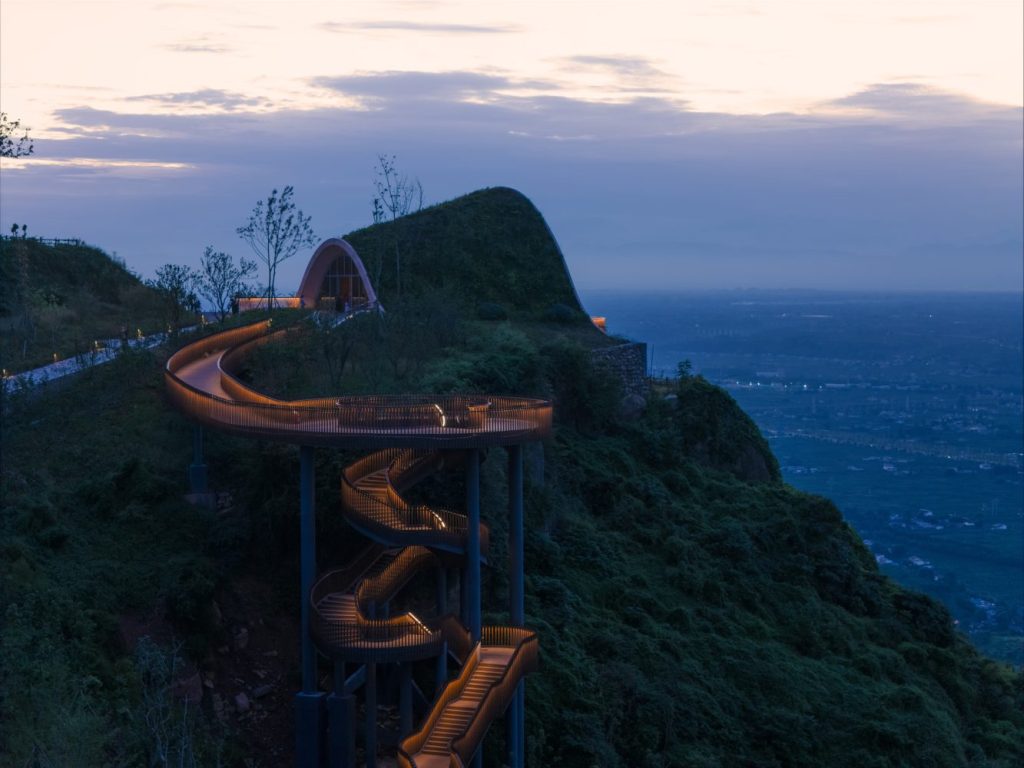
MVRDV has completed construction on the Pujiang Platform, a viewpoint comprising an arched, earth-covered timber pavilion perched among the hills to the south of Chengdu.
The project serves as both a visitor destination and an event space amidst the natural beauty of central China.
The design structure of the earth-covered timber arches takes a telescopic shape, drawing visitors to the expansive viewing window and balcony that projects out over the slope.
The design also enhances the path network by adding multiple routes to the viewpoint, including the incorporation of a secondary viewing platform into a twisting staircase structure. The pavilion itself is made using a timber structure.
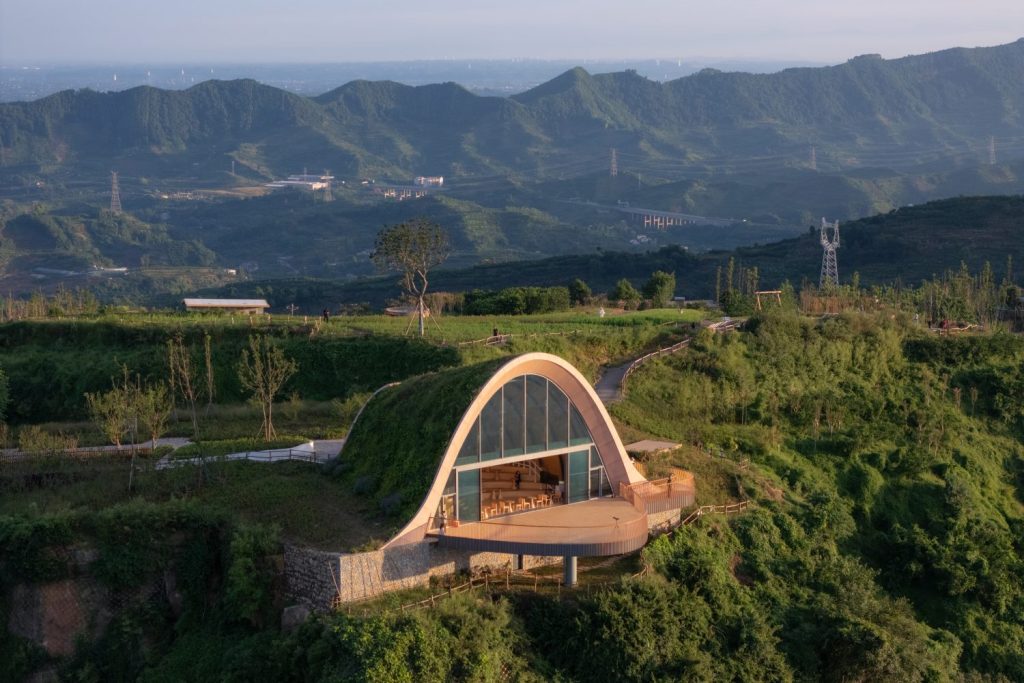
The pavilion is entered via a small glass facade on the building’s south-east side. Inside, the roof slopes upwards as the floor slopes downward, conforming to the slope of the hill.
The facade incorporates a pair of oversized sliding doors that open the interior to the viewing balcony outside, allowing the balcony to serve as an extension of the indoor space.
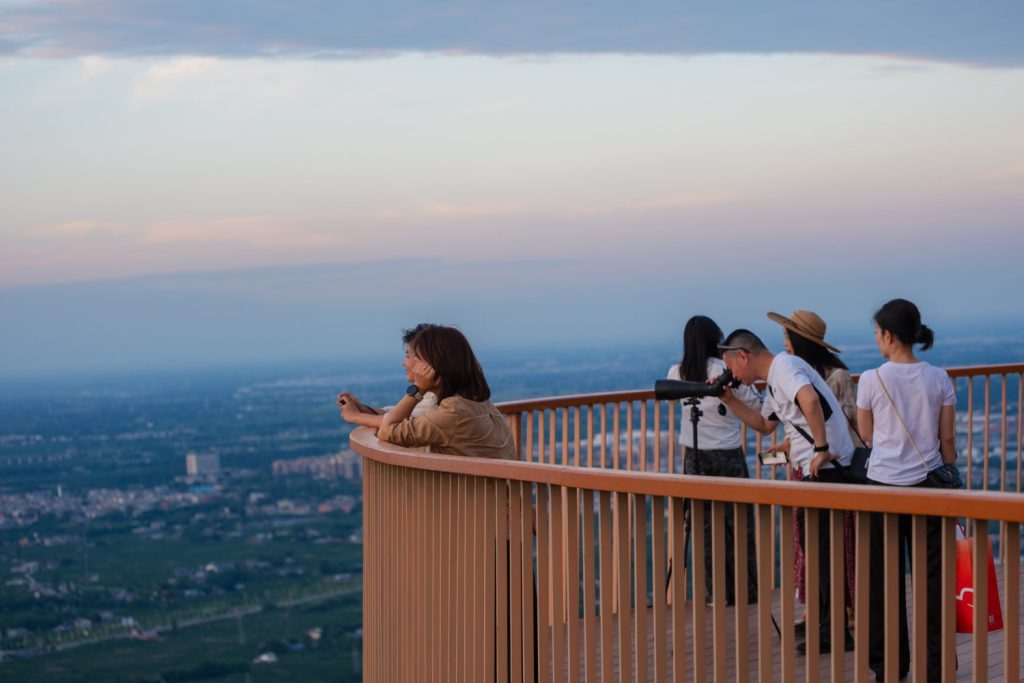
Atop the staircase is the circular secondary viewing platform, offering 360-degree views of both the distant mountains as well as the nearby natural environment.
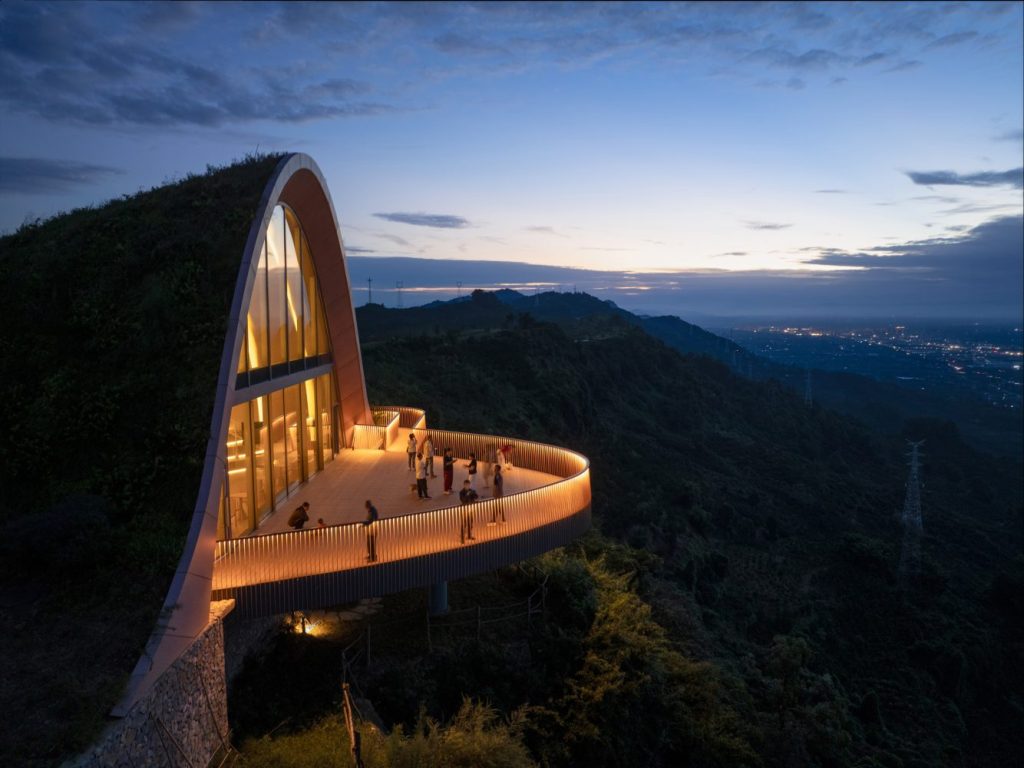
In addition to the project’s wood structure, which helps to keep its embodied carbon emissions low, the design incorporates a variety of strategies to reduce operational emissions. The earth berm and its surrounding greenery provide a significant amount of insulation and thermal mass, reducing the impact of temperature changes. Meanwhile, the ceiling is designed to allow for natural ventilation, which helps cool the space. Solar gain is minimized, thanks to the north-facing orientation of the large window, as well as the roof overhang and surrounding trees that shield the smaller entrance wall from direct sunlight.
Sign up for our weekly newsletter
Architectural materials and methods delivered right to your inbox

- CSI News & Notes: CSI’s impact earns official recognition; celebrate leaders, mentors, and innovators; and more
- CSI News and Notes: CSI spring certification exams open; scholarships available; and more
- CSI News & Notes: CSI MSR heading to San Diego; spring certification exams open; and more
- To Be Specific: Why CDT Should Be Your First Move
- CSI News & Notes: CSI Fellows share member benefits; and a New Year’s Resolution to keep
Popular Articles
-
1
-
2
-
3
-
4
-
5
Read the Latest Issue