Contemporary office draws from screened heritage forms
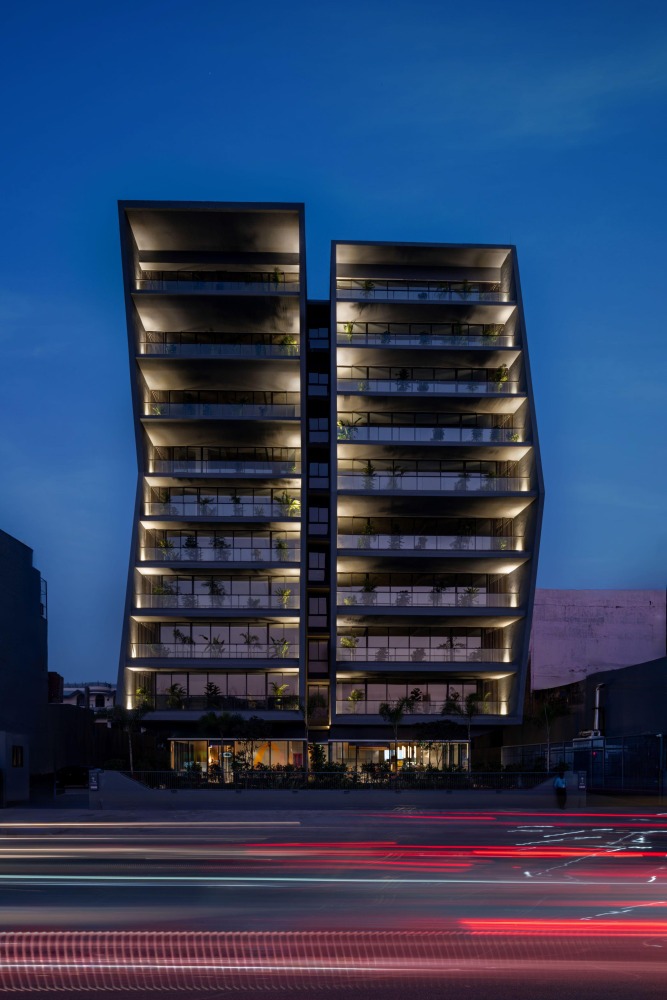
Situated in Jaipur, India, and designed to respond to both context and climate, the Magnus project establishes a contemporary identity while respecting the region’s architectural heritage.
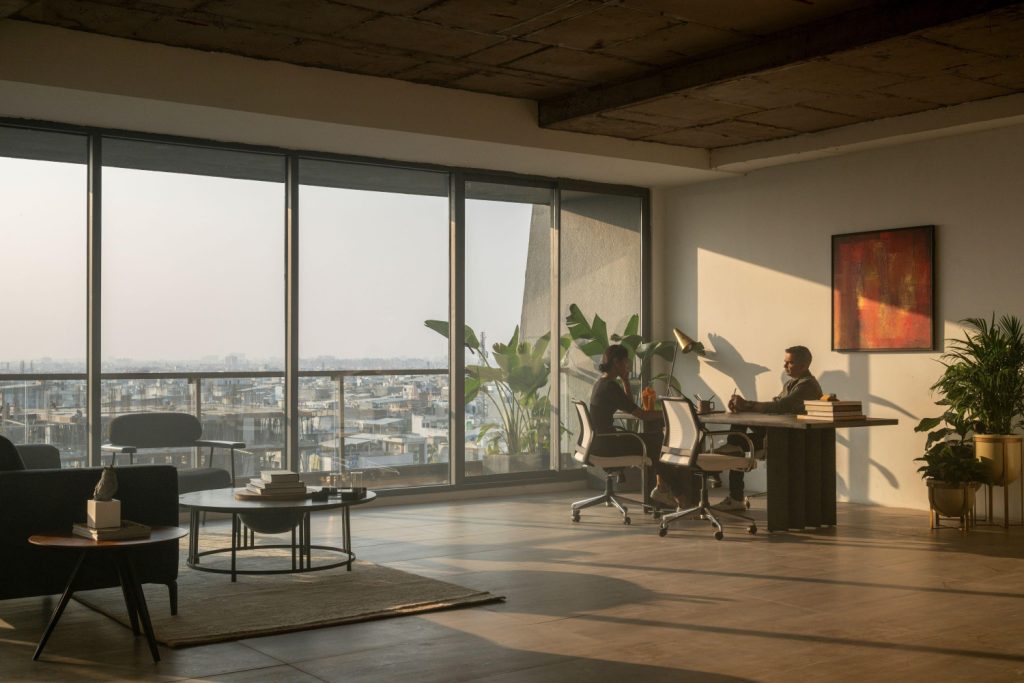
The lower levels accommodate smaller office units, while larger office spaces are located on the upper floors.
On the road-facing western facade, the building inclines both forward and backward, forming two vertical volumes with opposing angles. This massing creates sheltered outdoor decks at every level, and the contrasting inclines also ensure privacy between adjacent office terraces.
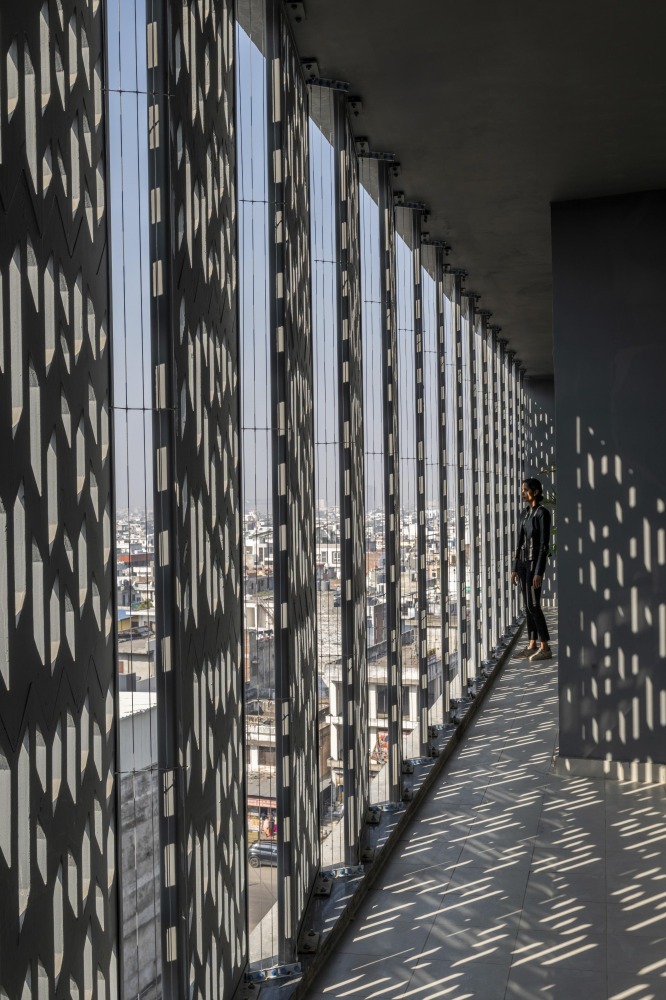
The building’s sides are wrapped in perforated screens inspired by traditional stone ‘jaali’ screens (ornamental screens made of stone or wood featuring intricate geometric or natural patterns), a characteristic of Rajasthan’s heritage architecture. These screens are fabricated from lightweight foam concrete composed primarily of recycled materials and offer thermal insulation.
A wide planter zone is introduced between the perforated screen envelope and the glazed facade, serving as a noise buffer from the busy road.
Constructed predominantly with fly ash bricks and reinforced cement concrete (RCC) frame, the building integrates sustainable strategies such as water recycling, rainwater harvesting, and rooftop solar panels, significantly reducing embodied carbon.
This office building responds to Jaipur’s hot climate while drawing inspiration from regional architectural traditions.
Sign up for our weekly newsletter
Architectural materials and methods delivered right to your inbox

- CSI News and Notes: CSI Foundation’s construction camp; CSI spring exam; and more
- CSI News and Notes: CSI’s credentials; CSI conference theme; and more
- To be specific – CSI supports young AECO professionals
- CSI News and Notes: CSI’s foundation scholarships, national conference, and Crosswalk
- CSI News and Notes: AI’s impact; CSI 2024 conference, and more
Popular Articles
-
1
-
2
-
3
-
4
-
5
Read the Latest Issue