Strutting about
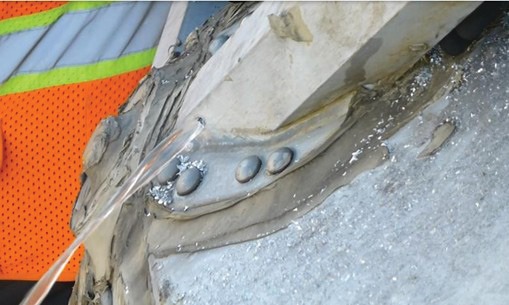
It is well established that construction materials exposed to exterior environmental conditions can be susceptible to freeze-thaw damage, particularly in climate zones with frequent and concurrent wetting and freeze-thaw cycles. Freeze-thaw distress is typically associated with critically saturated, absorptive materials such as concrete and masonry. However, damage can also occur in non-porous systems during freeze-thaw cycling when water becomes trapped internally, resulting in volumetric expansion that can exert significant pressure on surrounding components.
An example of this situation was encountered during a condition assessment of a geodesic dome structure. The dome’s exterior structural framework consisted of a hexagonal array of exposed tubular aluminum struts welded to end plates, which were bolted to node assemblies through folded aluminum panels forming the cladding. Several struts had developed full-thickness longitudinal fractures, raising questions about the cause of the failure and the structural integrity of the affected struts. The fractures were isolated to the bottom ends of the struts and at the lower elevations of the dome, where the struts sloped more steeply.
The original design incorporated sealant at cladding panel joints and gaskets below the strut end plates to mitigate water infiltration. Each strut also included a large fabrication hole centered in the upper end plate (beneath the open end of the hexagonal strut) and a drainage hole on the underside of the lower end.
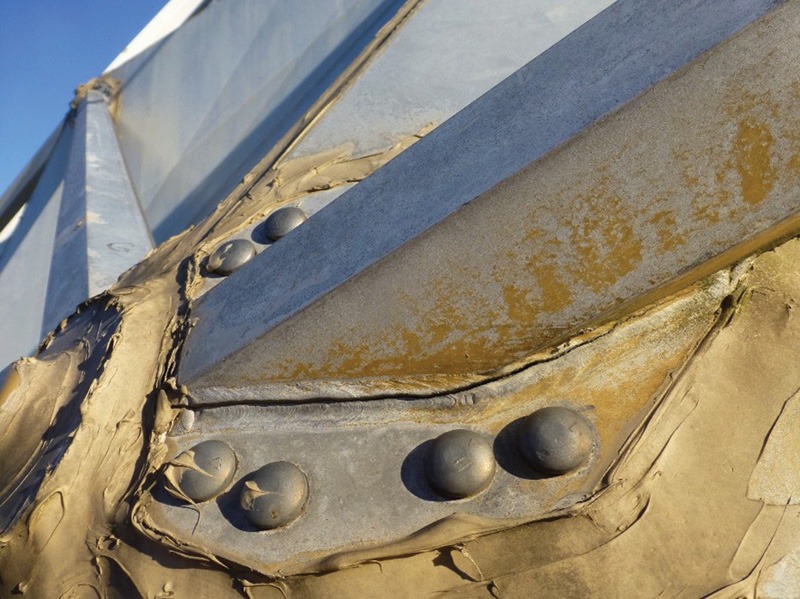
To address recurring water leakage, a previous repair campaign replaced the sealant protecting the exposed exterior joints—an effort that was not overly successful. The remedial sealant application was found to be poorly executed, with systemic deficiencies including improper profiles and tooling, cohesive and adhesive bond failures, and areas where new sealant was thinly applied directly over the original failed sealant. Additionally, many of the dedicated drainage holes at the base of the struts had been covered with sealant.
Noting that several of the damaged struts exhibited water staining at the bottom tips of the fractures, exploratory holes were drilled into the base of several affected struts. Each released a significant volume of trapped water, indicating that water had migrated into the struts through the fabrication hole at the upper end plate via breaches in the seals and original gaskets, and had accumulated at the base due to blocked drainage holes. Cyclic freezing and thawing of the confined column of water within the near-vertical struts exerted expansive pressures that fractured the struts and several of their connections to the end plates. In comparison, the near-horizontal struts located higher on the dome did not exhibit fractures, as water infiltration did not fill the circumference of those members, resulting in lower confined expansive forces. This finding alleviated previously held structural concerns regarding the long-term fatigue performance of the dome.
Remediation efforts included replacing the fractured struts, reestablishing the dedicated drainage holes, and replacing the sealant. This example highlights the importance of fully understanding failure mechanisms so that repairs intended to address one condition do not inadvertently cause another. In this case, a lack of awareness of the intended water-management approach within the original structural assembly led to blocked drainage provisions, ultimately resulting in strut fractures.
Author
Jeffrey Sutterlin, P.E., is an architectural engineer and associate principal with Wiss, Janney, Elstner Associates (WJE) in the New York and Princeton offices. He specializes in the investigation and repair of building enclosures, as well as peer review and consulting for new enclosure design. He can be reached at jsutterlin@wje.com.

David S. Patterson, AIA, is an architect and senior principal with Wiss, Janney, Elstner Associates (WJE) in Princeton, N.J. He specializes in the investigation and repair of building enclosures, as well as peer review and consulting for new enclosure designs. He can be reached at dpatterson@wje.com.

Dale Statler is a structural engineer and senior associate with Wiss, Janney, Elstner Associates (WJE) in Denver, Colo. He specializes in the investigation, analysis, and repair of existing and damaged structures. He can be reached at dstatler@wje.com.
The opinions expressed in Failures are based on the authors’ experiences and do not necessarily reflect that of The Construction Specifier or CSI.
Sign up for our weekly newsletter
Architectural materials and methods delivered right to your inbox

- CSI News and Notes: CSI Foundation’s construction camp; CSI spring exam; and more
- CSI News and Notes: CSI’s credentials; CSI conference theme; and more
- To be specific – CSI supports young AECO professionals
- CSI News and Notes: CSI’s foundation scholarships, national conference, and Crosswalk
- CSI News and Notes: AI’s impact; CSI 2024 conference, and more
Popular Articles
-
1
-
2
-
3
-
4
-
5
Read the Latest Issue