These landmarks didn’t always look like they currently do
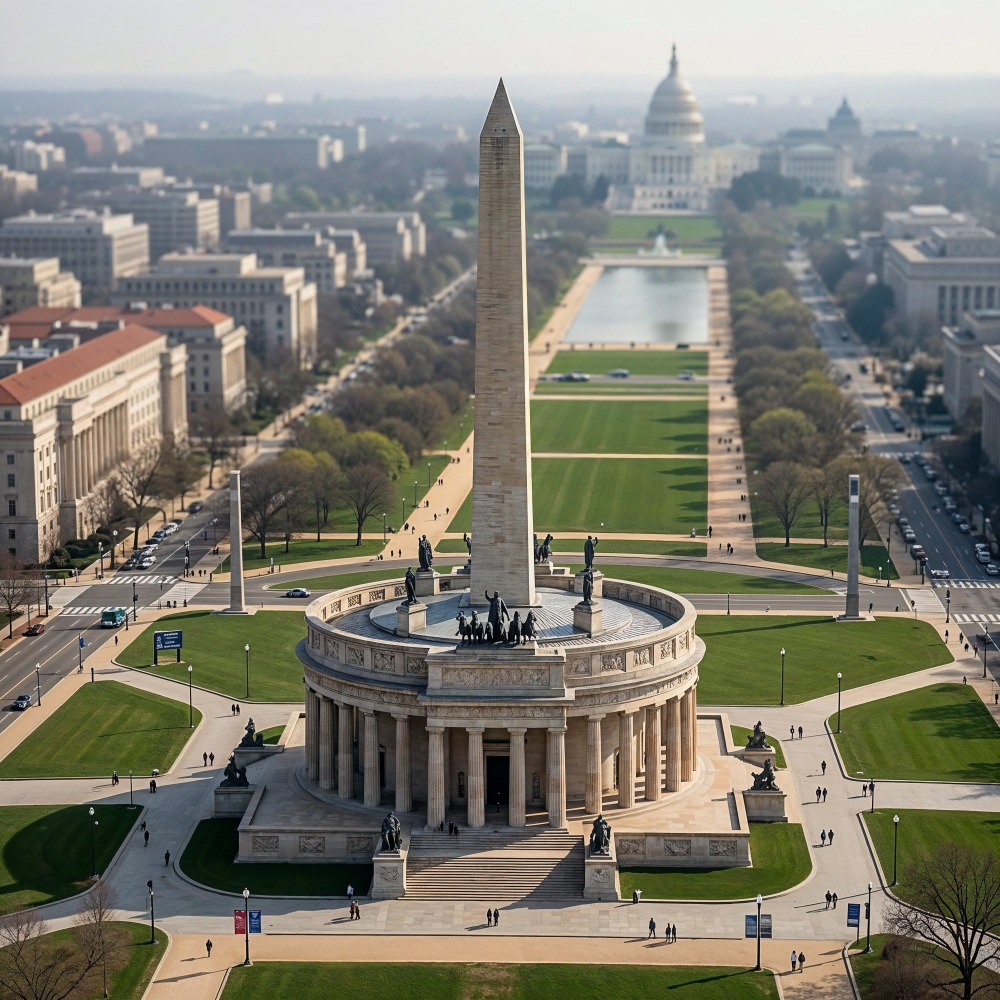
Many of the United States’ most recognizable landmarks did not turn out exactly as their creators originally imagined, with early designs that were far more ambitious, featuring larger structures, additional architectural elements, or more elaborate artistic details.
Practical challenges such as construction costs, engineering limitations, and project timelines often forced architects and planners to simplify their visions so the projects could realistically be completed.
Construction equipment parts provider Astrak released a new visual series reimagining iconic U.S. landmarks based on their original architectural blueprints and sculptors’ visions. These side-by-side renderings offer a “what if” look at American history.
Here are some important landmarks and how they might have looked:
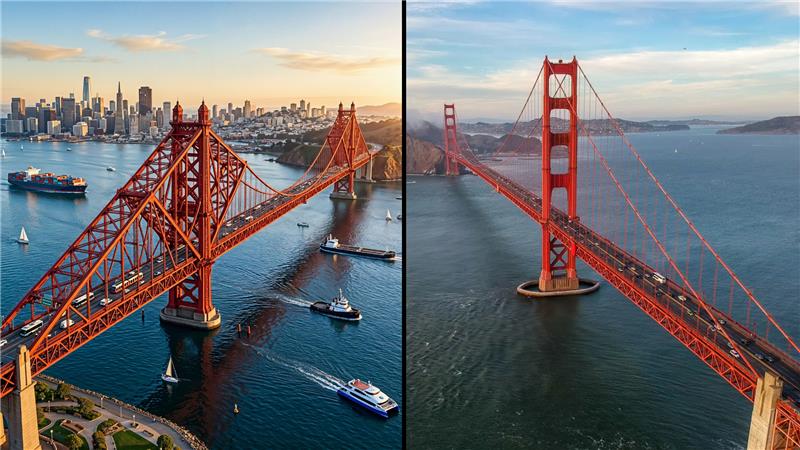
- Golden Gate Bridge: Engineer Joseph Strauss initially proposed a hybrid suspension–cantilever design with heavy trusses focused on function rather than form. Collaborative input from other engineers and architect Irving Morrow led to the streamlined suspension bridge.
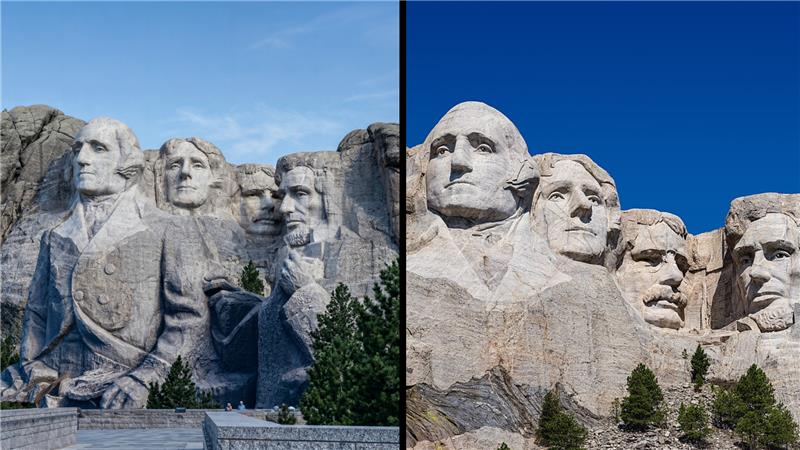
- Mount Rushmore: Sculptor Gutzon Borglum envisioned full-body statues of Washington, Jefferson, Roosevelt, and Lincoln, along with a monumental Hall of Records. Limited funding and the technical challenge of carving granite led to a focus solely on the presidential heads.
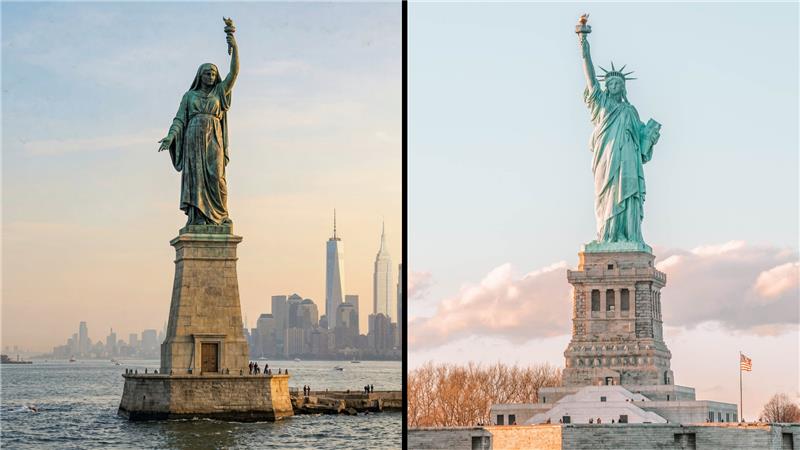
- Statue of Liberty: French sculptor Frederic Auguste Bartholdi first proposed a colossal figure, “Egypt Carrying the Light to Asia.” After that project fell through, the design was reimagined as Liberty Enlightening the World in New York Harbor.
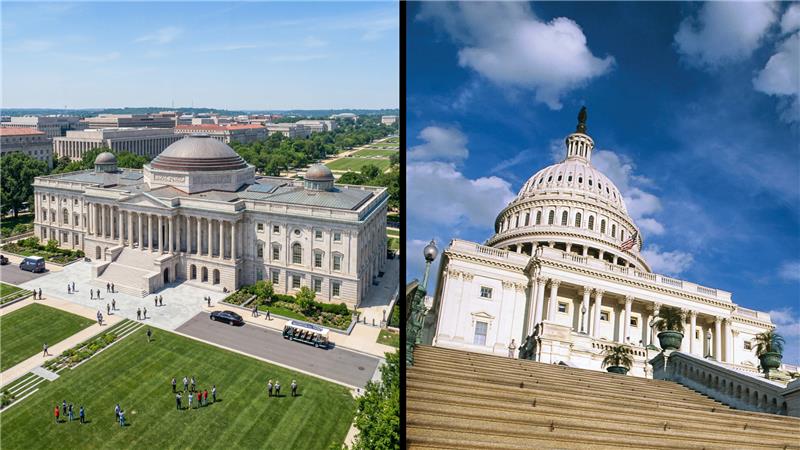
- U.S. Capitol Building: William Thornton’s original design featured a modest copper dome appropriate for the early federal government. As the House and Senate wings were added, Thomas U. Walter replaced it with the much larger cast-iron dome that defines the Capitol’s silhouette today.
Sign up for our weekly newsletter
Architectural materials and methods delivered right to your inbox

- CSI News and Notes: CSI Foundation’s construction camp; CSI spring exam; and more
- CSI News and Notes: CSI’s credentials; CSI conference theme; and more
- To be specific – CSI supports young AECO professionals
- CSI News and Notes: CSI’s foundation scholarships, national conference, and Crosswalk
- CSI News and Notes: AI’s impact; CSI 2024 conference, and more
Popular Articles
-
1
-
2
-
3
-
4
-
5
Read the Latest Issue