Building science on roofing: Barriers guide modern design
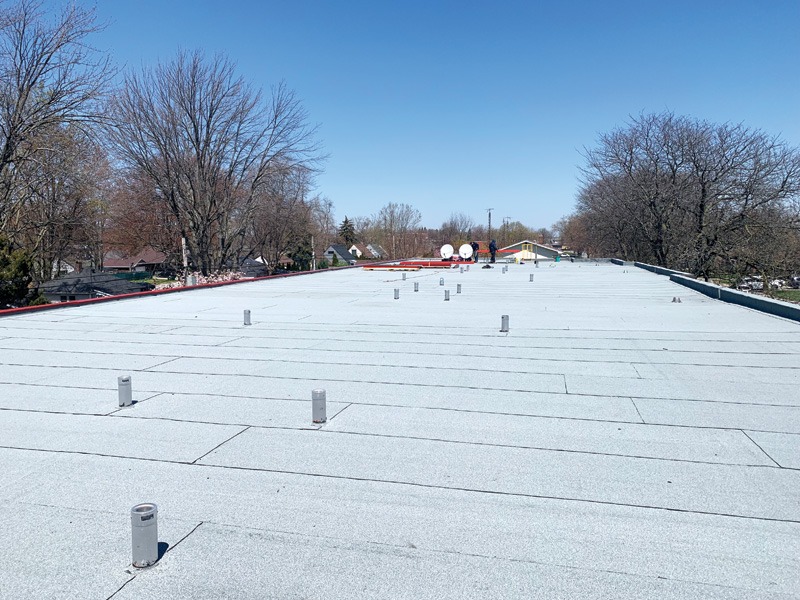
As many building restoration consultants and contractors will attest, the design and construction of roof replacements have evolved substantially over the last 20 years. Contractors and roof designers can no longer rely on habitually selecting favorite roof solutions, and one roof system or assembly can no longer be considered suitable for all buildings. There is no longer one material manufacturer that can supply all the solutions. New roof designs have increased demands from building owners for roofs that offer complete sustainable solutions, not just waterproof protection.
Evolution of roof construction practices
Roof construction in the mid-’80s was a predictable practice. Roofing crews would leave their place of business to work on projects where the only installation instruction required was the amount of roof work expected to be completed that day. There was no question of what type of roof system was to be installed, no concern about how much or what kind of insulation was required, and no consideration of how to ensure continuity of the air barrier, vapor retarder, tie-ins, adhesive rates, mechanical fastening patterns, material lists, or shop drawings. The practice proved effective, with roofing contractors installing watertight solutions that typically provided long-lasting, effective results. Roofing technicians were craftsmen often trained through apprenticeship and generational-type training. They were successful in their trade primarily due to the predictable and repetitive nature of working with built-up roof assemblies, which had few variables and a sole objective: keeping precipitation out. There was very little consideration given to using roof assemblies for anything other than waterproofing.
Modern construction practices and increased building code demands have undergone substantial transformations since the 1980s, primarily to provide better environmental separation between interior and exterior climates, enhance interior comfort, and reduce energy costs. There are no longer umbrella-type covers on buildings; instead, there are impermeable solutions that attempt to control or eliminate thermal, moisture, and airflow migration. Early attempts with what seemed to be revolutionary materials, including new membranes and insulations designed to provide improved roof performance, brought mixed results. Roofers and designers alike experienced roof system failures, often due to a lack of understanding regarding the installation of roofs using new products and a lack of knowledge about the application of building science principles to roofing design and installations.
Challenges with early insulated roof systems
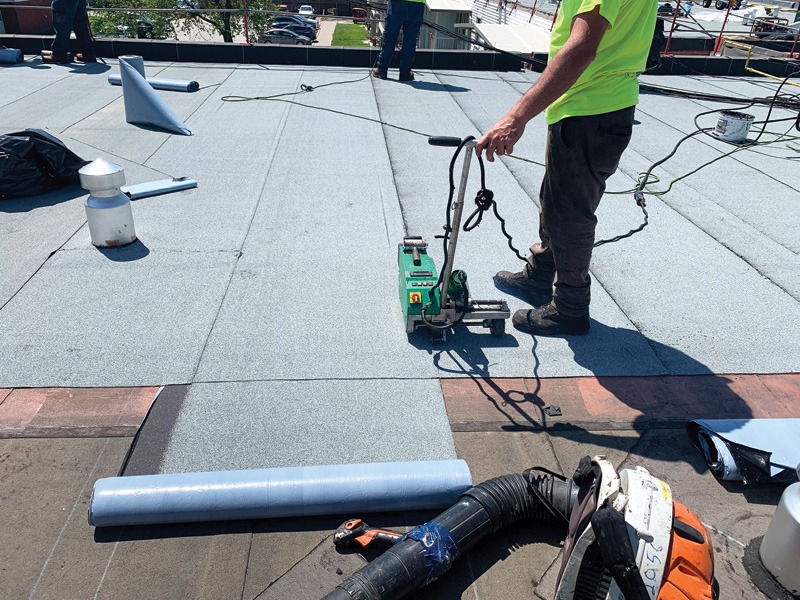
The early versions of insulated roof systems introduced new issues, including vapor drive and thermal bridging, which led to uncontrolled deterioration and premature failures of roofs, making them unable to provide the desired improved protection. The moisture-related deterioration included a reduction in anticipated thermal resistance values, mysterious leaks, emulsifying adhesives, metal corrosion, and mold issues. Membrane technology also changed as new membrane types were developed to improve performance and (hopefully) provide reliability in an insulated roof system. Roof membrane system types included single- and multi-ply assemblies incorporated in built-up (membrane over insulation) or inverted (membrane under insulation) formats. The unfortunate part of the new membrane and insulation trend was that the roofing industry was unsure about how to install and detail the new roof assemblies. Roofing contractors would rely on their workers, who had traditional built-up roof training, habits, and equipment, to install new single- or multi-ply systems by trial and error. As time progressed, some membrane manufacturers collaborated with contractors and industry organizations to develop best practice methodologies and achieve reasonable confidence in providing long-term solutions.
There is no denying that historically, owner roof replacement decisions were often swayed by selecting roof membrane systems from persuasive material sales staff offering extraordinary solutions and services, the attempt to save money by choosing an inexpensive solution, price, or choosing what appeared to be a too-good-to-be-true warranty. The bottom line is no sales pitch can guarantee success, the best price does not ensure a successful solution, and no warranty has ever improved the performance of a roof assembly. A well-designed and installed roof system deserves warranties issued by the contractor and membrane manufacturer as a gesture of quality, not as a guarantee that the roof system is a suitable solution for waterproofing and energy management, or that it meets building codes.
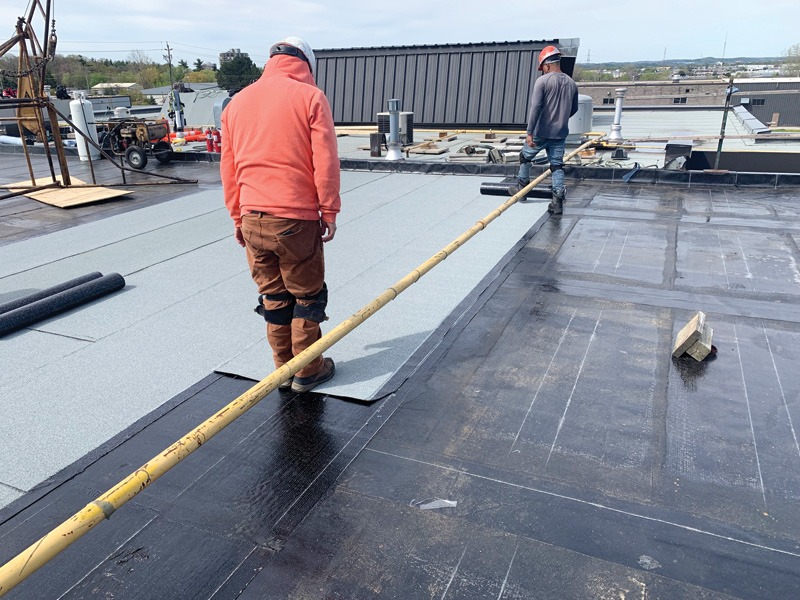
Modern designs account for the difficulty of installing roofs (the art) to meet raised expectations of building performance (the science) and, of course, all within governing building code requirements. The practicality of installing membrane and insulation continuity can sometimes resemble a game of “Twister” that requires coordination between the roofing contractor and representatives of other trades, including mechanical, electrical, plumbing, fenestration, cladding, and insulation contractors, during new build construction projects. In a roof replacement project, roofing contractors are often hired as general contractors, subcontracting other trades, as the only way to complete a roof replacement without risking water infiltration.
Before designing a roof replacement, it is essential to understand the existing building’s construction, including the type of structure and roof deck, existing mechanical and plumbing systems, parapet and adjacent wall construction, rooftop equipment, and penetrations. It is counterproductive to design a roof incompatible with existing materials or building detailing, as the connections could fail, allowing for air and moisture infiltration (resulting in energy loss and leaks). Removing wall parapet claddings to ensure continuous barrier membrane and insulation transitions, lifting mechanical units to complete curb detailing, and ensuring sufficient drainage capacity and strategy are all steps that must be intentionally and carefully detailed and performed to ensure a successful roof replacement.
Relying on the roofing contractor’s technician to design the transition between adjacent wall and parapet detailing, building materials, and roof accessories without professional direction creates the possibility that the installation may not meet building codes and building science best practices. This is not a slight towards a roofing technician’s ability, but is an acknowledgement of the cooperative approach between the roofing contractor and design professional that roof replacement work should follow. In turn, the designer must be mindful of the difficulties, limitations, and obstacles associated with roof construction, as well as the notion that what may look good on paper may not be possible or practical to install. Weather conditions, safety, accessibility, and material limitations could all transform what initially appeared to be a good design idea into an impossible or costly endeavor.
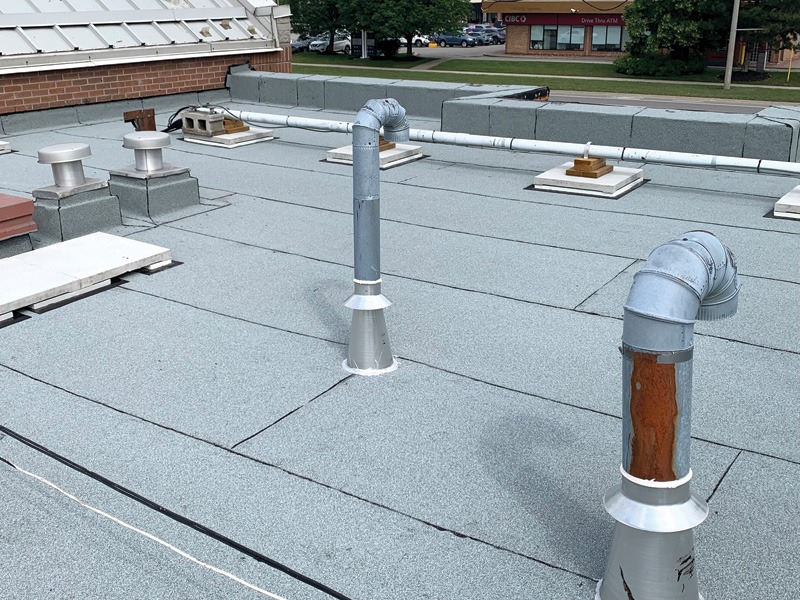
Modern roofing practices and responsibilities
Today’s roofing contractors have, for the most part, adapted to the modern ways of roofing. They send their crews to project sites with material safety data sheets, life safety and rescue equipment, and plans, engineered shop drawings for scaffolding and fencing, building and road closure permits, and tapered insulation drawings. Today’s roofing technicians are trained to install multiple types of roof membranes and incorporate them with insulation in various configurations of roof systems. How they incorporate their ability to work with roofing materials into the entire building envelope is where accurate contract documentation and site review of work in progress by a design professional lead to successful roof installations.
With the trend toward municipalities and jurisdictions requiring building permits for roof replacement work, designers are reminded of their obligation to incorporate current building codes and municipal requirements into their designs. Considerations for structural loading, wind uplift resistance, roof drainage, insulation values, and building occupancy have always been required; however, they are not often accurately analyzed or calculated.
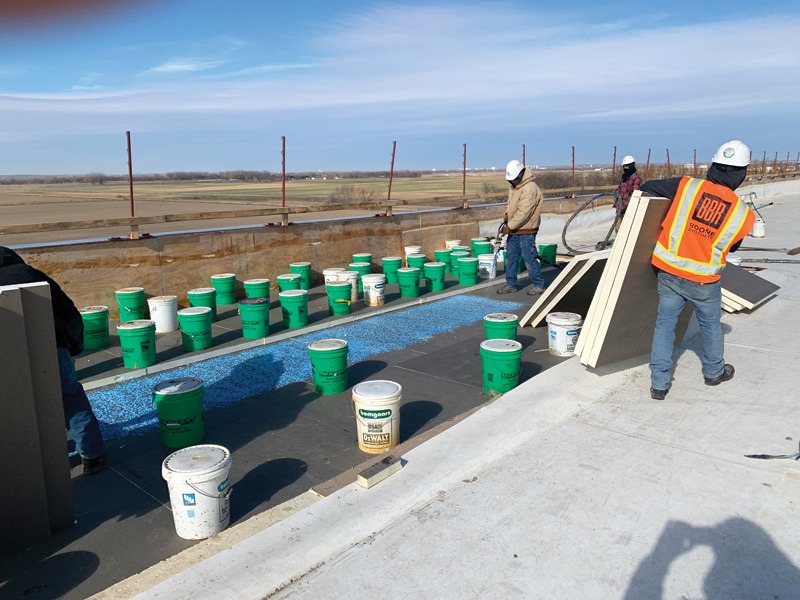
Balancing design and practicality
In recent years, increased demands have also risen from the way roofs are used. Some view roofs as prime opportunities to implement landscaping, additional building mechanical and operational equipment, stormwater retention systems, and energy production equipment (solar and wind). Some of these have become requirements and are included in municipal codes to “green” the roof surfaces and reduce the negative aspects of large, low-slope roof spaces. How roof design and construction are with these new demands on roof space is a challenge from a roofing design and engineering perspective. Providing viable solutions to roofing contractors to accomodate these innovations in the roof space must be the objective of the roof design professional.
Looking to the future of roof construction practice, designers must be able to continuously identify solutions that balance roof installation with sound building science and engineering principles. With the most recent demands by governments for decarbonization, CO2 reductions, energy consumption reductions, and sustainable land and building stewardship, owners are more motivated than ever to engage professionals with proven experience in balancing the arts and sciences of roof design and installations.
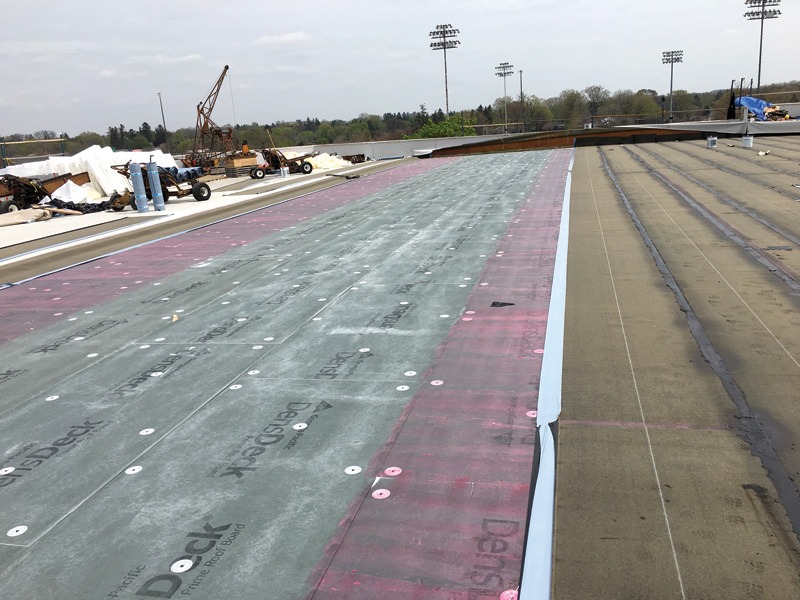
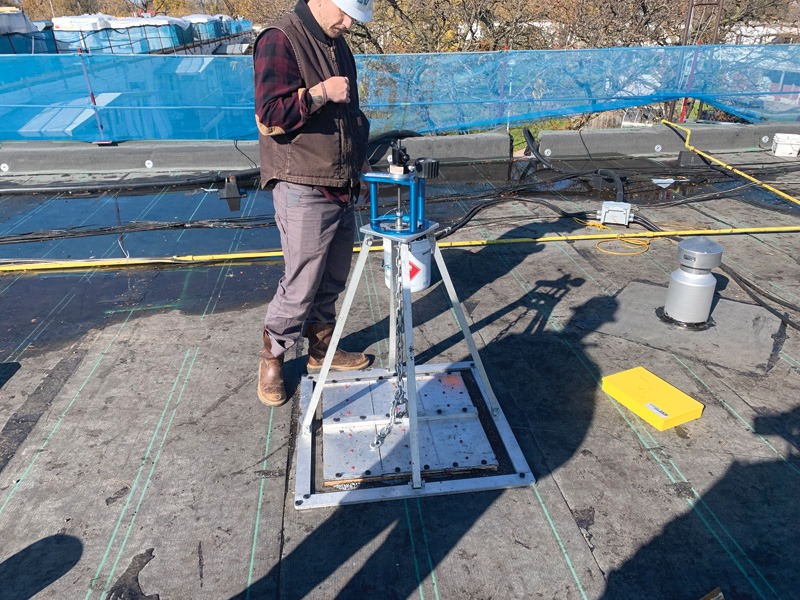
Author

Michael Hensen is a professional engineer and a registered roof consultant with the International Institute of Building Enclosure Consultants (IIBEC). His technical duties for Rimkus include engineering and leadership of the building enclosure consulting practice.
Key Takeaways
Roof replacement has shifted from simple waterproofing to complex, building science–driven systems that integrate air, moisture, and thermal control. Modern roofing requires careful design, adherence to building codes, and effective coordination among trades to ensure optimal performance and durability. Early insulated systems revealed issues such as vapor drive and thermal bridging, highlighting the need for improved materials and installation practices. Today, designers must balance practical installation challenges with evolving demands for sustainability, energy efficiency, and the multifunctional use of roofs.
Sign up for our weekly newsletter
Architectural materials and methods delivered right to your inbox

- CSI News & Notes: CSI’s impact earns official recognition; celebrate leaders, mentors, and innovators; and more
- CSI News and Notes: CSI spring certification exams open; scholarships available; and more
- CSI News & Notes: CSI MSR heading to San Diego; spring certification exams open; and more
- To Be Specific: Why CDT Should Be Your First Move
- CSI News & Notes: CSI Fellows share member benefits; and a New Year’s Resolution to keep
Related Products

Read the Latest Issue