Polymer rubber gel waterproofing: A high-performance solution for below-grade waterproofing
Below-grade waterproofing is a crucial element for long-term building performance. It directly affects structural longevity, indoor air quality (IAQ), and occupant health. While the industry has seen a multitude of waterproofing technologies and materials over the last few decades, polymer rubber gel waterproofing systems stand out due to their flexibility, chemical resistance, substrate adaptability, and constructability across varying site conditions.
Trusted for its performance benefits, polymer rubber gel waterproofing systems have been applied to some of the world’s most important infrastructure, including Incheon International Airport in South Korea and the Centre Block Parliament Hill renovation in Ottawa, Canada.
What are polymer rubber gel waterproofing systems?
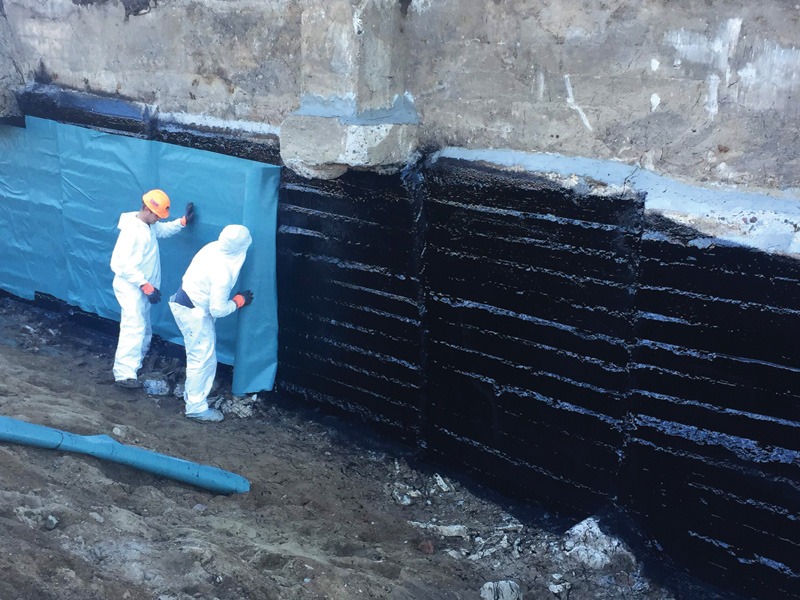
Polymer rubber gel waterproofing systems are composite systems comprising a single-component, hot- or cold-applied, polymer-modified synthetic rubber gel and a bonded high-density polyethylene (HDPE) protection sheet. The polymer rubber gel remains in a semi-fluid, elastomeric state throughout its service life. This property imparts remarkable flexibility, long-term adhesion, and the capacity to self-heal in the event of minor cuts or punctures. The HDPE protection sheet completes the composite assembly, providing added durability and safeguarding the system from damage during backfill or follow-on trade work.
Polymer rubber gel systems can adhere to a wide range of substrates, including “green” concrete. This type of waterproofing can be applied to concrete surfaces as early as three days after placement—well ahead of the 28-day curing requirement typical of many fluid-applied systems. This enables project teams to accelerate installation and reduce scheduling bottlenecks, a benefit that can be game-changing with tight construction timelines.
Polymer rubber gel waterproofing characteristics
Beyond new construction applications, polymer rubber gel’s spray-applied application and unique physical gel-like consistency are well-suited for restoration waterproofing applications where substrate conditions are irregular or less than ideal.
Testing in accordance with ASTM D412 demonstrates that polymer rubber gel systems possess elongation properties nearing 400 percent. Such elasticity allows the membrane to accommodate building movement caused by differential settlement or thermal cycling without sustaining damage or losing waterproofing integrity. Additionally, the elastomeric nature of the gel permits recovery from localized compression during construction—such as foot traffic or pressure from wheeled equipment—ensuring the waterproofing remains bonded and fully functional before overburden materials are installed.
Perhaps the most distinguishing feature of polymer gel waterproofing is its ability to self-heal. Since the gel component does not fully cure and retains a low-viscosity profile, it can naturally re-seal minor breaches, such as incidental punctures. These cold-flow properties mimic the physical performance benefits of coal tar pitch membranes, yet without the adverse health impacts. In practice, this results in a resilient barrier that maintains watertight performance even under strenuous site conditions.
Further, the system’s fluid-applied installation method produces a seamless, monolithic waterproofing layer over the substrate. This eliminates reliance on field-formed seams or lap joints alone, which are often weak points in traditional sheet membrane systems.
How do polymer rubber gel systems perform?
In terms of performance under hydrostatic pressure, polymer gel systems meet the polymer modified asphalt requirement of International Building Code (IBC) 1805.3.2 for below-grade wall waterproofing applications. Unlike dampproofing, which merely resists water vapor in the absence of pressure, polymer gel membranes are designed to withstand hydrostatic forces over prolonged periods and effectively bridge nonstructural cracks. This makes them suitable for deep foundations, elevator pits, tunnels, and other structures that are regularly exposed to constant hydrostatic pressure. Different composite assemblies of polymer rubber gel enable applications in both post-applied waterproofing and pre-applied blindside waterproofing.
Chemical resistance is another area where polymer gel systems demonstrate superior performance. They have been shown to retain their physical properties and waterproofing performance when exposed to a broad spectrum of common ground contaminants—including hydrocarbons. The HDPE sheet component plays a critical role by acting as a chemical barrier, thereby enhancing the durability of the polymer rubber gel system in impacted soils.
Additionally, polymer gel membranes can be applied in ambient temperatures as low as -17.8 C (0 F), an important consideration for construction in colder climates where winter conditions might otherwise prevent below-grade work. Heated mobile kettles or hose systems maintain the gel at optimal application temperatures (typically around 82 C [180 F]), ensuring consistent material flow.
From an installation standpoint, polymer gel systems offer significant efficiency. The spray-application process, in conjunction with the elimination of primer requirements, can reduce total installation time.
Traditional fluid-applied waterproofing materials, particularly hot fluid applied asphalt materials, emit a pungent, unpleasant odor. This odor may cause adverse public impact at or near environmentally sensitive locations such as hospitals or schools. Polymer rubber gel is a low-odor material that minimizes disruption to sensitive environments and maintains acceptable air quality standards during installation, offering a good alternative to more traditional options.
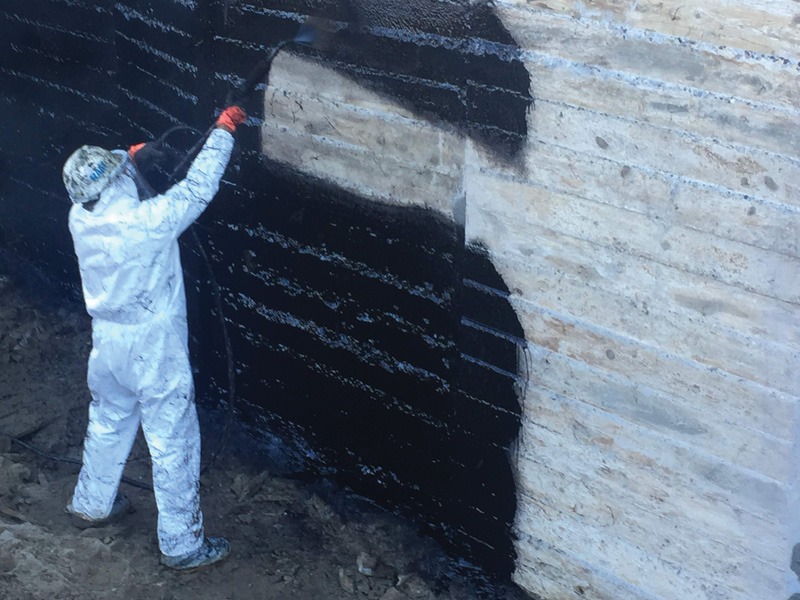
Case study: Polymer rubber gel and restoration waterproofing
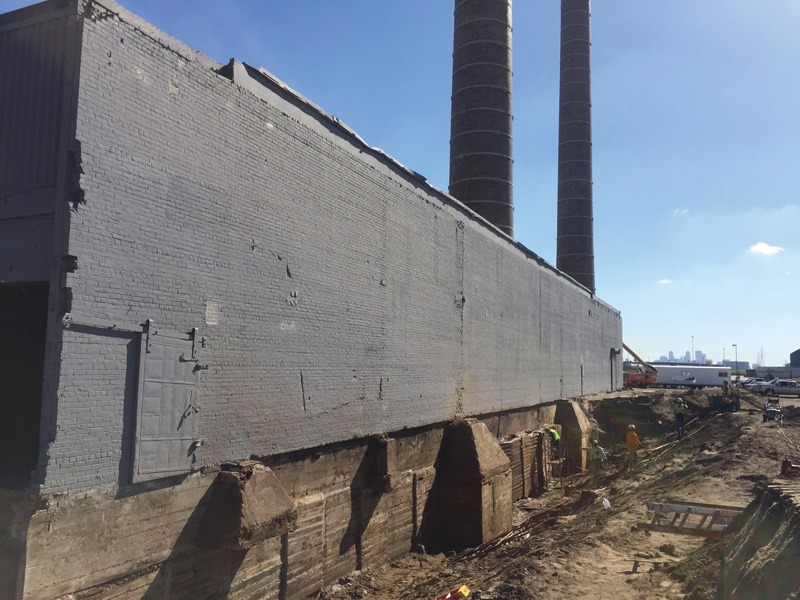
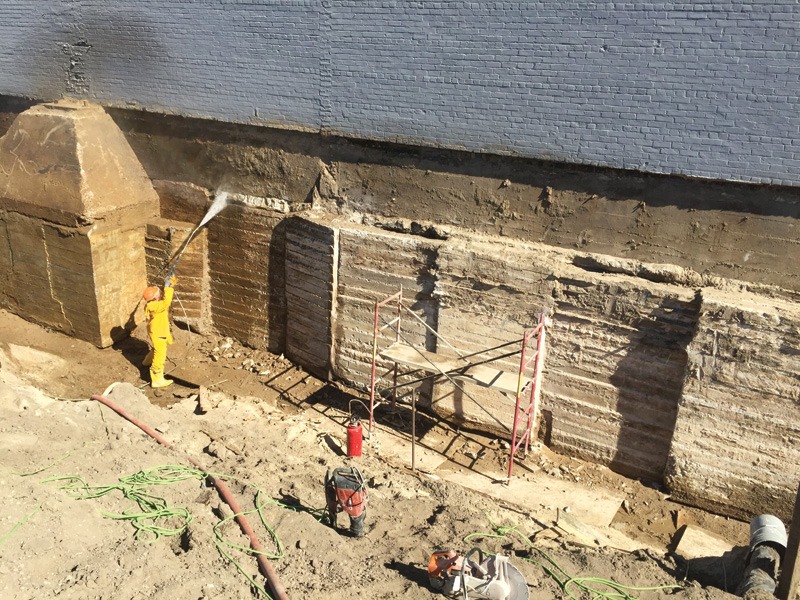
The Northern Stacks facility in Minneapolis required a restoration waterproofing system that could accommodate an extremely irregular substrate over a foundation wall area of approximately 929 m2 (10,000 sf). As an added challenge, the design and construction teams did not know the full extent of the area’s conditions until excavation was well underway. While the condition of the concrete was structurally sound, large concrete fins formed during the original concrete pour due to loose-fitting lagging boards, deep rock pockets, and irregularities in the concrete surface. This substrate would have proven challenging for any typical sheet-applied waterproofing membrane.
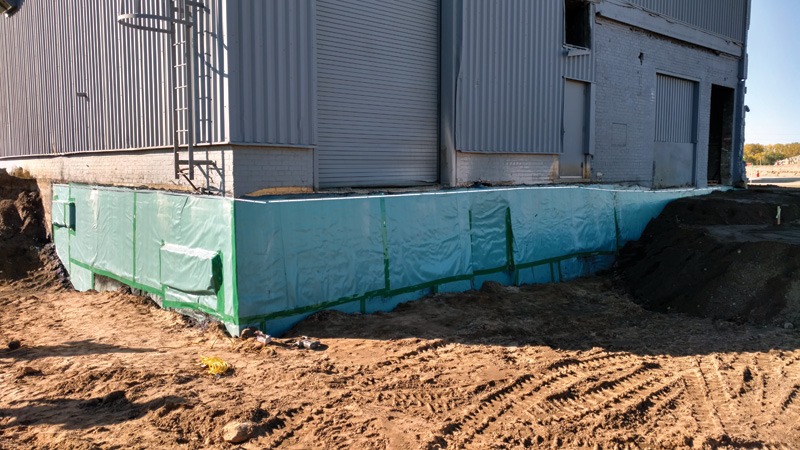
Polymer rubber gel was the ideal fit for the unpredictable and irregular substrate at this site, and the product’s speed of installation helped maintain a tight schedule. It adhered well to the existing concrete, even on areas where prior waterproofing materials were still partially bonded. Polymer rubber gel’s installation process did not require curing time, which helped with an efficient install. The system was completed with a highly durable and puncture-resistant HDPE protection sheet, which also served to allow for the immediate addition of subsequent topping materials and backfill.
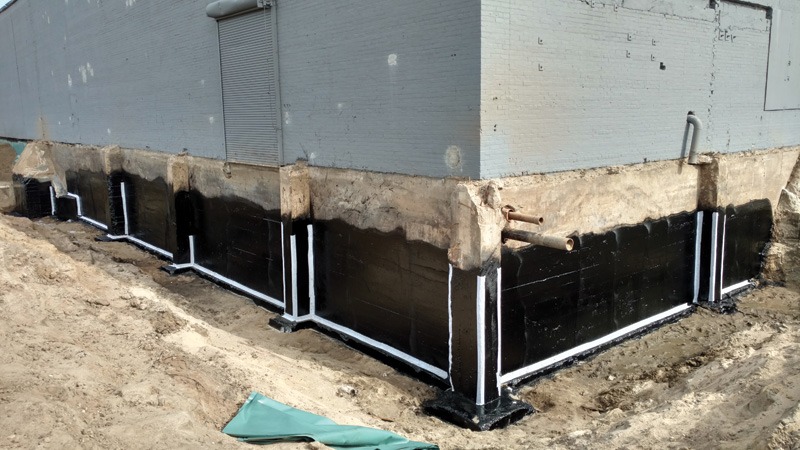
The result was a durable and continuous waterproofing system that adapted to the challenging restoration substrate and was completed within a demanding two-week time schedule. Selection of the polymer rubber gel system substantially reduced the amount of labour necessary for surface preparation and application of the waterproofing system, resulting in significant cost savings for the owner.
Installation
Cold-applied polymer rubber gel is applied by a progressive cavity rotor/stator pump system, extruded directly onto the substrate, and finished with troweling or squeegeeing to achieve the specified minimum 90-mil thickness. Hot-applied polymer rubber gel offers two installation methods: direct application using an oil-jacketed kettle followed by troweling or squeegeeing, or spray application using a modified oil-jacketed spray system—both achieving the required 90-mil thickness.
As a single-component material, polymer rubber gel eliminates the complexity and potential errors associated with multi-component mixing, while offering greater tolerance for varying environmental conditions during installation. This streamlined application process reduces labor requirements and minimizes installation errors, resulting in enhanced productivity and more consistent results.
The spray-applied method provides additional advantages, significantly increasing application speed while accommodating complex detailing, uneven surfaces, and irregular substrate configurations that would be challenging for conventional application techniques.
Polymer rubber gel also functions as an effective leak repair material, injected through walls to seal active water leaks or restore failed waterproofing membranes. Single-component polymer rubber gel does not require a catalyst, is hydrophobic, and does not react with water. In fact, as it displaces water, it acts as an injectable waterproofing membrane, applied using a curtain wall grouting method. The physical characteristics of polymer rubber gel make it ideally suited as a leak repair material, and it is unique among waterproofing materials in that the same material is used for both structural waterproofing and waterproofing repair applications.
The application of polymer rubber gel systems is limited to certified installers trained by the manufacturer. While this requirement may restrict the bidding pool in some regions, it serves a critical quality control function. Certification ensures that applicators are familiar with the equipment, proper application techniques, and enables manufacturer oversight during key phases of the project. Therefore, it is essential to partner with manufacturers who demonstrate proven experience across diverse site conditions, along with extensive project experience, to maximize overall long-term project success. These manufacturers will also help guide the selection process to the most appropriate system based on the project site conditions, which may mean polymer rubber gel is the ideal product for the specific project scenario.
References
- International Code Council (ICC). 2021 International Building Code (IBC). Section 1805 “Dampproofing and Waterproofing.” Country Club Hills, IL: ICC, 2020.
- ASTM International. Standard Test Methods for Vulcanized Rubber and Thermoplastic Elastomers (ASTM D412 16). West Conshohocken, PA: ASTM International, 2022.
- ASTM International. Standard Test Methods for Water Vapor Transmission of Materials (ASTM E96/E96M-22). West Conshohocken, PA: ASTM International, 2022.
- Campbell, D. (2021). An Assessment of Polymer Gel Waterproofing. International Institute of Building Enclosure Consultants (IIBEC) Interface, October 2021.
Author

As director of product development for EPRO, Scott Schendel manages an innovative portfolio of products that help protect structures in any site conditions, at any locations. Schendel has more than 20 years of relevant building envelope experience with specific expertise in below-grade waterproofing for new construction and restoration applications. From large-scale civil infrastructure to elevator pits and planters, he has a wide range of project experience. Schendel is a member and Sealant, Waterproofing, and Restoration Institute (SWR Institute). He regularly collaborates on waterproofing projects across North America.
Sign up for our weekly newsletter
Architectural materials and methods delivered right to your inbox

- CSI News & Notes: CSI’s impact earns official recognition; celebrate leaders, mentors, and innovators; and more
- CSI News and Notes: CSI spring certification exams open; scholarships available; and more
- CSI News & Notes: CSI MSR heading to San Diego; spring certification exams open; and more
- To Be Specific: Why CDT Should Be Your First Move
- CSI News & Notes: CSI Fellows share member benefits; and a New Year’s Resolution to keep
Related Products

Read the Latest Issue