
From retrofit to inclusive hub: Reframing accessibility through design
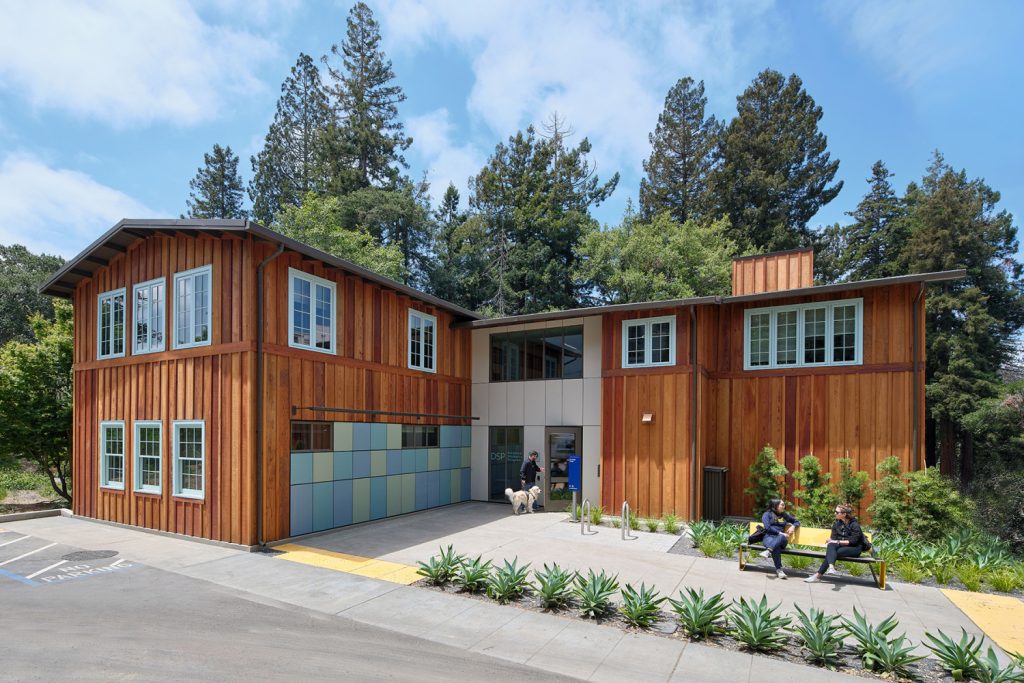
The Creekside Center renovation for the Disabled Students’ Program transforms a beloved building located in the University of California, Berkeley campus’s core.
The revitalized building upgrades seismic and life-safety performance and is a welcoming, inclusive, and accessible new Center for the University’s Disabled Students’ Program (DSP).
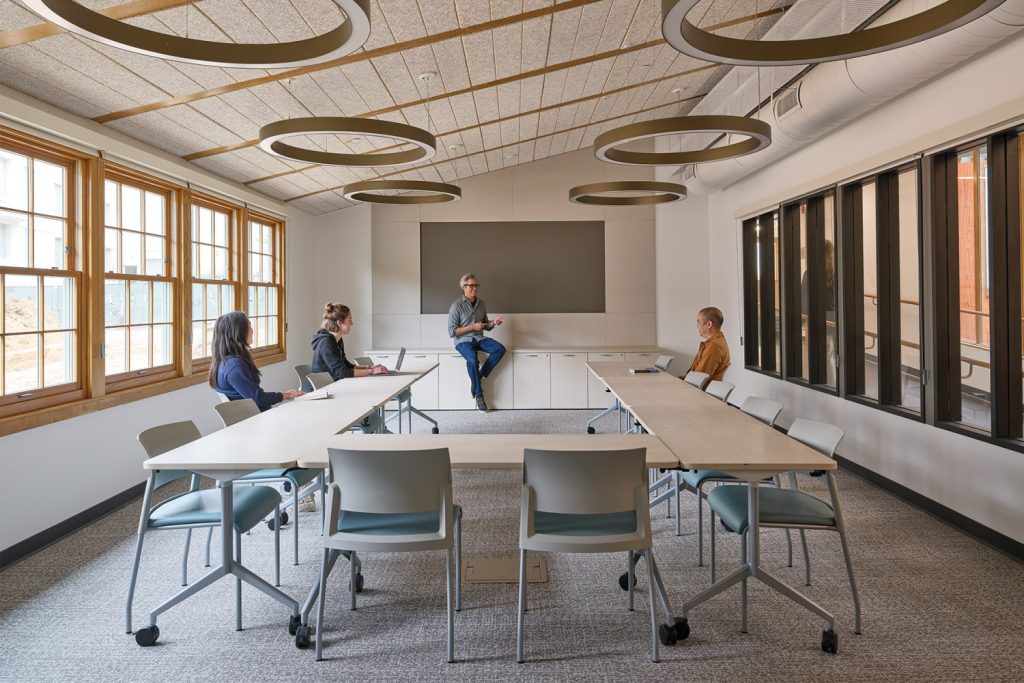
Some of the strategies utilized to address the eight impact areas include:
● Community building and privacy—A revitalized entry plaza welcomes students in and is an outdoor extension of the reception lobby.
- Cognitive access—To address a wider diversity of communication styles, transitions between spaces are marked with accent colors, tactile material changes, and lowered ceilings in addition to typical code-required signage.
- Safety and security—Tightened the building envelope and added Minimum Efficiency Reporting Values (MERV-13) filtered ventilation to all spaces. Environmental controls include operable windows, dimmer switches, and thermostats in every office.
- Sensory zoning—A low sensory room is located off the reception for de-escalation and provides a calm and quiet waiting area.
- Mobility and height—New ramped passageways connect the east and west wings to mitigate the five existing floor levels while revealing activity within the building. Gender neutral restrooms flank the building’s first-ever elevator. Floor-level control buttons allow users to operate the elevator with their feet, wheelchairs, or other mobility devices.
- Hearing and acoustics—Low-sensory rooms and disability specialist offices are acoustically isolated from adjacent spaces.
- Vision—Natural light is complemented by direct/indirect LED fixtures and finishes that support an even distribution of daylight.
- Durability—Volatile organic compounds (VOCs), phthalates, and PFA-free finishes were selected to accommodate a large volume of users and students who may be prone to requiring movement and physical flexibility.

The vision and goals for the 817-m2 (8,800-sf) Creekside Center renovation were developed through an inclusive, iterative process involving DSP leadership, staff, students, Capital Projects, and other campus stakeholders. The project was undertaken by Leddy Maytum Stacy Architects.
Sign up for our weekly newsletter
Architectural materials and methods delivered right to your inbox

- CSI News & Notes: CSI’s impact earns official recognition; celebrate leaders, mentors, and innovators; and more
- CSI News and Notes: CSI spring certification exams open; scholarships available; and more
- CSI News & Notes: CSI MSR heading to San Diego; spring certification exams open; and more
- To Be Specific: Why CDT Should Be Your First Move
- CSI News & Notes: CSI Fellows share member benefits; and a New Year’s Resolution to keep
Popular Articles
-
1
-
2
-
3
-
4
-
5
Read the Latest Issue