
Low-carbon design shapes agricultural education center
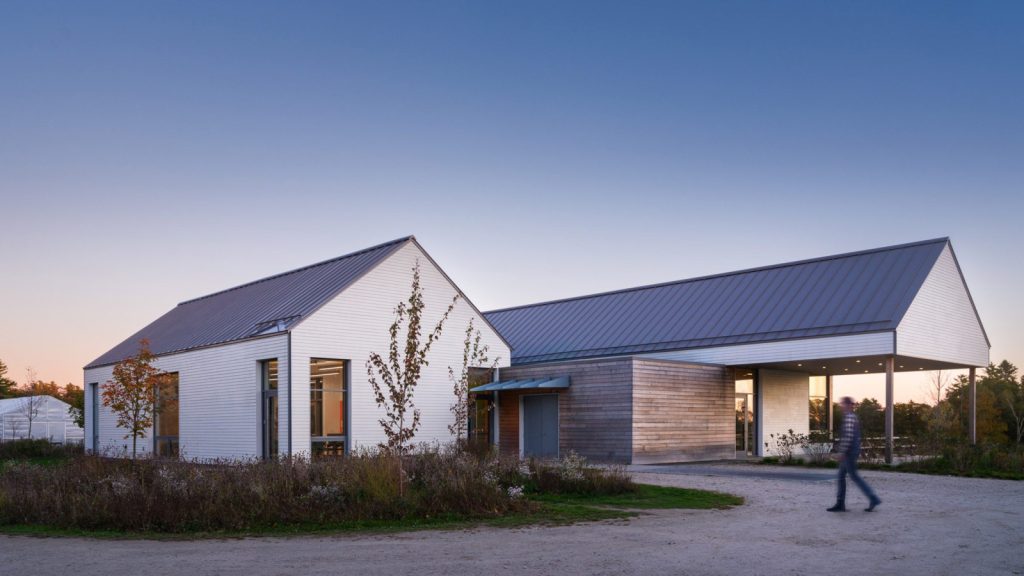
A new agricultural education center in Maine uses mass timber and low-carbon building systems to reduce embodied carbon while reflecting the design of traditional local barns. The design was tailored to meet the Smith Center for Education and Research’s commitment to sustainable land use.
The center, also known as Grange Life, is part of the 202 ha (500-acre) Wolfe’s Neck Center for Agriculture and the Environment in Freeport. The 817.5 m2 (8,800 sf) facility is designed for sustainable agriculture and educational programs.
The project, designed by architecture studio OPAL, focuses on ecological design principles, including low emissions and site restoration. Biogenic materials and renewable energy reduce environmental impact while improving occupant comfort.
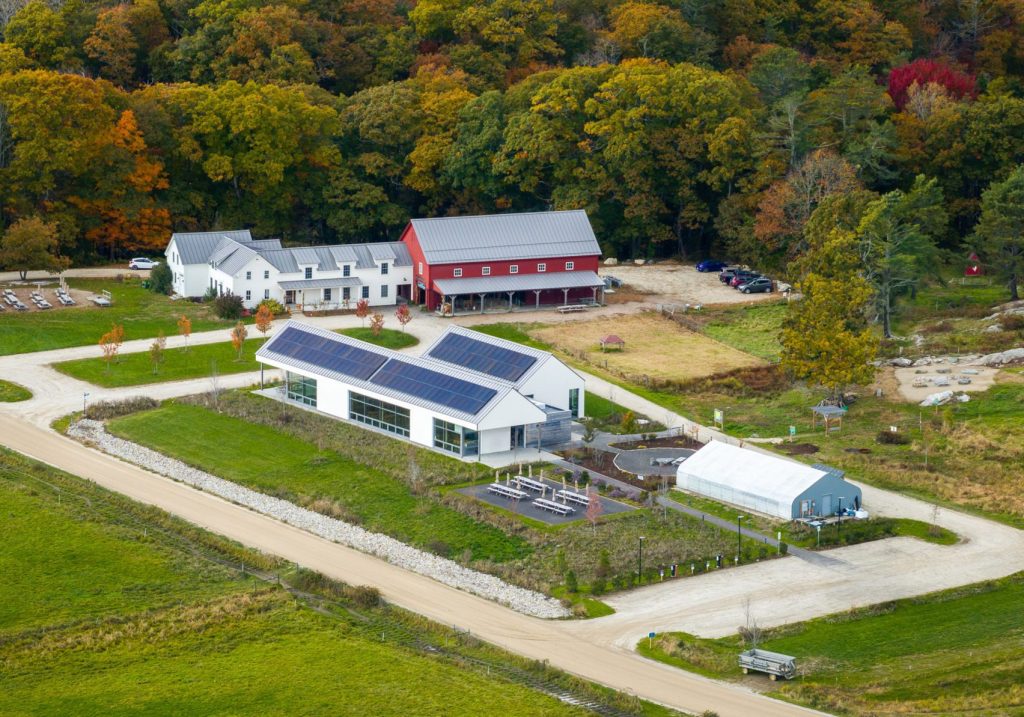
The building creates a permanent home for public meetings and educational programs that were previously held in temporary structures. The design blends agricultural context with a modern vision.
A mass timber frame supports a wood-fiber and cellulose-insulated curtain wall with climate-specific, operable triple-pane glazing for natural ventilation. The mechanical system delivers 100 percent outdoor air, pre-conditioned with 90 percent efficiency. This strategy cuts energy use intensity (EUI) by 83 percent.
The project manager, Gabe Tomasulo, told the Construction Specifier that the Smith Center’s gabled forms echo and honor the traditional vernacular architecture of the renovated farmhouse that shares the site.
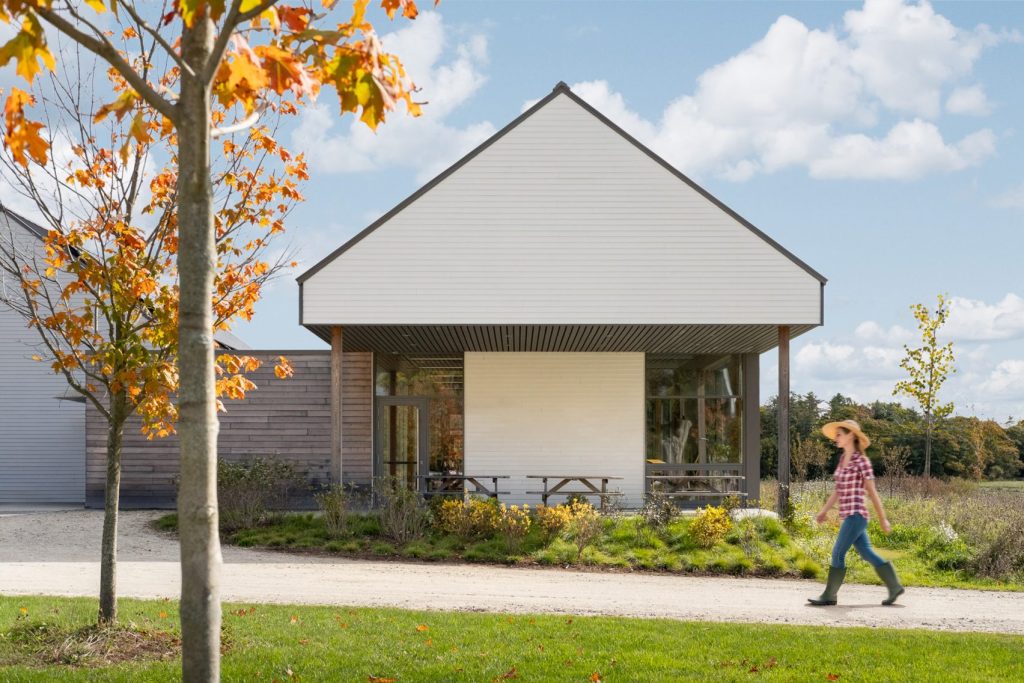
“The building was conceived and designed ecologically from the ground up. It is an ecological design rather than a set of ecological features. The point-loaded timber-frame structure in the southern gabled volume enables future reconfiguration of the space without structural alterations, reducing the risk of premature demolition. Factoring in the 44kW solar array on the roof, the project will pay back its entire embodied carbon debt during its usable lifetime,” he said.
The project’s greatest success was meeting the clients’ needs and quality expectations while achieving significant reductions in energy use, Tomasulo said. The building uses over 60 percent less energy than comparable buildings.
Sign up for our weekly newsletter
Architectural materials and methods delivered right to your inbox

- CSI News & Notes: CSI’s impact earns official recognition; celebrate leaders, mentors, and innovators; and more
- CSI News and Notes: CSI spring certification exams open; scholarships available; and more
- CSI News & Notes: CSI MSR heading to San Diego; spring certification exams open; and more
- To Be Specific: Why CDT Should Be Your First Move
- CSI News & Notes: CSI Fellows share member benefits; and a New Year’s Resolution to keep
Popular Articles
-
1
-
2
-
3
-
4
-
5
Read the Latest Issue