Making the connection: Field joints in prefabricated walls
Prefabricated exterior wall panels or unitized systems consist of prefabricated modules that include framing, insulation, air barriers, cladding, and glazing components. These modules are manufactured in a factory, transported to the site, and attached to the building structure. While these systems were traditionally limited to curtain walls, a variety of cladding systems, such as EIFS, thin brick, and metal panels, are now available. These systems can provide more consistent performance and a higher level of quality control for the building envelope, while also significantly reducing construction time. However, the modular nature of the system requires careful consideration of the joints between units, which are addressed during the installation process. Gaskets and/or sealant are often used to bridge these gaps and create the final building enclosure. Two recent projects demonstrate the challenges that can arise at field joinery locations.
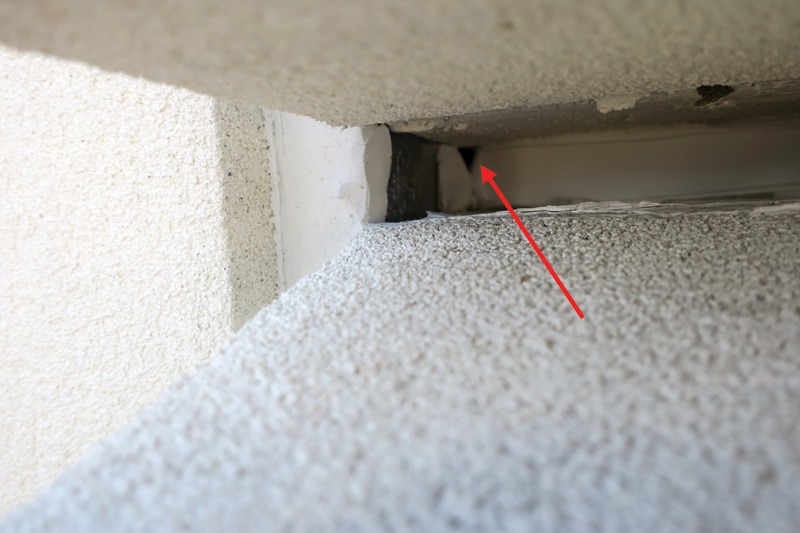
In the first project, the panelized assembly included an EIFS cladding system supported on cold-formed metal studs. The design incorporated a drainage plane behind the EIFS with integrated through-wall flashings above window openings and at the base of the wall. The joints between the modular panels were sealed with a two-stage sealant joint, with the interior (primary) seal interfacing with the air and water barrier at the drainage plane. This design also required the primary seal to offset toward the interior at fenestration systems to interface with the primary window seal. Unfortunately, due to the depth of the drainage plane compared to the exposed face of the panels, access in the field to install the primary seal in the correct position was challenging. In several locations, a gap inadvertently formed where the horizontal and vertical primary seals met, allowing water and air leakage through the assembly (Figure 1).
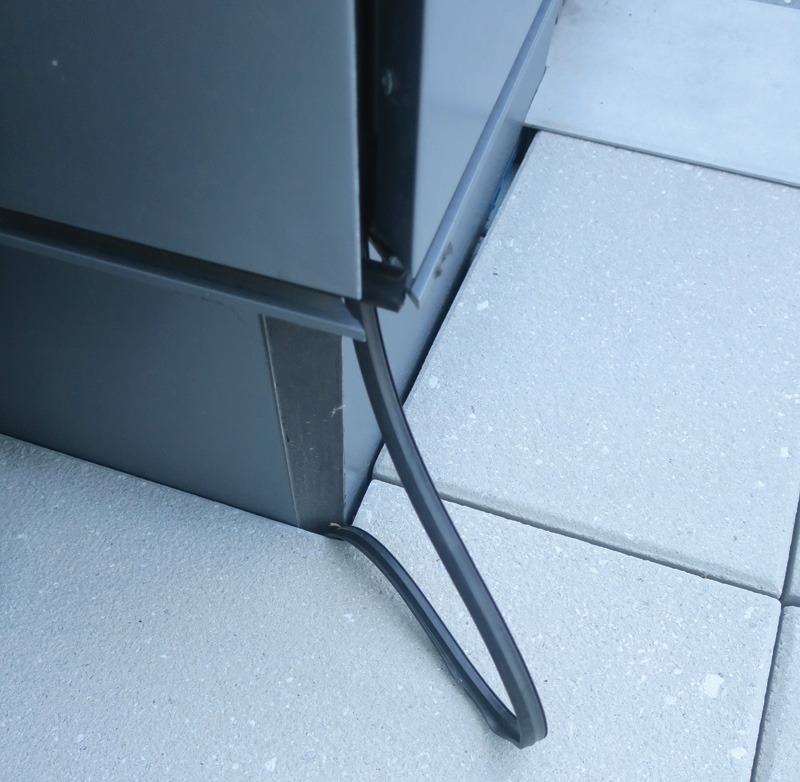
In the second project, metal panels were incorporated into a unitized curtain wall system with the air and water barrier and mineral wool insulation positioned behind the metal panel. The primary air and water seal was located inboard of the metal panels; however, the outer exterior joint between metal panels was detailed with factory-installed elastomeric gaskets at the perimeter of each module to form a weather seal when compressed against the adjacent module during field installation. Unfortunately, due to a missed quality control step during fabrication, the gaskets were not crimped into the raceway that secures them in place. With normal thermal cycling of the assembly, many gaskets began to displace and fall out of the joints (Figure 2).
Prefabricated cladding systems can provide faster construction and consistent quality control; however, achieving high performance with these systems requires careful design of the joints between modules. These joints must accommodate the tolerances inherent in the underlying structure and allow access for field installation of seals. The perimeter configuration of each module must consider practical methods for field installation of sealant, gaskets, or other transition strips during construction.
Authors

Kenneth Itle, AIA, is an architect and associate principal with Wiss, Janney, Elstner Associates, Inc. (WJE) in Northbrook, Ill., specializing in historic preservation. He can be reached at kitle@wje.com.

Renae Kwon, RA, is an architect and associate principal with Wiss, Janney, Elstner Associates, Inc. (WJE) in Northbrook, Ill., specializing in enclosure design for new and existing buildings. She can be reached at rkwon@wje.com.
The opinions expressed in Failures are based on the authors’ experiences and do not necessarily reflect that of The Construction Specifier or CSI.
Sign up for our weekly newsletter
Architectural materials and methods delivered right to your inbox

- CSI News and Notes: CSI Foundation’s construction camp; CSI spring exam; and more
- CSI News and Notes: CSI’s credentials; CSI conference theme; and more
- To be specific – CSI supports young AECO professionals
- CSI News and Notes: CSI’s foundation scholarships, national conference, and Crosswalk
- CSI News and Notes: AI’s impact; CSI 2024 conference, and more
Popular Articles
-
1
-
2
-
3
-
4
-
5
Read the Latest Issue