
Why stone wool delivers high-performance acoustics

Good acoustics are no longer “nice to have” in the built environment. Sound is one of the most universal and ever-present components of our daily lives. People rely on it to communicate, collaborate, learn, heal, and connect. Yet when sound is not addressed, it can become a source of stress, distraction, and discomfort.
For architects, interior designers, and contractors shaping today’s commercial spaces, acoustics sit at the intersection of performance, well-being, and design intent. As open plans, exposed structures, and visually expressive ceilings continue to grow in commercial interiors, the question is no longer whether acoustics matter, but how to deliver high-performing acoustic solutions without compromising aesthetics.
This is where ceiling systems and strategic material selections—such as stone wool—enter the conversation.
Acoustics as a core component of occupant health and performance
Acoustics affect everyone, every day. The sound environment directly influences how people feel and perform in a space, from homeowners and office workers to students, patients, and healthcare staff. Research consistently shows that excessive noise and reverberation negatively impact comfort, focus, communication, and productivity.
The impacts of poor acoustics are well documented in published research:
- Studies show that 50 percent of employees say noise prevents them from being productive. In educational environments, increased noise levels are linked to lower student performance on standardized tests.1
- Persistent background noise can elevate stress, contribute to fatigue, and reduce overall satisfaction with a space.
- Poor acoustics cause sound to carry farther than intended, particularly in shared environments where privacy is needed for focused work or sensitive conversations.
In offices, schools, and healthcare facilities, these effects have real consequences. Performance, employee retention, and health can all suffer. With more than 90 percent of an organization’s operating costs tied to employee efficiency, acoustic ceiling design can directly influence the bottom line.2
Yet acoustics are still often overlooked early in the planning and design process. Decisions made to support collaboration, sustainability, or visual openness can unintentionally create spaces that are noisy, distracting, or tiring to occupy. Open offices may reduce visual barriers but sacrifice speech privacy. Some finishes may support sustainability goals but reflect sound rather than absorb it. Exposed concrete decks and open plenums may look striking, but amplify reverberation.
The result? Spaces that look great on day one but struggle to support occupant well-being over time.
As awareness grows around the impact of sound on health and performance, particularly in workplaces, schools, and healthcare settings, designers are seeking smart, high-performing acoustic solutions that integrate seamlessly into the ceiling plane rather than feeling like an afterthought.
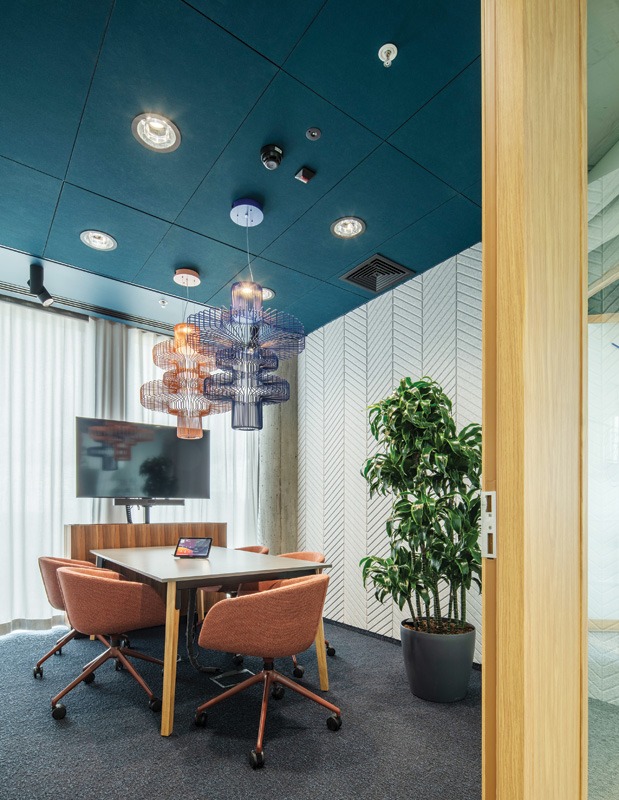
When it comes to acoustics, material selection is everything
More stringent acoustical criteria are shaping the way spaces are designed. Building owners increasingly recognize the link between acoustics and well-being and are willing to invest in solutions that support healthy indoor environments. Voluntary standards and rating systems are also reinforcing this shift, placing greater emphasis on indoor environmental quality (IEQ).3
The challenge lies in material selection. Not all acoustic materials perform equally, and not all solutions balance performance with aesthetics. Some products may offer visual appeal but limited sound absorption. Others may deliver strong acoustic performance but restrict design flexibility or visual rhythm.
That is why acoustics should be addressed early in the design process. Ceiling systems play a critical role. They can become one of the most effective tools for controlling sound in commercial interiors.
Designers and specifiers rely on standardized testing to understand how materials behave in real-world conditions. Two of the most common metrics in ceiling and wall design are Noise Reduction Coefficient (NRC) and Sound Transmission Class (STC).

Understanding NRC
NRC measures the amount of sound a material, such as a ceiling panel, absorbs. It is expressed on a scale from zero to one, where:
- Zero indicates little to no sound absorption (highly reflective)
- One indicates high sound absorption
High-performing absorptive ceiling panels with NRC ratings of 0.90 or higher can significantly improve the acoustic experience in open-plan offices, classrooms, retail spaces, healthcare recovery areas, corridors, meeting rooms, and lobbies.
The higher the NRC, the more sound energy is absorbed rather than reflected back into the space. Ceilings with NRC values below 0.70 often require additional absorption on walls to achieve acceptable acoustic comfort. Ideally, ceilings should handle absorption, while walls focus on blocking where needed.
Closely tied to NRC is the Ceiling Attenuation Class (CAC), which evaluates how effectively a ceiling panel limits sound transmission between adjacent spaces—particularly when partition walls stop short of the underside of the floor or roof deck.
“It’s important not to sacrifice necessary ceiling absorption for only moderate CAC ratings in the mid-30s. It leads to both insufficient absorption in rooms and disappointing privacy between rooms. Instead, specify the appropriately high ceiling NRC while also achieving privacy between rooms per building standards using full-height, STC-rated partitions or plenum barriers,” says Gary Madaras, PhD, Rockfon North America’s acoustic specialist.
For designers, NRC is the critical indicator of whether a ceiling system will meaningfully reduce reverberation and occupant noise.
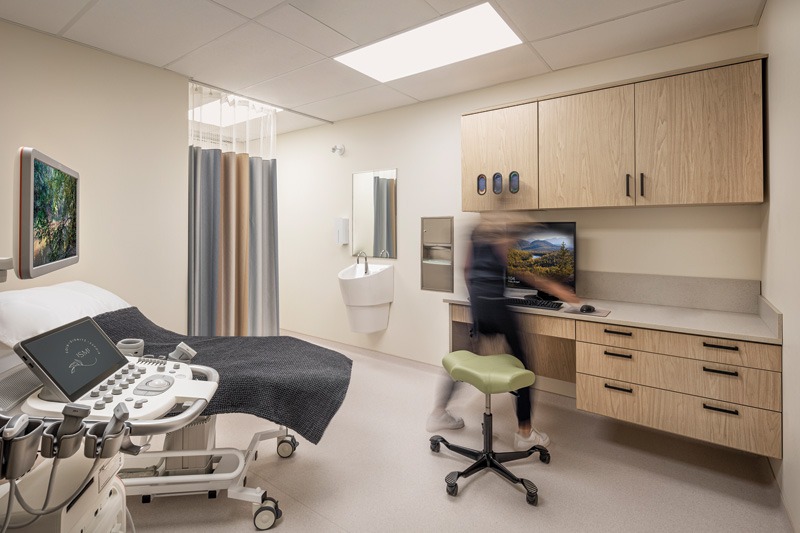
STC and sound insulation
While NRC focuses on absorption, STC measures a wall or floor/ceiling assembly’s ability to block sound from transferring between adjacent spaces.
“Building standards such as LEED, WELL, and Facility Guidelines Institute (FGI) require lab-tested partitions of STC 40, 45, and 50 between most commercial spaces. This assumes the construction extends from the floor to floor or roof. To maintain the intended sound insulation, the ceiling and plenum barrier location vertically above the wall combined must achieve the same level of performance,” says Madaras.
It is important to note that STC values are not additive. Adding another layer of drywall does not automatically result in a proportional increase in STC. Assemblies must be tested as a system to confirm performance.

Absorption versus blocking
Effective acoustic design typically involves a combination of strategies:
- Absorption—Materials such as ceiling panels, fabric systems, and porous products absorb sound and reduce loudness, reverberation, and echo
- Blocking (insulation)—Heavier, multi-layer, and full-height assemblies prevent sound from traveling between spaces
In most commercial environments, sound absorption is achieved primarily through ceiling systems, while walls and partitions provide the necessary blocking through mass and separation.
Materials such as stone wool excel in absorption. Due to the randomly oriented fiber structure, they are designed to capture and dissipate sound energy, reducing ambient noise and improving speech intelligibility. This makes them a powerful tool for creating quiet, comfortable spaces—particularly when integrated thoughtfully into ceiling systems.
Rethinking ceiling systems and acoustic performance
Meeting today’s high sound-absorption requirements can be achieved with a variety of ceiling solutions. Baffles have become a popular solution for open and visually expressive ceilings. Suspended vertically in open plenum spaces, they allow designers to maintain ceiling height, reveal structure, and create dynamic visual rhythm. However, not all baffles deliver the same level of acoustic performance.
Stone wool is not commonly associated with metal baffle systems. However, integrating stone wool into baffle systems is not only possible, but it can also elevate acoustical performance without compromising architectural intent.
The role of stone wool in ceiling performance
When incorporated into baffle designs, stone wool delivers:
- High sound absorption directly into the ceiling product
- Effective control of reverberation and background noise in open plenum spaces
- Proven acoustic performance backed by tested NRC values
Metal ceiling systems that integrate stone wool offer an opportunity to move beyond typical ceiling solutions. Rather than choosing between open ceilings and acoustic comfort, designers can achieve both.
Proven performance, backed by testing
Stone wool is known for its high sound absorption capabilities and reliable performance across a range of applications. Its porous structure enables it to absorb sound effectively, contributing to calm, comfortable environments.
Consistent NRC values, supported by standardized testing, give designers confidence that specified performance will translate into real-world results. This reliability is particularly important in complex commercial spaces where acoustics play a critical role in occupant experience.
Stone wool delivers additional built-in benefits that support safe, healthy, and durable buildings. Its non-organic, moisture-resistant composition does not support mold or mildew growth, helping protect indoor air quality, while its inherently fire-resistant nature provides reliable occupant safety.
Does acoustic performance limit design intent?
One of the most persistent concerns among designers is that acoustical materials will constrain creativity. Bulky panels, limited sizes, or repetitive layouts can feel at odds with expressive architectural visions.
This is where integrating stone wool into baffle systems changes the narrative.
Supporting design flexibility through integration
When stone wool is inserted within baffle systems, designers can:
- Maintain desired depths, heights, and lengths
- Preserve visual rhythm and ceiling articulation
- Achieve clean, intentional design expressions
Rather than adding acoustical treatments after the fact, acoustic performance becomes part of the design language itself. Baffles can be spaced, oriented, and proportioned to support both aesthetics and acoustics—without compromise.
Aligning performance with aesthetics
High-performing acoustics can work seamlessly with the design. With stone wool-integrated baffle systems, acoustics work with the architecture, supporting both function and form.
The result is a ceiling that does more than look good. It actively contributes to occupant comfort, speech clarity, and well-being while preserving the openness and visual interest designers seek.
Designing for the future of acoustic performance
As expectations around occupant comfort continue to rise, acoustic performance will only become more critical. Architects and designers are increasingly challenged to deliver spaces that support health, productivity, and experience while maximizing visual impact.
Design teams can create environments that truly perform by prioritizing performance early, understanding key acoustic metrics, such as sound absorption, sound transmission, and reverberation times, and exploring innovative materials such as stone wool ceiling systems.
Stone wool-integrated baffle systems, as an example, demonstrate that high-performing acoustics and compelling aesthetics are not mutually exclusive. Designers can maintain creative freedom while complying with requirements in standards and delivering the sound control modern spaces demand.
In the end, if people keep asking, “Can you repeat that?”—it is a clear sign the acoustics were not adequately addressed in the design.
Notes
1 Refer to “GSA Public Buildings Service, Sound Matters: How to achieve acoustic comfort in the contemporary office.”
2 See “The Center for Health Design, Sound Control for Improved Outcomes in Healthcare Settings.”
3 See.
Author

Michael Thill has worked in the commercial ceilings industry since 2019, with a focus on metal ceiling systems. After supporting multiple metal ceiling product launches in product management, he now serves as specialty sales district sales manager at Rockfon North America, bringing practical insight into specification, installation methods, and field performance.
Key Takeaways
Good acoustics are now fundamental to occupant comfort, health, and performance, making ceiling design and material selection critical in commercial interiors. As open plans and exposed ceilings become more common, acoustics must be addressed early to avoid noisy, fatiguing spaces. Understanding key metrics such as Noise Reduction Coefficient (NRC) and Sound Transmission Class (STC) helps designers balance sound absorption and privacy. High-performing ceiling systems can control reverberation while preserving visual openness, demonstrating that acoustic performance and expressive architectural design can work together rather than in opposition.
Sign up for our weekly newsletter
Architectural materials and methods delivered right to your inbox

- CSI News and Notes: CSI Foundation’s construction camp; CSI spring exam; and more
- CSI News and Notes: CSI’s credentials; CSI conference theme; and more
- To be specific – CSI supports young AECO professionals
- CSI News and Notes: CSI’s foundation scholarships, national conference, and Crosswalk
- CSI News and Notes: AI’s impact; CSI 2024 conference, and more


Read the Latest Issue