World’s largest satellite terminal opens in China
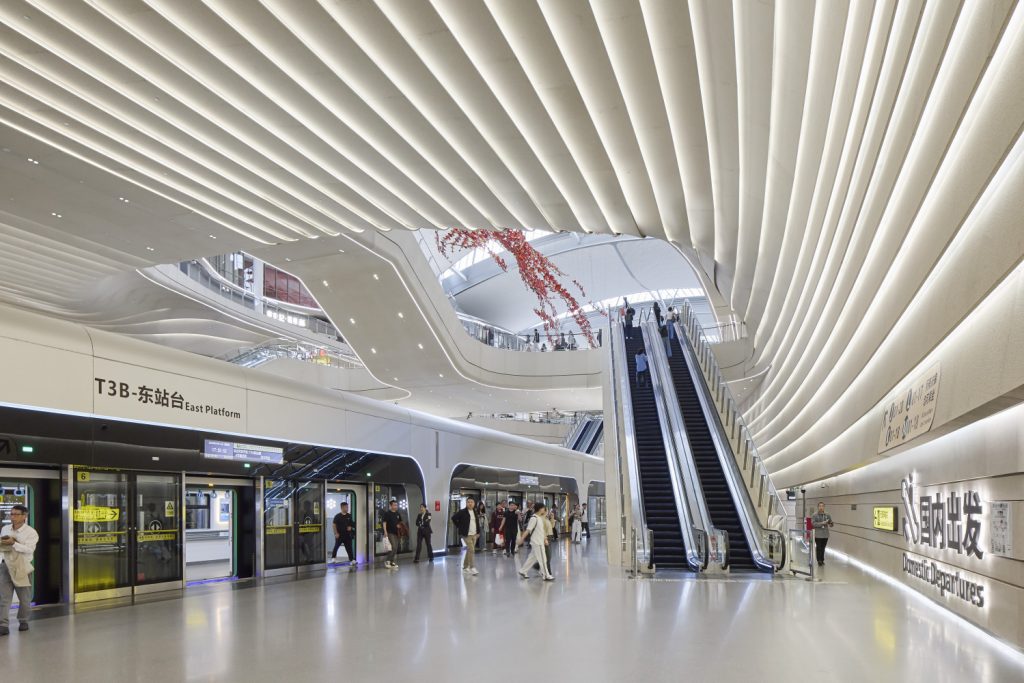
Chongqing Jiangbei International Airport in China has opened a new satellite terminal that ranks as the world’s largest by passenger traffic.
Terminal 3B, designed by Zaha Hadid Architects (ZHA), doubles the airport’s capacity. A satellite terminal is a standalone building detached from the main airport complex. It is surrounded entirely by aircraft parking.
The new satellite terminal adds 35 million passengers per year in capacity. It increases the airport’s total annual capacity to 80 million passengers, 580,000 aircraft movements, and 1.2 million t (1.32 million ton) of cargo.
ZHA organized the terminal around an X-shaped plan. The layout includes 71 aircraft gates with adjacent parking stands. The design supports faster aircraft turnaround and gives the airport flexibility for future operations.
Terminal 3B covers 362,987 m2 (3.9 million sf). It includes four above-ground floors and two basement levels.
Designed to reduce congestion
The terminal’s piers, aprons, and taxiways improve aircraft movement and gate allocation. Terminal 3B connects to Terminal 3A through an underground metro system and airside service lanes.
The design separates departures and arrivals to reduce congestion during peak periods. The terminal also includes outdoor terraces and courtyards on its north and south sides.
The roof form draws on Chongqing’s mountain-and-river landscape. Skylights bring daylight into the terminal.
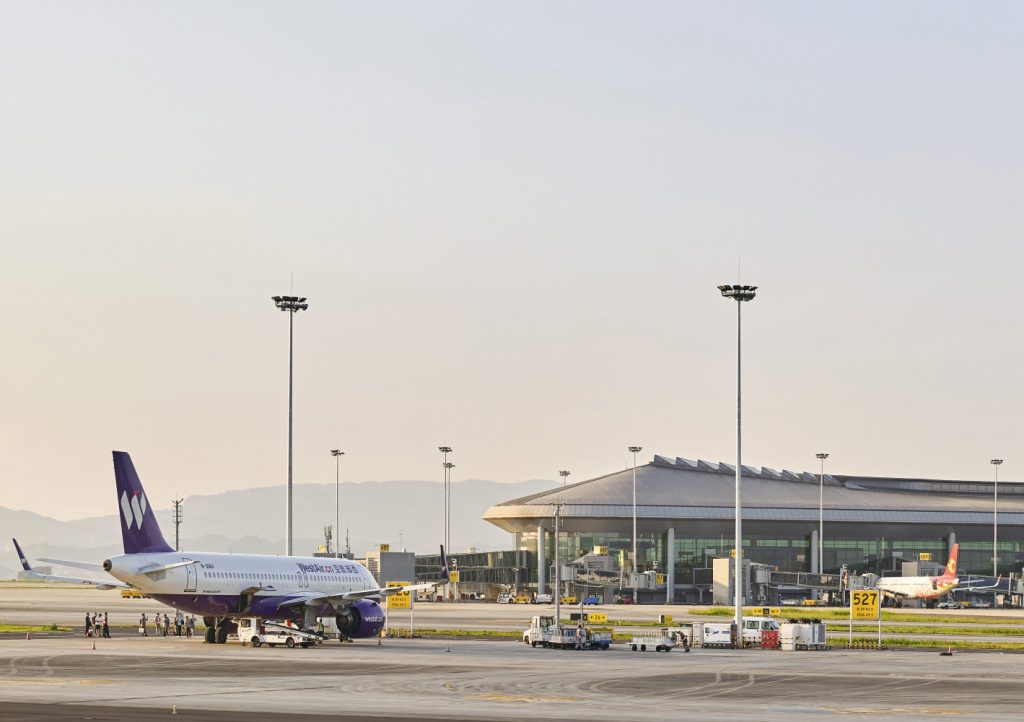
The building also uses systems designed to reduce energy use. In Chongqing’s humid subtropical climate, Terminal 3B operates with a zero-carbon air-source heat system that supports hybrid natural ventilation. According to the project team, the system avoids direct emissions from traditional boilers that would have used 1.4 million m3 (49.44 million cf) of natural gas each year.
The terminal uses locally sourced materials and also includes thermally dimming glazing that responds to temperature and sunlight to provide shading.
Sign up for our weekly newsletter
Architectural materials and methods delivered right to your inbox

- CSI News & Notes: CSI’s impact earns official recognition; celebrate leaders, mentors, and innovators; and more
- CSI News and Notes: CSI spring certification exams open; scholarships available; and more
- CSI News & Notes: CSI MSR heading to San Diego; spring certification exams open; and more
- To Be Specific: Why CDT Should Be Your First Move
- CSI News & Notes: CSI Fellows share member benefits; and a New Year’s Resolution to keep
Popular Articles
-
1
-
2
-
3
-
4
-
5
Read the Latest Issue