Multi-hazard envelopes: Engineered for hurricane zones, applied nationwide
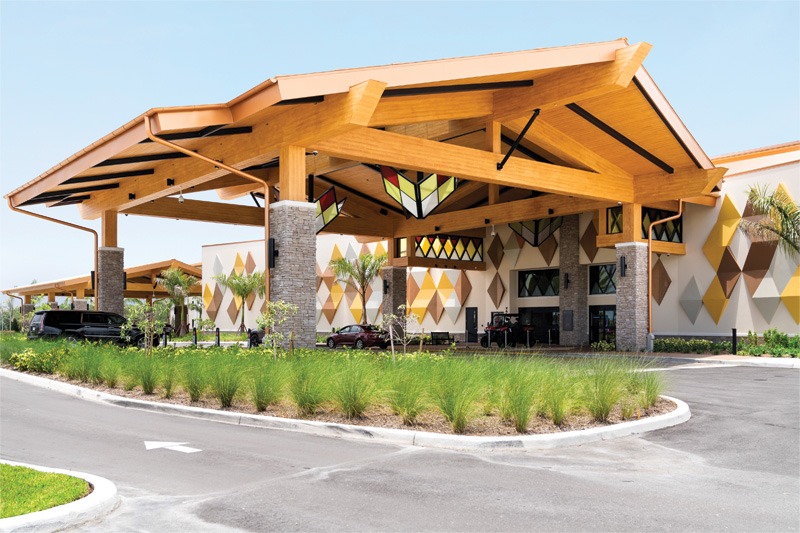
Between 2016 and 2025, the United States experienced 29 hurricanes or tropical storms across those hurricane seasons. The cumulative damage from these storms is estimated at $820 billion.1 These losses underscore the importance of rigorous building codes in High Velocity Hurricane Zones (HVHZ).
Historically, HVHZ designations applied primarily to the wind-exposed coastal regions of South Florida. Recently, however, a shift has occurred. There is evidence that architects, developers, and building owners are applying HVHZ-level systems and standards in regions far from coastlines to exceed baseline code requirements and improve overall envelope resilience in response to increasing severe weather risks.² While these assemblies are not intended to replace tornado or safe-room design governed by standards such as FEMA P-361, Safe Rooms for Tornadoes and Hurricanes: Guidance for Community and Residential Safe Rooms, they can enhance the performance of the building envelope under extreme wind and impact conditions. These assemblies were designed to meet the Miami-Dade NOA and/or Florida Building Code (FBC) requirements, not the local building codes outside of Florida.
This trend reflects a strategic response to evolving climate patterns, rising expectations for resilience, and tightening insurance requirements. This article dives into how these robust systems work and why they are ideal for regions and zones far from the Florida coast.
What defines an HVHZ-rated facade assembly?
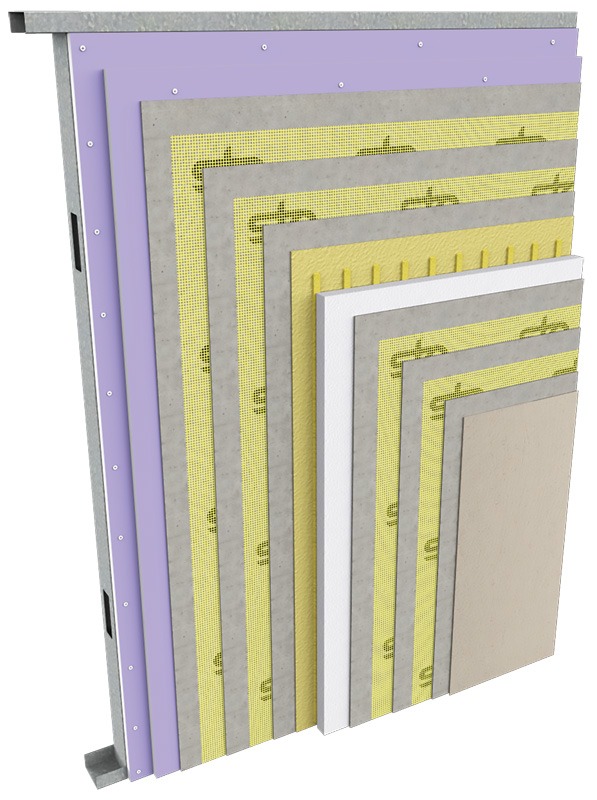
An HVHZ-rated facade assembly, whether a ventilated rainscreen, EIFS, stucco system, or prefabricated panelized wall, must pass the industry’s most demanding performance tests. These evaluations simulate the combined stresses building envelopes experience during extreme weather events and include:
- Large missile impact testing—A 4.1 kg (9 lb)
2×4 timber projectile is propelled at a speed of 15.24 m/s (50 fps) - Cyclic pressure loading—The system is subjected to thousands of cycles of positive and negative wind pressure to simulate the “push-pull” effect of a sustained storm.
- Static and dynamic water penetration—High-velocity water is sprayed at the assembly
while under extreme pressure to ensure no moisture breaches the air-and-water-resistive barrier (AWB).
Designing these resilient envelopes requires a holistic strategy that addresses extreme wind pressures, wind-driven rain, continuous water management, and debris impact.
Some key features of an HVHZ system include:
- Tested facade assemblies, including rainscreen, EIFS, and stucco systems.
- Fire-resistant wall assemblies evaluated under FBC protocols.
- Both field-applied and prefabricated
facade solutions. - Cladding designed to resist high winds, water intrusion, and windborne debris.
These systems are among the industry’s most rigorously tested facade assemblies. Understanding where to use them is essential, and there are many places where they are considered beneficial.
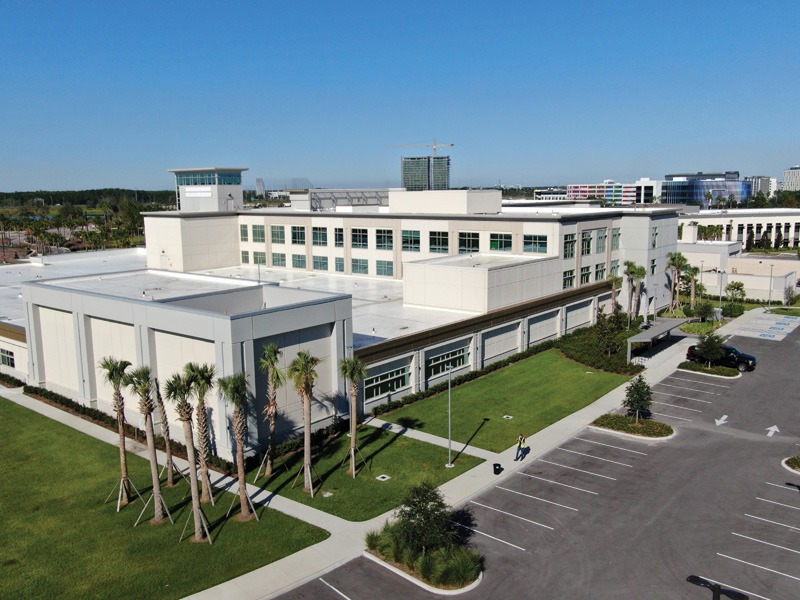
Where and why these systems are used beyond Florida
HVHZ standards were born of hurricanes. However, high-velocity winds and driving rain are increasingly common in other types of extreme weather across the country. Here are a few examples:
Tornado Alley
States such as Oklahoma and Kansas increasingly experience “derechos,” long-duration, straight-line windstorms and microbursts that can exceed 161 km/h (100 mph), speeds once thought to be exclusive to the coast. HVHZ-rated systems provide a tested safety factor that standard rainscreens cannot match.
Wind damage is often associated with direct pressure on the facade. However, significant damage during high-wind events in the Midwest or Great Plains is frequently caused by negative pressure (suction) on the leeward side of the building. These conditions can overlap with regions identified by the International Building Code (IBC) as Windborne Debris Regions (Zones 1–4), where impact resistance and attachment integrity become critical design considerations.
- Standard systems may see cladding panels “sucked” off the track.
- HVHZ systems are engineered with reinforced subframes and clips specifically designed to resist this suction, keeping the building’s
“skin” intact.
By specifying HVHZ in these areas, engineers effectively remove the “weakest link” in the building envelope.
‘Wind-driven rain’ in the interior
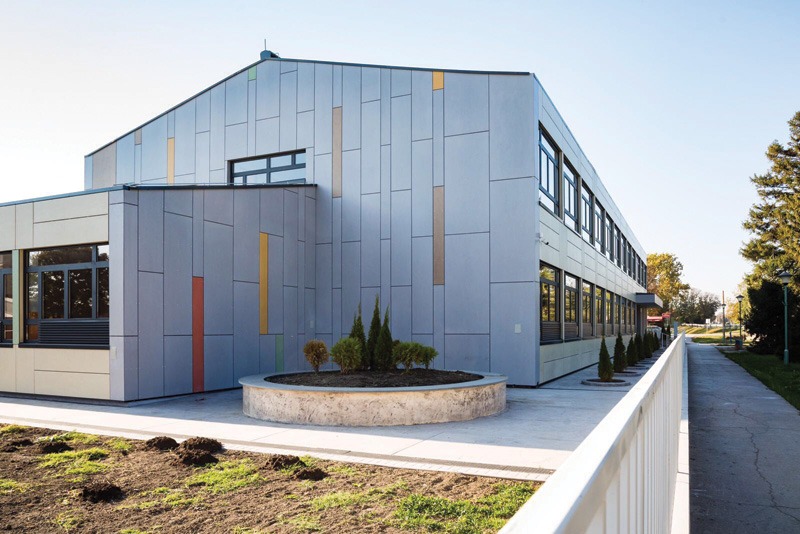
In regions such as the Ohio Valley and the Northeast, sideways rain has become a common characteristic of summer storm seasons. Traditional masonry or siding assemblies without proper drainage planes become saturated during prolonged wind-driven rain events, increasing the risk of moisture intrusion and mold growth. Pressure-equalized facade assemblies, such as ventilated rainscreen systems, use a larger cavity behind the cladding to help balance air pressure and reduce the force driving water into the wall assembly. Drained EIFS systems manage moisture differently, incorporating a narrow drainage space that allows incidental water to escape and dry before reaching the structural wall. While the mechanisms differ, both approaches are designed to improve moisture management and protect the integrity of the building envelope. Since the system is built to withstand hurricane-force water entry, it effectively manages a standard Midwestern thunderstorm with ample safety margins.
Wind-driven rain from supercell thunderstorms can force water into building envelopes. The pressure-equalized design of an HVHZ rainscreen ensures that even if water penetrates the outer cladding, the internal air gap neutralizes the pressure, allowing the water to drain harmlessly away.
Hail-prone regions
In a hail-prone region such as Colorado or Texas, an HVHZ rating provides substantial hail resistance. Systems capable of withstanding large-missile impact testing typically demonstrate substantial resistance to hail that can damage conventional siding systems. However, these assemblies intend to maintain the structural integrity of the building envelope and protect occupants during severe weather events. While facade systems designed for HVHZ performance can reduce the risk of catastrophic failure, aesthetic damage to exterior finishes may still occur during significant hail, hurricane, or tropical storm events.
Beyond projectile resistance, the behavior of facade materials under extreme loading conditions also influences envelope resilience. Ductile, multi-component assemblies, such as ventilated rainscreens with flexible attachment mechanisms, can absorb and redistribute energy during debris impact or cyclic wind loading. In contrast, brittle cladding materials may crack or shatter under concentrated forces. Compartmentalized cavity design and reinforced substrates further enhance performance by maintaining attachment integrity and controlling pressure equalization during severe storm events.
The insurance factor
Insurance requirements are a major driver behind the adoption of HVHZ-level performance standards. With global natural disaster losses exceeding $180 billion annually, insurance companies are seeking “verifiable comprehensive performance.”
Property owners in non-coastal areas are finding that complying with HVHZ standards can lead to significantly lower premiums. According to recent industry reports, every $1 invested in meeting these high-performance codes can yield up to $11 in long-term savings by reducing storm damage and maintenance costs.3 In some cases, lenders are making HVHZ-grade cladding a prerequisite for financing large-scale commercial developments to mitigate financial exposure.
Thermal efficiency and moisture management
Beyond wind resistance, the “over-engineering” beyond code minimums of HVHZ systems offers secondary benefits that are highly desirable in any climate.
- The latent heat effect—In hot climates, HVHZ-rated ventilated rainscreens allow moisture-laden air to vent to the outside before it can vaporize and trap latent heat within the wall. This reduces the cooling load on HVAC systems, enhancing energy efficiency by up to 10 percent.4
- Freeze-thaw protection—In colder climates, freeze-thaw cycles pose a major durability challenge. HVHZ-level assemblies incorporate advanced drainage and drying strategies that help maintain a drywall cavity, reducing the risk of ice expansion that could damage cladding or substrate materials.
Passive cooling and ‘future-proofing’
Architects are increasingly adopting a “future-ready” design philosophy. Modern buildings today are built to last 50 to 75 years. Given the unpredictability of climate patterns over the next half-century, specifying an HVHZ system is seen as a form of “climate adaptation.” It provides a structural buffer against emerging climate hazards, such as more frequent flooding and extreme heat, which were not traditionally addressed in local building codes.5
The gold standard for durability
Looking toward the 2027 and 2030 code cycles, many experts believe the distinction between “coastal” and “inland” requirements will continue to blur. High-performance facade assemblies, once reserved for coastal areas, have become the baseline for structures to perform for decades in an increasingly volatile climate. Studies from the National Institute of Building Sciences (NIBS) have found that every $1 invested in hazard mitigation can yield up to $6 or more in long-term savings through reduced damage, maintenance, and operational disruption.6
For specifiers, these systems illustrate how integrated envelope assemblies, tested under standards such as ASTM E1886, Standard Test Method for Performance of Exterior Windows, Curtain Walls, Doors, and Impact Protective Systems Impacted by Missile(s) and Exposed to Cyclic Pressure Differentials, ASTM E1996, Standard Specification for Performance of Exterior Windows, Curtain Walls, Doors, and Impact Protective Systems Impacted by Windborne Debris in Hurricanes, and Miami-Dade protocols, can provide a higher level of risk mitigation for projects exposed to severe wind, water, and impact events.
The migration of HVHZ-rated envelope systems from coastal regions to inland markets represents a broader evolution in facade design. By treating the building envelope as an integrated performance system rather than a simple exterior wall, architects and engineers can deliver structures capable of withstanding extreme wind, water intrusion, and impact events while improving long-term durability and resilience.
As climate pressures and performance expectations continue to evolve, envelope systems designed for the most demanding conditions are increasingly informing best practices for resilient building design across
the country.
Notes
1 See Becker, Beverly. “Understanding HVHZ: A Comprehensive Guide for Architects and Contractors.” September 13, 2024.
2 Read more at Erdman, Jonathan. “The Staggering Price of US Hurricanes Since 2016: Over $800 Billion.”
May 29, 2025.
3 Refer to K2M Design. “Building for Insurability, Resilience, and Housing Affordability.” 2025–2026.
4 Read more at Sto Corp. “Designing for Extreme Weather: HVHZ Systems Comparison.” 2025.
5 See World Bank. “Stronger Building Codes for a Safer, More Resilient Future.” 2025.
6 Refer to the National Institute of Building Science (NIBS). nibs.org/wp-content/uploads/2025/04/mitigationsaves2019_complete.pdf
Resources
ASTM E1886, Standard Test Method for Performance of Exterior Windows, Curtain Walls, Doors, and Impact Protective Systems.
ASTM E1996, Standard Specification for Performance of Exterior Windows, Curtain Walls, Doors, and Impact Protective Systems Impacted by Windborne Debris
in Hurricanes.
FEMA P-361, Safe Rooms for Tornadoes and Hurricanes: Guidance for Community and Residential Safe Rooms.
Insurance Institute for Business & Home Safety (IBHS): FORTIFIED Commercial Standards (2025 Update).
Key takeaways
Modern HVHZ-rated facade assemblies—ventilated rainscreens, EIFS, stucco systems, and prefabricated panelized walls—are increasingly specified well beyond coastal hurricane zones to address tornadoes, wind-driven rain, and hail. These tested systems give architects and building owners a verified safety margin against extreme wind, water intrusion, and debris impact, along with secondary gains in thermal efficiency, insurance cost, and long-term durability.
Author

Karine Galla is director of product management for Sto Corp. She has more than 20 years of experience in product marketing in EIFS, stucco, air and moisture barriers, and other materials. She has a master’s degree from the University of Lyon, France. She is multilingual and holds the Association of the Wall and Ceiling Industry’s (AWCI) EIFS Doing it Right and Building Envelope Doing it Right certifications, as well as the ISO Internal Lead Auditor certification from Georgia Tech.
Sign up for our weekly newsletter
Architectural materials and methods delivered right to your inbox

- CSI News & Notes: CSI’s impact earns official recognition; celebrate leaders, mentors, and innovators; and more
- CSI News and Notes: CSI spring certification exams open; scholarships available; and more
- CSI News & Notes: CSI MSR heading to San Diego; spring certification exams open; and more
- To Be Specific: Why CDT Should Be Your First Move
- CSI News & Notes: CSI Fellows share member benefits; and a New Year’s Resolution to keep
Popular Articles
-
1
-
2
-
3
-
4
-
5
Read the Latest Issue