
Balancing performance and preservation: Strategies for historic metal window rehabilitation in public buildings
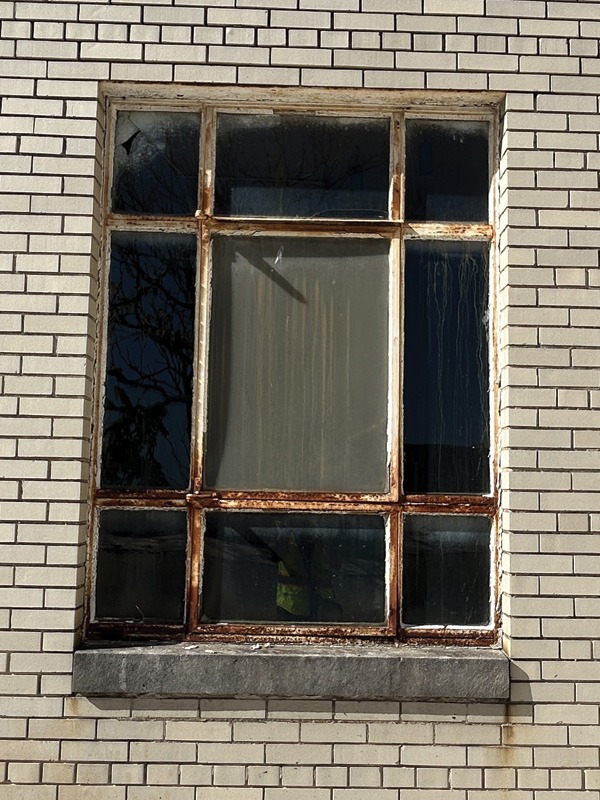
Historic public-sector buildings are tangible aspects of a community’s cultural and architectural heritage, offering a sense of identity and continuity in an ever-changing built environment. Maintaining these structures for future generations requires careful stewardship, particularly when it comes to the rehabilitation of window assemblies. Historic window composition, craftsmanship, and materiality reflect the period of construction and the architectural style of the building; however, they do not typically perform well by modern criteria, such as thermal or condensation resistance. Further, the introduction of tightly controlled interior conditions through HVAC systems has fundamentally changed the criteria in which windows must operate. As historic windows age and degrade, the need to meet increasingly stringent performance standards will present owners with a difficult decision about their windows: to repair or replace them.1
This article explores factors that affect the window rehabilitation decision-making process including historical importance, cost, and modern performance requirements imposed on old building stock, especially that of governmental or civic buildings. This article outlines approaches for successful employment of either restoring, and/or supplementing, or replacing historic windows. The authors rely on past works by others, insight from contemporary practicing architects, and experience practicing in the field of enclosure preservation.
Window rehabilitation project goals
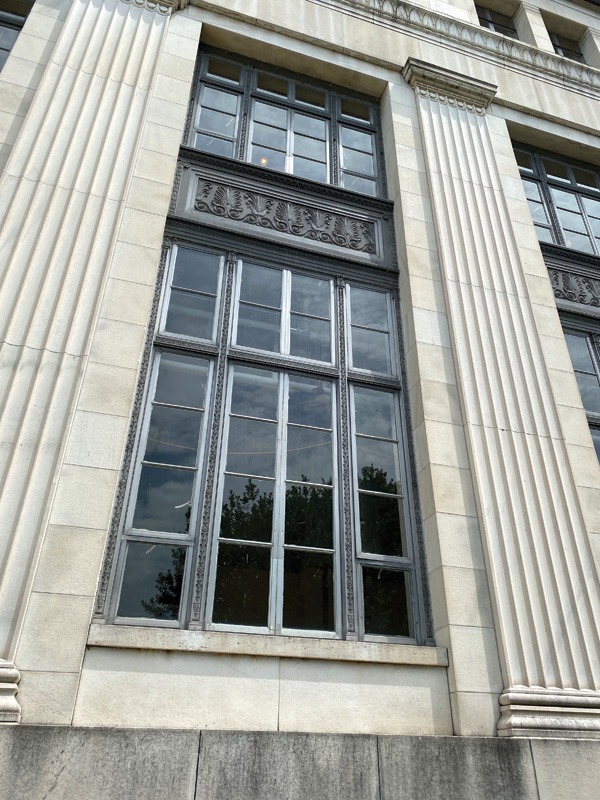
Rehabilitation of historic windows has a myriad of goals, such as restoring functionality, maintaining appearance and architectural authenticity, improving thermal performance, or air-/watertightness of the assembly. These goals often compete with one another.1 But in most cases, maintaining architectural authenticity is paramount. Therefore, it is critical for the project team to determine a hierarchy of window rehabilitation project goals early on.
Quantification of rehabilitation goals with associated performance metrics are also subject to debate and judgment of the designer. Charles Sparkman of Quinn Evans, a multidisciplinary architecture firm with expertise in historic preservation, points out, “it is challenging to quantify window rehabilitation with a performance metric, but instead, approaching the project with the mindset of leaving the window assembly in better condition than it was, allows for improved resiliency of the overall system.”2 To this end, the following list compiles common goals and considerations for designers of historic window rehabilitation projects:
Building code requirements
Building codes establish minimum requirements that a window system must meet. The 2024 International Existing Building Code (IEBC) includes detailed requirements that identify the required improvements to existing building elements, spaces, and structural systems based on the level of alteration. In the 2024 IEBC, sections 708.1, 809.1, and 907.1 include “Alteration Levels One through Three,” respectively, to comply with the energy requirements listed in the International Energy Conservation Code (IECC),3 but the IECC applies only to new construction. Historic projects often take the exception included in 2024 IECC section R501.5, which allows a report submitted to the code official and signed by the owner, a registered design professional, or a representative of the State Historic Preservation Office (SHPO), or the historic preservation authority having jurisdiction (AHJ), demonstrating that compliance with the provisions listed in IECC would threaten, degrade, or destroy the historic form, fabric, or function of the building.4
Historic significance
The determination of historic significance will drive a rehabilitation project and inform the decision-making process for selecting the appropriate means to rehabilitate a window. Project teams must coordinate with the appropriate review board to understand the historic significance of the building and the preservation approaches that remain true to its character.
Historic Review Boards typically oversee any changes to historic places with respect to the building’s original character, materials, and architectural significance. While specific requirements and authorities vary by jurisdiction, governmental bodies, such as SHPO, may be involved during historic fenestration rehabilitation projects.
Other governmental entities and institutional owners may have their own review bodies that oversee historic rehabilitation projects. For instance, the General Services Administration (GSA) is an agency that helps manage and support the basic functioning of federal agencies and has its Center for Historic Buildings, which provides guidelines that any changes that will permanently “alter or remove historic features or materials require a compelling justification supported by a system and building-specific analysis that take into consideration preservation goals as well as window performance goals.”1
Historic Review Boards often characterize historic significance by the exposure and profile (i.e. amount of public attention) of the building. Ellen Wright of Arcadis, a multidisciplinary architecture firm with extensive experience in federal and institutional works, says, “the determination of historic significance depends on the contribution of the window to the building aesthetic, as well as its exposure to the viewing public.”5 For instance, public and civic works are often high-profile buildings in highly public places and therefore require significant investments in preservation efforts and will also receive a high degree of scrutiny. The permissible amount of intervention on historic windows will significantly affect selection of an overall rehabilitation approach.
Cost
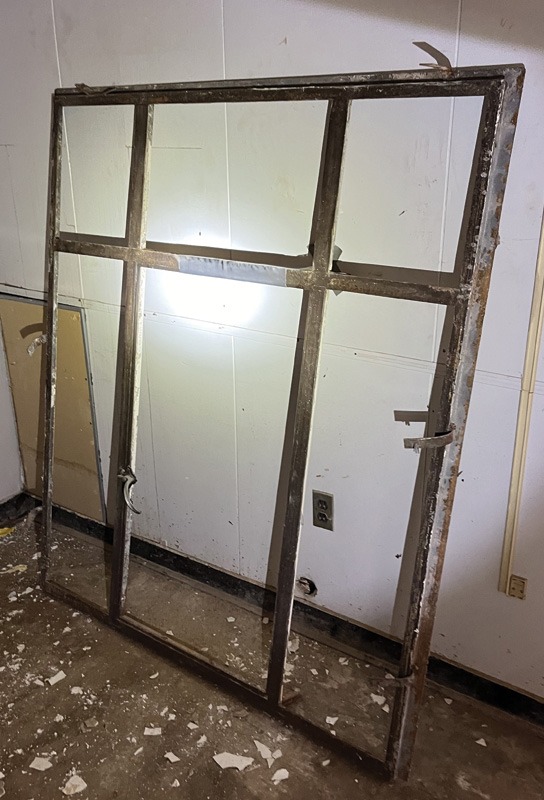
The degree of customization of window units, rarity of materials used, and level of craftsmanship required to restore the windows all impact the cost of window rehabilitation. The extent of restoration can make the cost of restoration more expensive than the cost of replacement. Wright notes that “second to historic preservation motives, cost is often a leading decision maker in window rehabilitation approach.”5
Removal of hazardous materials
Building owners often include the abatement and removal of hazardous materials (e.g. asbestos, polychlorinated biphenyls [PCBs], lead-based paint, etc.) as part of a window rehabilitation project. Windows installed before the 1980s may contain lead-based paint, which can produce toxic dust when disturbed. Additionally, sealants may contain asbestos or PCBs, both of which are carcinogens.6 Removal of these hazardous materials is vital to prioritize occupant safety; however, the removal does inherently change the existing fabric of the window assembly.
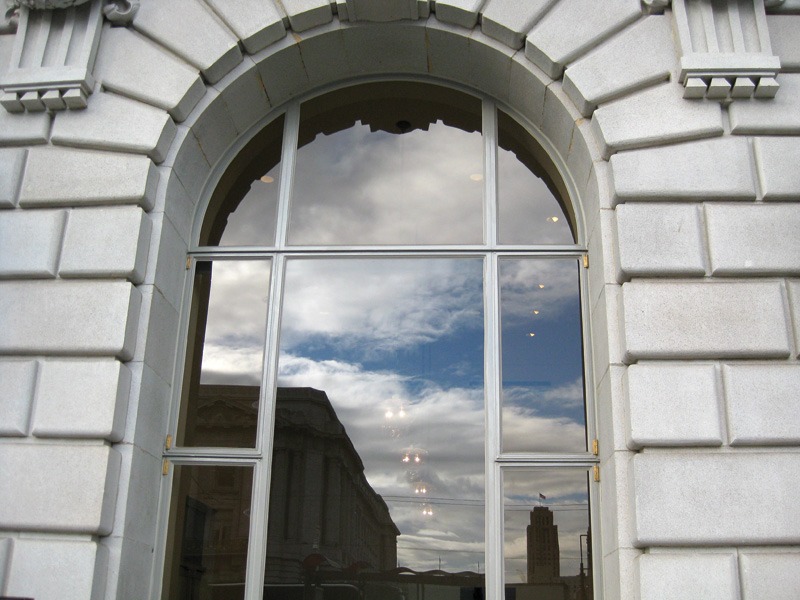
Thermal performance
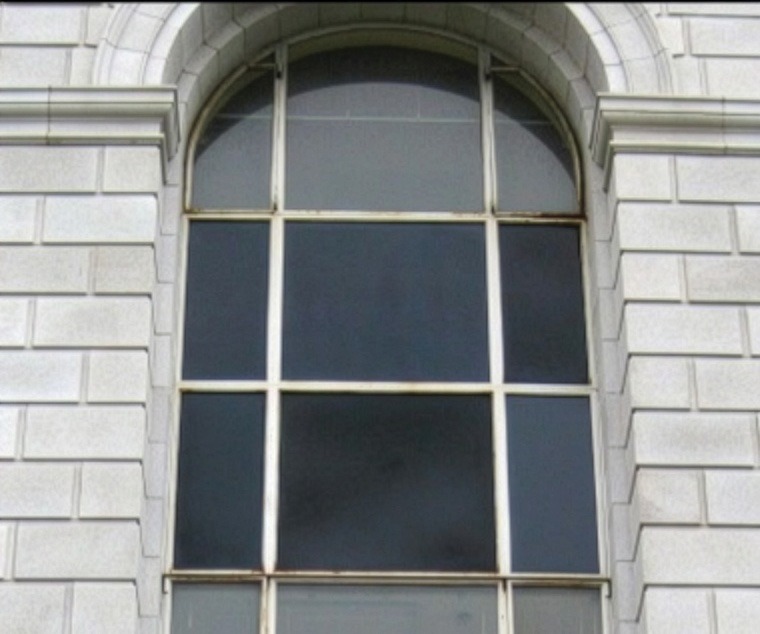
Historic metal-framed windows did not have available modern thermal break technology, which uses low-conductivity plastics to reduce thermal loss through window frames. Thermal breaks were not consistently incorporated into window products until the 1990s,7 so windows of older vintage experience poor thermal performance and may suffer from condensation depending on the climate of the project. Meeting contemporary prescriptive thermal performance requirements in the IECC is often an unattainable goal due to the direct conflict with the use of non-thermally broken steel or aluminum window frames. For example, steel-framed windows, given their strength, allow for large glazing panes and thin frame profiles that cannot be improved thermally without alteration of appearance.6
The project team should develop attainable targets for thermal improvements and condensation resistance. Prescriptive requirements in IECC (e.g. R-values, U-values, solar heat gain coefficient, visible light transmission, etc.) may be used as a starting point for project performance goals, but are reduced in deference to maintaining historic appearance and materials.
For rehabilitation projects that include scope broader than window rehabilitation alone, poor energy performance of windows may be offset, in part, by relying on other improvements, such as the following:
- Use of better insulating materials that will remain concealed elsewhere on a broader rehabilitation project, such as opaque walls (trade-off option)
- Replacing other systems with higher-performing versions (mechanical, lighting, electrical, etc.) if pursuing a performance-based compliance path with energy code
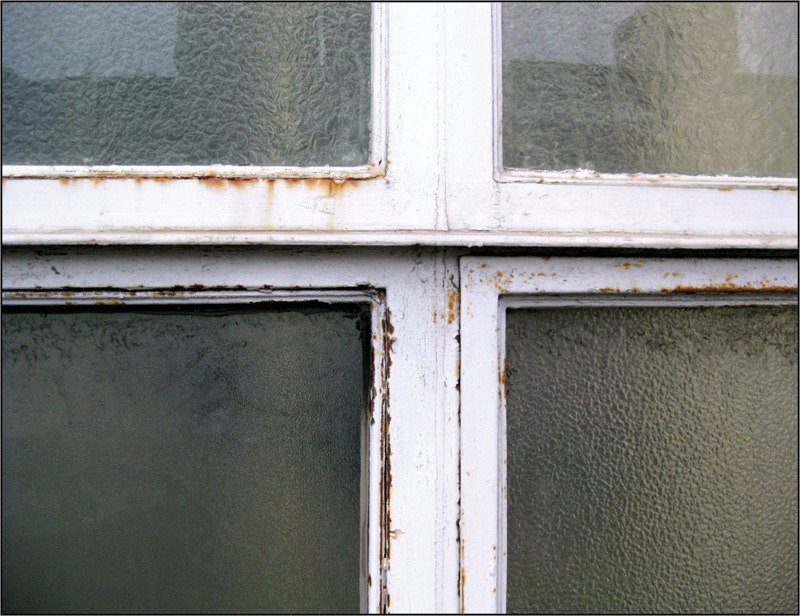
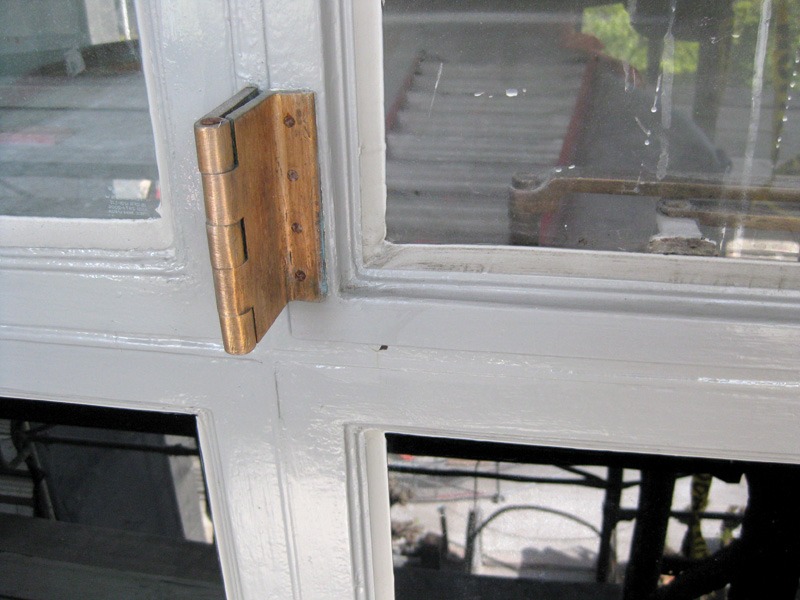
Air and water penetration resistance
The air and water penetration resistance of windows prevents the passage of ambient air and precipitation past the building enclosure, which can cause degradation of materials, mold growth, energy loss, or other detrimental consequences. AAMA/WDMA/CSA 101/I.S.2/A440-22 describes optional performance class and grade rating requirements for new or replacement factory-fabricated window assemblies, for which windows qualify based on a series of tests. Although not directly applicable to in-situ window products, these testing standards may be used as a benchmark for assessing the air and water penetration performance of existing historic windows. Historic windows often do not meet contemporary performance standards.8 Understanding owner expectations for air and water penetration resistance is key to developing a window rehabilitation program with realistic performance improvements. For instance, restoring a window assembly in place may return it to its originally installed performance, whereas adding an interior storm or replacing the window product with a modern replica will likely exceed the existing assembly’s performance.
Security requirements
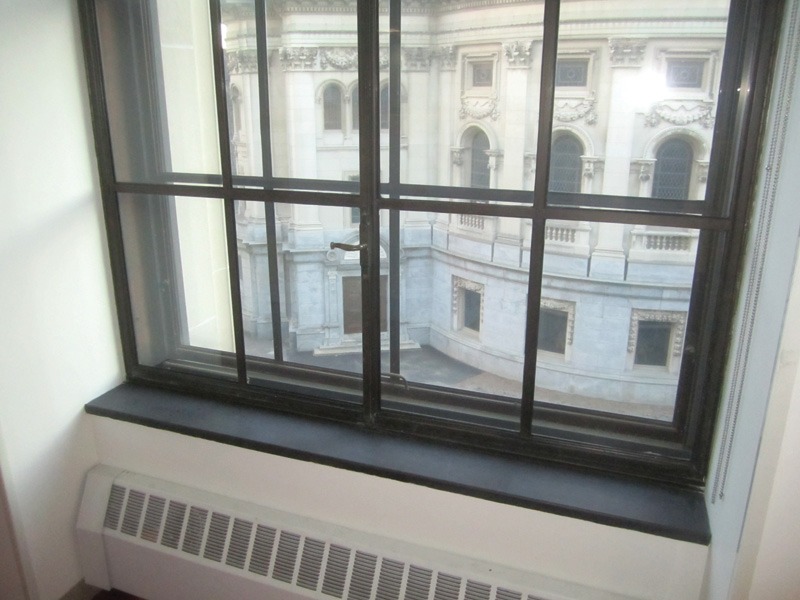
Jurisdiction-specific security standards determine the level of physical security requirements (e.g. blast/ballistic requirements) for fenestration (e.g. UL 752 rating, Facility Security Level [FSL]). These standards classify performance levels based on how the window assembly responds to physical threats, ranging from no glazing breakage to full glazing failure with debris projection. Examples of blast performance interventions include replacement windows, interior window film, and interior storm windows. Depending on the nature of the security requirements, blast/ballistic requirements can take precedence over all other performance goals, including preservation efforts, in order to protect occupants. Intervention to increase resistance to ballistic and blast threats almost always requires removal and alteration of the existing window and its support structure. However, it must also be aesthetically and functionally tenable.
Other considerations
Window rehabilitation design may also be impacted by additional performance requirements, including but not limited to expected service life, ongoing maintenance requirements, acoustic performance, and fire/life safety requirements.
Historic window rehabilitation approaches
Once a project teams establishes design goals and parameters for rehabilitating historic windows, the project can then consider the means of accomplishing them while minimizing changes to historic appearance:
- Restoring the existing windows
- Supplementing with interior storm windows
- Replacing the existing windows with new high-performance historic replica windows
Each project will have its own complexities and considerations, with no universal rules for selecting a rehabilitation approach applying to all scenarios. However, determining means of code compliance and understanding the historic significance of the windows and building is a critical first step to selecting a window rehabilitation approach.
Restoring existing windows
Historic materials and building components have immense value, and thus, many preservation professionals decide to preserve them. Sparkman points out, “Historic objects have value, and we should carefully consider their re-use before their disposal.”2 Such a conclusion will lead preservationists to restore windows either in place or offsite whenever feasible. Restoring in place minimizes disturbance to the original work but limits the scope of intervention possible. Restoring offsite in a shop may allow for greater modification, particularly regarding window surrounds (e.g. flashings) that will be concealed permanently after reinstallation of the restored windows, but risks greater disturbance to historic materials.
Window restoration, whether in place or in a factory, typically does not provide improved thermal performance, enhanced air and water penetration resistance, or increased physical security beyond the original performance.
Restoring windows is a specialized trade. Selecting an experienced restoration contractor with experience on similar projects, using similar materials, and of a similar vintage, is key to project success. The time and expense of either in situ restoration or factory restoration are likewise important considerations, as restoration in place can be a laborious and meticulous process. Conversely, removing and shipping windows to a specialized restoration contractor far from the project site requires great care.
- Restoring in place—Windows experiencing significant degradation may be too fragile or the cost may be too prohibitive to remove and restore offsite.6 Restoring in place presents a lower risk of damage to the original material. In other cases, removal of the window to an offsite facility may not provide a significant advantage over restoration in place, due to limitations on altering window surrounds. The decision to restore in place may also be influenced by adjacent interior finishes that are historic and must also be preserved. If so, in-place window restoration may be the only feasible option.
Without removing the window, improving the air and water penetration resistance of the system is challenging and incorporating new flashings is infeasible. Expectations for restored performance should approximate original window performance.
- Restoring offsite—Restoring in a factory allows greater quality control through environmental regulation, a clean working environment, and consistent oversight. Factory restoration is an attractive option for windows that must be preserved but are more manageable to remove (i.e. smaller sizes, single windows in punched opening, etc.), have less unique geometry, or have flexibility for smaller accessory components to be replicated if needed.
Restoring windows in a factory is similar to restoring them onsite in that the air/water penetration resistance of the window will not improve beyond its original performance. However, removing a historic window allows for the improvement of the window surrounds and the incorporation of new perimeter flashings, potentially allowing for better overall water management. For mass masonry walls, this approach could include establishing a watertight perimeter using a combination of metal flashings and liquid-applied materials. In rainscreen assemblies, this approach could include reestablishing continuity of the existing waterproofing and air barrier materials. Removal of the windows also provides an opportunity to repair adjacent wall assembly components, including repair or modification of window structural anchorage.
Supplementing existing windows with interior storm windows
Supplementing an original historic window assembly with interior storm windows can help achieve physical security requirements and improve enclosure performance while preserving the original window materials. Below are the design considerations for adding interior storm windows.
- Historic significance—Interior storm windows can be nearly invisible from the exterior and are particularly effective when the exterior building fabric must be preserved without compromise. However, the impact on interior appearance and use is significant.
- Physical security requirements—Interior storm windows, frames, and glazing are designed by specialized manufacturers to meet blast/ballistic ratings, and a blast engineer may use the combination of exterior historic glazing, surrounds, attachment, and interior storm to function compositely to meet physical security loads.
- Structural considerations—Interior storm windows will add significant weight to the window assembly, and analysis of the surrounding support conditions is required to verify the suitability of their addition. If required, new additional interior steel framing can be added to help support these supplemental loads. Depending on the acceptable limit of disturbance (e.g. influence of historic interior finishes), added structural support may be unacceptable, thereby making the addition of interior storm windows unacceptable as well.
- Thermal performance—Interior storm windows can improve thermal performance of the overall assembly through the introduction of new, contemporary glazing; however, the overall degree of improvement will depend on the original orientation of the historic window, such as attachment to conductive elements of the frame. Thermal performance may be limited by a venting strategy that circulates air past either the historic or interior storm window product, thereby discounting the thermal resistance contribution of a part of the assembly.
- Air and water management—Interior storm windows are typically rated per FGIA/AAMA 101 and will carry rated performance class and grade. As such, they can be relied upon to bring the assembly up to contemporary standards for air and water penetration resistance, both of which have become increasingly stringent in building codes.
- Condensation management—Interior storm windows will block the distribution of interior air and heat by the mechanical system to the original historic window surfaces. For windows in cold climates, condensation in the interstitial space between the storm and historic window is inevitable. The project team may choose to vent the interstitial space to either the interior or exterior to reduce condensation through evaporation. The decision to vent interstitial spaces is largely dependent on the performance of the restored exterior window (i.e. if the restored window is a barrier system or drained system), climate zone, and accessibility for cleaning. Direction of venting depends on the climate zone, mechanical conditioning scheme, and access for cleaning.
Adding interior storm windows may tempt project teams to reduce the scope of refurbishment of the original historic window to improve air and water penetration resistance. If left untreated, the historic window will continue to allow the passage of air and moisture into the window surround and the newly formed interstitial space. Leaks through the historic window may have a more pronounced effect on the enclosure as the interior storm limits drying to the interior, and any confined air and moisture may accelerate deterioration of surrounding materials. A comprehensive repair program that includes interior storm windows should also include commensurate repairs to the original historic windows.
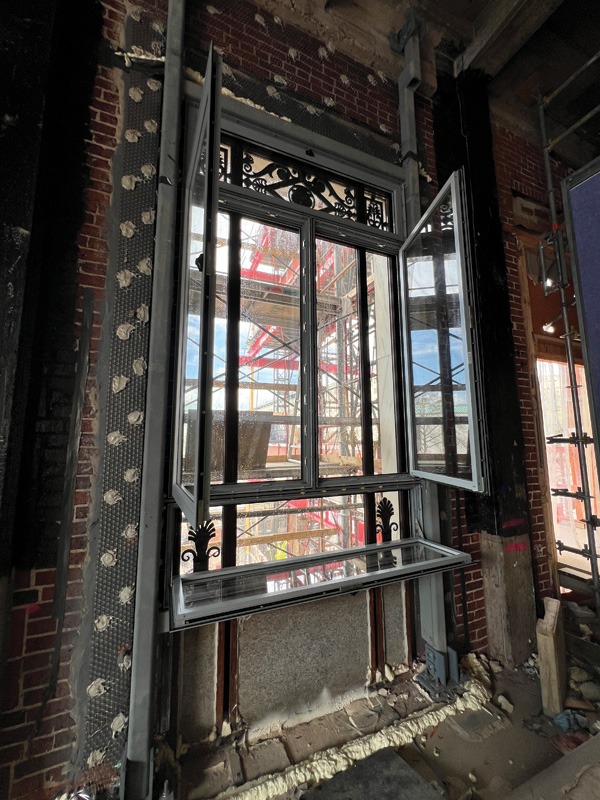
Replacing existing windows with new high-performance historic replica windows
Some windows may be deteriorated beyond repair, making replacement the only viable option. For other projects, replacing existing historic windows with new high-performance historic replica windows will improve the energy performance of the assembly and provide opportunities to retrofit the existing structure to meet project goals, including blast/ballistic requirements. However, replacement windows will inevitably modify the historic fabric. Sparkman notes, “Sometimes other performance requirements prevail based on future use of the building that would compete with or preclude preserving windows in place and project teams may be led to replicate the historic window,”2 particularly if the windows include fewer character defining features (e.g. wider site lines, greater system depth, less ornamentation) that are not overly challenging to reproduce by modern fabricators.
Below are design considerations for replacing existing windows with new high-performance historic replica windows.
- Historic significance—Replica windows take the place of the original historic material. For preservation projects where the materiality, not just the appearance, of the window is critical, replica windows may be unsuitable. For projects where replicating the historic window appearance without preserving the original material is acceptable, particularly in cases of dilapidated windows, replica windows are an attractive option.
- Physical security requirements—Replica window frames and insulated glazing units (IGUs) can be manufactured to meet blast and ballistic requirements. The structural capacity and condition of the adjacent construction will dictate whether supplemental interior steel framing is required to support added loads. Some specialized window fabricators strive to match existing frame geometry while incorporating internal reinforcement (depending on the original material and spatial constraints) and enhancing attachment to surrounding structural elements.
- Thermal performance—New replica windows can greatly improve thermal performance over existing conditions with the inclusion of thermally improved frames and IGUs that meet IECC prescriptive requirements.
- Improved air and water management—Modern replica windows improve air and water penetration resistance using modern window assemblies that include wept glazing pockets and continuous frame cavities in combination with integrated perimeter flashings to manage and direct water to the exterior. Removal of the existing window from the opening prior to installing the new window allows for improvement of window surrounds and incorporation of flashings. For mass masonry walls, this approach could include establishing a watertight perimeter using a combination of metal flashings and liquid-applied materials. In rainscreen assemblies, this approach could include reestablishing continuity of the existing waterproofing and air barrier materials.
Conclusions: Best practices
The following items provide a guide for building owners, architects, and preservationists to make informed decisions when addressing historic window assembly rehabilitation:
- Determine the historic significance of the building and understand the extent of historic fabric preservation required. Coordinate closely with historic AHJs to comply with jurisdiction-specific preservation standards.
- Identify the building owner’s intent for window rehabilitation, understand jurisdiction-specific code requirements, and set attainable performance goals for the overall window assembly.
- Understand the condition and significance of the existing window assembly, adjacent construction, and overall performance, and identify any potential constraints related to existing construction, including access and constructability constraints, occupant comfort goals, and any other
project-specific requirements. - Select an approach for rehabilitation of the window assembly: restoring and/or supplementing the existing windows or replacing the existing window assembly with new high-performance historic replica windows. Determine if additional work to the window surrounds and supporting structure is required to meet performance goals.
- When restoring windows, use period-appropriate materials to refurbish frames, seals, and glazing. Expect performance to approach, but not exceed, original performance. Plan for pursuit of the exception included in 2024 IECC Section R501.5.
- When supplementing historic windows with interior storm windows, restore historic windows as well. Set performance goals according to the anticipated composite behavior of the historic and interior storm windows. Wherever feasible, without altering the historic fabric of the building, use the project to improve the performance of the window surrounds through the repair or introduction of concealed flashings. Plan for altered mechanical conditioning of window surfaces and vent the interstitial space between the storm and historic windows according to the anticipated new conditioning scenario. Plan for pursuit of the exception included in 2024 IECC Section R501.5 for at least some aspects of window performance, such as thermal resistance.
- When selecting replica windows to replace historic windows, review frame geometry to match existing and, where appropriate, introduce modern materials to improve performance, such as IGUs, thermal breaks, concealed reinforcing elements, etc. Anticipate performance will meet modern requirements without IEBC exception.
Notes
1 Refer to “Upgrading Historic Building Windows. Technical Preservation Guidelines” from Center for Historic Buildings, U.S. General Services Administration.
2 Charles Sparkman, AIA LEED AP BD+C, interviewed by Nupur S. Dube, AIA and Anthony J. Nicastro, P.E., senior associate, senior architect (June 9, 2025).
3 Refer to International Code Council (ICC) 2024, International Existing Building Code.
4 See note 4.
5 Ellen Wright, interview by Nupur S. Dube, AIA and Anthony J. Nicastro, P.E. principal, US East Government and civic practice manager (June 9, 2025).
6 Refer to “Historic Window Rehabilitation,” edited by Alison Hoffmann. Journal (Hoffmann Architects, Inc.), pages 1–8.
7 See “The Evolution of Windows from the 1950s to Today: The Technological and Design Transformation.”
8 Learn more at “ Preservation Brief 13: The Repair and Thermal Upgrading of Historic Steel Windows,” U.S. Department of the Interior, National Park Service Cultural Resources, Heritage Preservation Services.
Authors

Nupur Dube, AIA, is a consulting architect who consults on building enclosure design, restoration, rehabilitation, and investigation projects for a variety of building types across the Mid-Atlantic Region. She also specializes in building science analysis for both new and existing buildings to develop performance-based solutions in predicting, mitigating, or reducing moisture-related damage to building enclosures.

Anthony Nicastro, P.E., is a principal with national experience in investigating, designing, and providing construction administration services
for building enclosure components for major institutional, commercial, educational, and residential building projects. He has consulted with architects, building owners, and contractors to analyze facade design concepts, evaluate construction defects, and develop repairs for complex enclosure issues.

Dylan J. Andresino is an associate project consultant whose work includes design and repair projects for a variety of building types across the Mid-Atlantic Region. He has experience with restoration and rehabilitation projects focusing on investigation, field testing, and designing repairs for air and water leakage across building enclosure assemblies.
Key Takeaways
Rehabilitating historic windows in public-sector and civic buildings requires balancing the preservation of architectural authenticity with modern performance, safety, and code requirements. Early alignment on project goals, particularly historic significance, cost, thermal performance, air/water resistance, and security, is critical, as improvements in one area often constrain another. Restoration, interior storm windows, and high-performance replica replacements each offer viable paths, but no universal solution exists. Successful outcomes depend on realistic performance targets, coordination with historic authorities, and a clear understanding of how code exceptions, building systems, and enclosure upgrades interact at the whole-building level.
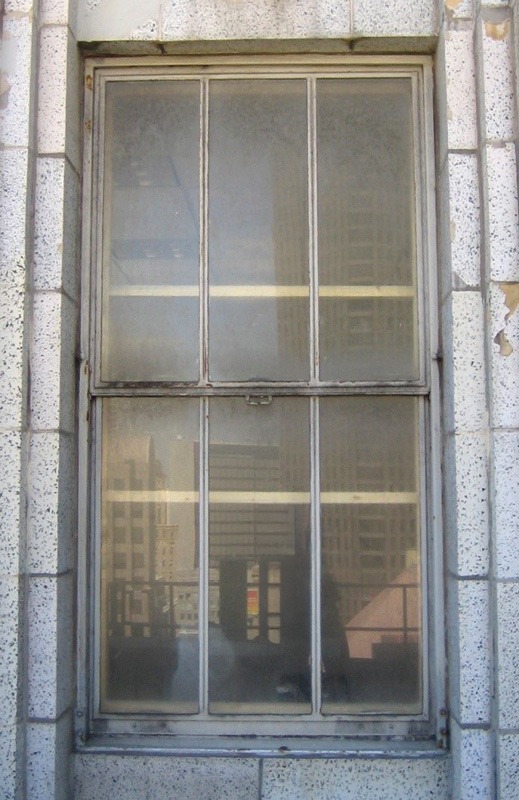
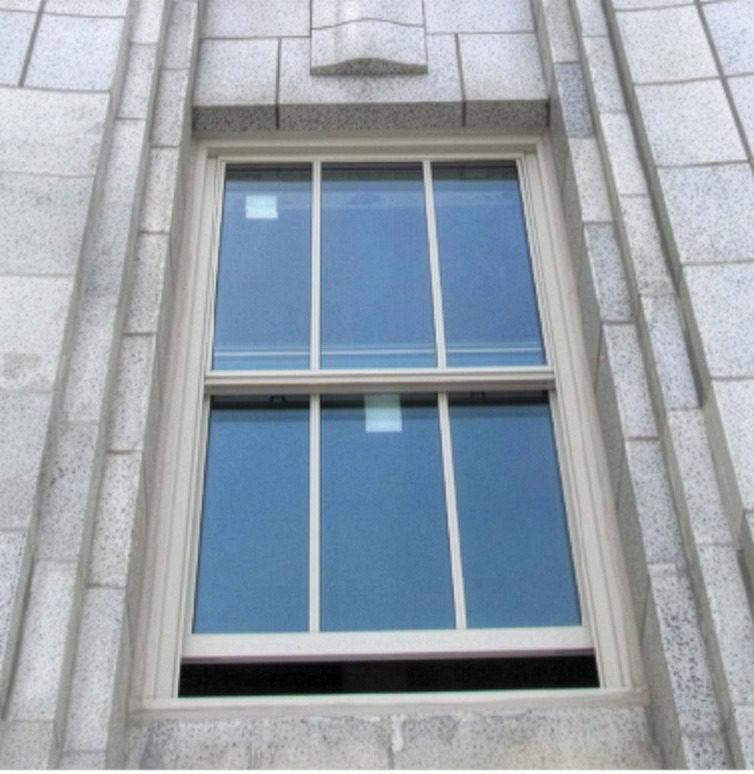
Existing steel double-hung window sill to jamb corner on the left and new replica window sill to jamb corner on the right in San Francisco, Calif., 2011-2013.
Sign up for our weekly newsletter
Architectural materials and methods delivered right to your inbox

- CSI News and Notes: CSI Foundation’s construction camp; CSI spring exam; and more
- CSI News and Notes: CSI’s credentials; CSI conference theme; and more
- To be specific – CSI supports young AECO professionals
- CSI News and Notes: CSI’s foundation scholarships, national conference, and Crosswalk
- CSI News and Notes: AI’s impact; CSI 2024 conference, and more
Products

Read the Latest Issue