
Proactive coordination: The quiet driver of successful projects

Design professionals create documents that combine aesthetic and technical knowledge to turn concepts into reality. A team is responsible for producing construction documents that provide the necessary information for the contractor to realize the building.
The process of designing and constructing buildings can be arduous, especially for large, complex projects. The American Institute of Architects (AIA) provides guidelines for the minimum requirements for the design, development, and construction phases for project completion. In addition, most firms have their own “Production and Procedures Manuals” to help standardize the organization and development of the documents.
The Design Development (DD) and Construction Document (CD) Phases are where the nitty-gritty starts. These two phases are where the drawings and specifications, issued to the contractor for bidding and construction, are prepared. To have successful project coordination, not only in-house but between consultants, it is essential to develop a strategy on how to organize the project to ensure these goals are met. Common statements heard about not doing a thorough coordination are as follows:
- “It is too early”
- “Not in this phase”
- “We have been keeping an eye on things during the project meetings”
- “We will do it during the bidding period”
- “There is no money left in the budget”
All these excuses are not valid reasons to postpone coordination or, worse, to ignore it altogether. A well-structured schedule for project coordination and peer reviews can minimize construction delays, errors, and omissions, reducing the likelihood of requests for information (RFIs).
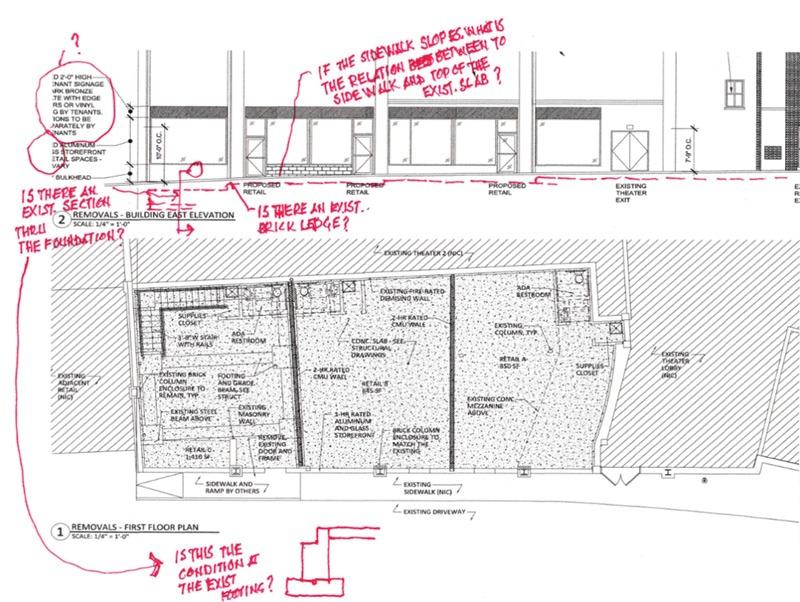
Common coordination pitfalls
Throughout the author’s career, they have been involved with numerous projects, including design development, construction administration, and peer reviews. The author finds that history does repeat itself. Here are a few examples consistently on projects:
- Notes such as “see structural for further information on stairs” and the structural drawing says, “see architectural for further information on stairs,” are a clear coordination failure.
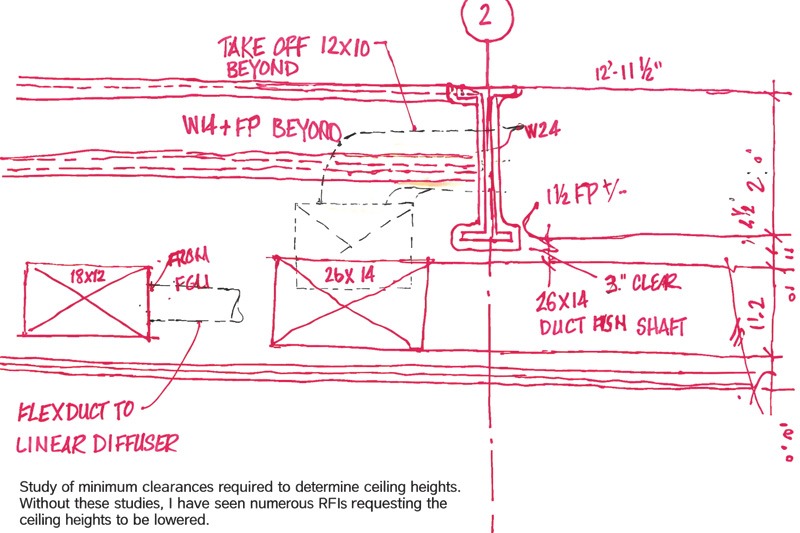
- Not coordinating the interstitial space with MEP and structural systems can result in insufficient clearance for the crisscrossing of equipment. This may force ceiling heights to be lowered, which in turn can disrupt the planned alignment of adjacent building elements—such as door and window frames or horizontal wall joints—originally set to a specific module.
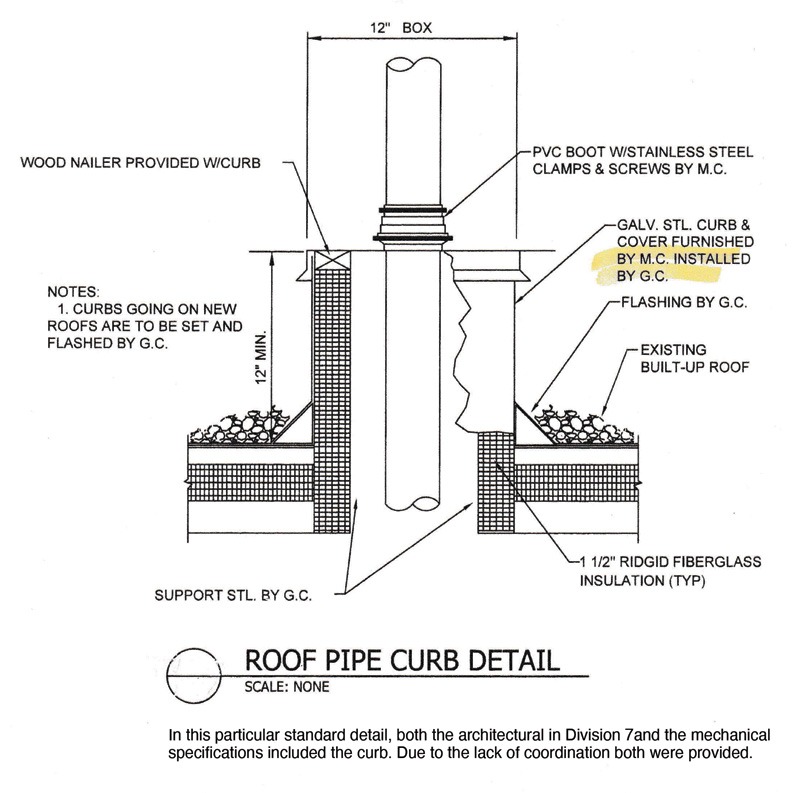
- Not reviewing the standard details to ensure they are in the project. This could cause RFIs from the field asking where the details are being used.
- Not reviewing the drawings to ensure all the materials on the plan, elevations, section, details, etc., have been labeled and properly identified. For instance, the author once asked someone what those lines, which were neither labeled nor referenced on the plans, represented. The answer was cabinets. Nothing should be left to interpretation.
- Coordinating the cross-bracing on the structural drawings with the location of the doors, windows, or other openings. Yes, this does happen.
Lack of coordination is a major cause of RFIs, change orders, and tension in construction. Good design practices and project management can help reduce these issues.
There are also tattle-tale signs in the documents that contractors and owners can easily detect to identify a lack of coordination. Things like the wrong city for the project’s jurisdiction in the general notes, standard details that have nothing to do with the project, a finish schedule indicating one material while a detail shows another, and references to details that do not exist. These discrepancies could be eliminated with proper coordination.
The AIA checklist guide is a very helpful tool for ensuring that the minimum requirements are met for both the design development and construction documents phases.
Just as architects do, contractors also have guidebooks for reviewing drawings and identifying potential change orders. During this process, contractors look for telltale signs of errors—most commonly discrepancies between the drawings and the specifications—which often translate directly into RFIs or change orders. Both typically require clarification during construction, adding time and potential costs to the project.
Project meetings
A project kick-off meeting with all decision-makers should occur before the project starts to establish communication lines and project directory. All the participants will be required to know their objectives and all contacts. A clear understanding of how the project will be run must be established. Project coordination will be an essential part of these meetings. From the beginning, time should be allocated to document review across the different phases, not after the CDs have been completed and issued for bidding. The general coordination of the project should be an ongoing process between the engineers and the architects, with the CM included, when the CM is a team member. These meetings should identify the problems and provide solutions. During meetings, each member of the design team should be personally familiar with the project and be able to decide who will be responsible for implementing those decisions. After the meeting, the minutes should be distributed to each team member. Each team member should review the minutes for accuracy and return them to the author within five business days.
Coordination of drawings, specifications, and general notes
The importance of coordinating drawings and specifications cannot be overemphasized. Open lines of communication must be established between the Project Architect and the Specification Writer. The specification writer should initiate a meeting early in the design development phase to discuss submission dates and information transfer. This will eliminate any possibility of starting the coordination process too late, which may lead to omissions.
All the materials being used on the project should be identified and included in the spec book. The Specification Writer should be informed of any additions or deletions to the materials to avoid missing sections or sections that do not apply. It is imperative that the specifications include only the materials that pertain to the project. Including superfluous language, materials or finishes in the spec that are not part of the project could lead to a tsunami of RFI’s.
Time should also be allocated for peer reviews and included in the overall project schedule. The reviews should be performed at the end of the DDs and at the 90 percent CD phases. The reviewers should not be part of the project team, but a third-party senior technical member of the office. Once the review is complete, it should be shared with the design team, including the project manager and/or the project architect. It is inevitable that there will be questions and disagreements. Remember, the goal is for a technically sound building.
Questions concerning finish schedule
Provide the following information as soon as possible to avoid delays:
Exterior finishes
Cannot find the following finishes on the schedule
- CONC-1 3. MTL CLG-2
- BRICK-2 4. MT-5
Cannot find the following finishes on the building elevations
- MT-3 The Alucobond panels are shown on the rendering on A201, but on the elevations.
- TL-8 – TL-12 Please verify. Drawing A203 has a different set of numbers for the tiles.
Interior finishes
General comments:
- PL-1 Schedule indicates “Desktop office.” Drawings indicate base and office partitions on Drawing A212.
- Verify PT-14 and PT-13 Elevation 10/ A215
Cannot find the following finishes on the schedule
- WD-1 4. PT-8 (Last # 7)
- PT-10 5. CONC-1
- TL-6 (Last # 5B)
These are just a partial list of an ongoing dialogue that should be established during the construction document phase to ensure the proper coordination between the architect and the specification writer.
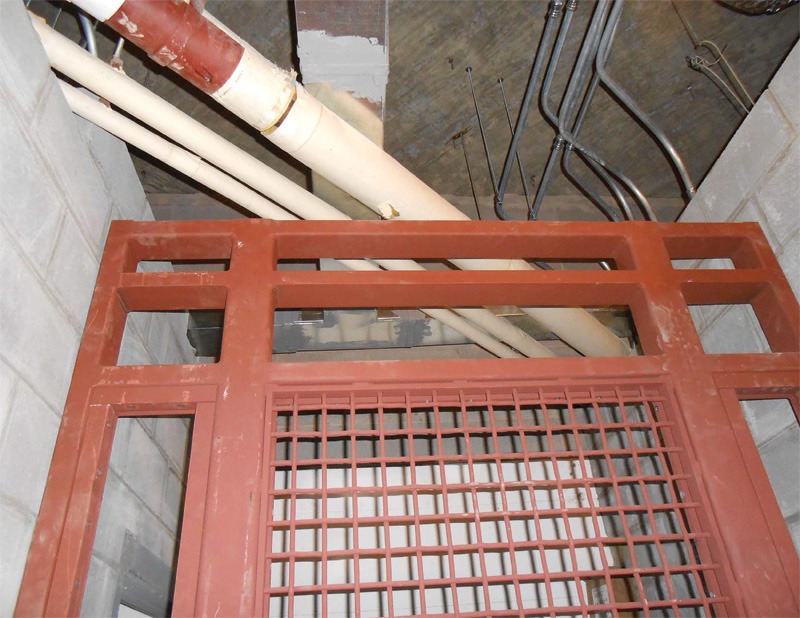
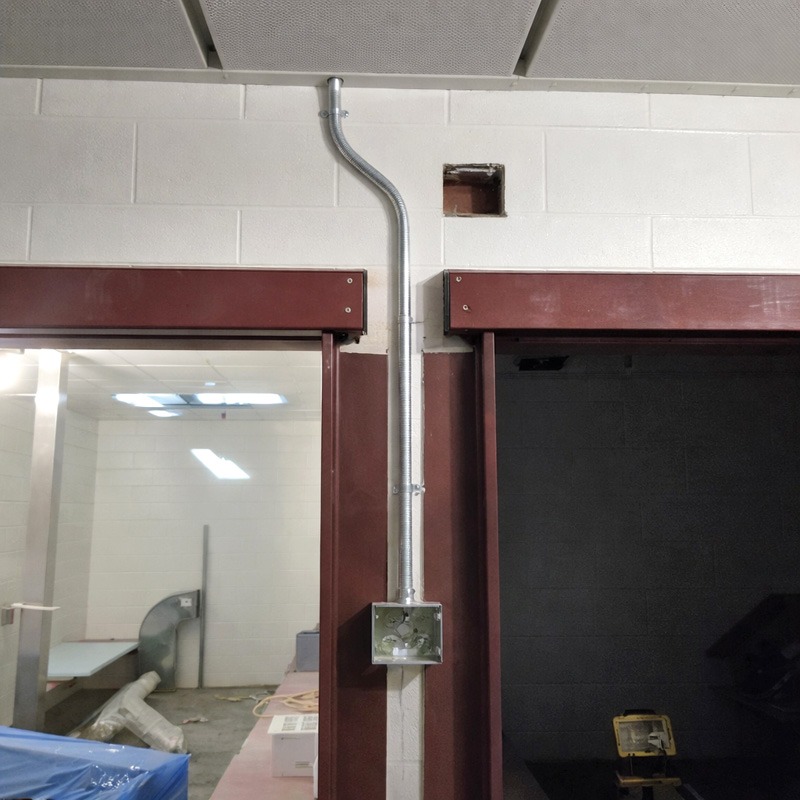
Figures 3 and 4 show the required field adjustments to cover the exposed conduits and the piping in the ceiling. Proper coordination and peer reviews will prevent this from occurring.
Part of the peer review is to identify work to be completed to avoid RFIs or errors.
Some offices have a sheet specifically for general notes to clarify requirements, establish precedence between documents, and reduce conflicts. When these issues are not clearly addressed, they often lead to RFIs during the bidding phase; if unresolved at that stage, they are typically discovered during construction, resulting in additional RFIs, potential change orders, and possible construction delays. Some of these notes may also be in specifications. Careful coordination is needed to ensure that the general notes are not repeated in the specification. They should only be indicated in one place to avoid discrepancies.
With the increasing number of restoration and renovation projects, more projects are being developed by choosing not to use a spec book and opting instead to include “general notes” on the drawings. While this may be acceptable for smaller projects, care should be taken for larger projects. It is important to include at least the following information:
- Quality assurance
- Mock-ups
- Maintenance materials
- ASTM numbers for materials being used
- Checking the moisture content of the existing concrete slabs for new flooring
These are just a few examples. It is essential to conduct a comprehensive review of the project materials to effectively prevent any potential RFIs or change orders.
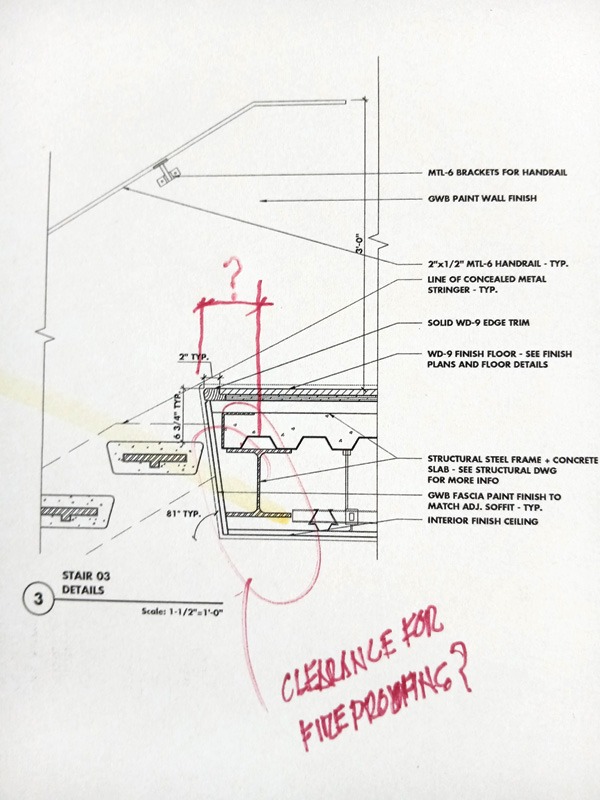
Post-construction lessons learned
Once the project has ended, it does not mean there are no opportunities to review and improve what transpired during construction. An ongoing list should be compiled during a progress field meeting by the field representative (if there is one) or the project manager. This list should identify items that may have been problematic or could be improved upon in future projects. It should contain comments on the drawings, specifications and any acceptable recommendations made by the contractors. This list is intended to facilitate a learning process aimed at enhancing the quality of the documents, as there will always be RFIs and change orders. The intent is to keep them to a minimum, improve document quality, and avoid repeating the same issues on other projects.
Share the list with the project team members and any other personnel who may benefit from these lessons learned.
Partial list of lessons learned
- Review with the electrical designer the electrical room equipment layouts based on the exact size of the equipment. The code requires specific clearances in front of switchgear. This is particularly important with respect to the roof ladder and the locations of the structural columns.
- Carefully review with the owner plumbing fixture mounting features relative to security issues and the possibility of hiding contraband.
- Confirm with the owner the rooms or areas that require security-grade return and supply registers. These must be coordinated with the mechanical engineers.
- All security fire-rated doors must have detention fire-rated glass.
- Check to make sure the drawings describe all the required housekeeping concrete pads for the mechanical and electrical equipment.
- Carefully review with the food service consultant the need for slab depressions to accommodate insulated floors, floor trough drains, and quarry tile floors in the kitchen areas. Pass this along to the structural engineer to include on the foundation plans. Also indicate curbs and reinforcing as required around the food waste pulping system.
- Anywhere there are suspended acoustic ceilings below sound-insulated drywall ceilings, special care must be taken to ensure mechanical systems will fit.
- All exposed steel embeds in concrete tilt panels on the exterior should be galvanized.
This list was for a correctional facility. Note: the list includes different trades and should be distributed to all the consultants.
Conclusion
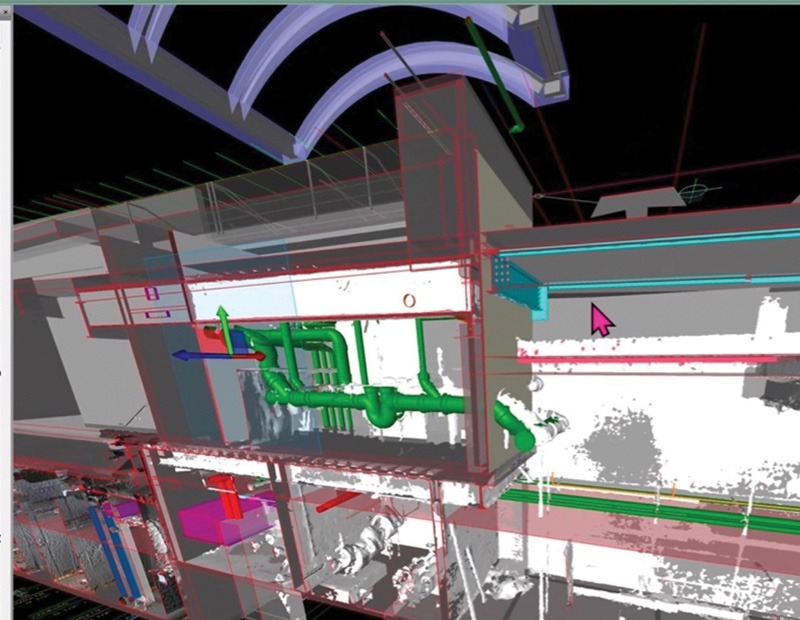
From the first line on paper or an image on a computer to the completion of the building, the amount of work required to bring a vision to reality can be overwhelming. The success or failure of the project rides on one of the most important factors: coordination. Use tools available, such as AIA documents and BIM, which enable 3D modeling and provide an effective way to coordinate and early detect potential problems.
While there is no such thing as a perfect project, these tools are an effective way to reduce potential problems, thus providing a more comprehensive set of documents. The intent is to be proactive and not reactive.
References
- For more information on contractors’ change orders, see “Contractor’s Guide to Change Orders” by Andrew M. Civitello.
Author

Ruben Caro, CSI, holds an associate’s degree in construction technology and studied architecture at the New York Institute of Technology. Through RC Consulting for Architects, he provides specifications, construction document support, and peer reviews. He has contributed to The Construction Specifier and has experience across institutional and commercial building types, including correctional, educational, and renovation projects throughout the United States.
Key Takeaways
Effective coordination during the Design Development (DD) and Construction Document (CD) phases is critical to reducing RFIs, change orders, and construction delays. Ongoing peer reviews, disciplined document organization, and clear communication between architects, engineers, and spec writers help eliminate discrepancies before bidding. Proactive coordination strengthens document quality, protects project budgets, and supports smoother construction outcomes.
Sign up for our weekly newsletter
Architectural materials and methods delivered right to your inbox

- CSI News and Notes: CSI Foundation’s construction camp; CSI spring exam; and more
- CSI News and Notes: CSI’s credentials; CSI conference theme; and more
- To be specific – CSI supports young AECO professionals
- CSI News and Notes: CSI’s foundation scholarships, national conference, and Crosswalk
- CSI News and Notes: AI’s impact; CSI 2024 conference, and more
Products



Read the Latest Issue