Quantifying the Potential Carbon Benefits of PVC Roof Recycling
Recycling PVC roofing membrane can do more than divert material from landfills. New research is helping the building industry quantify the potential carbon benefits of keeping these materials in circulation.
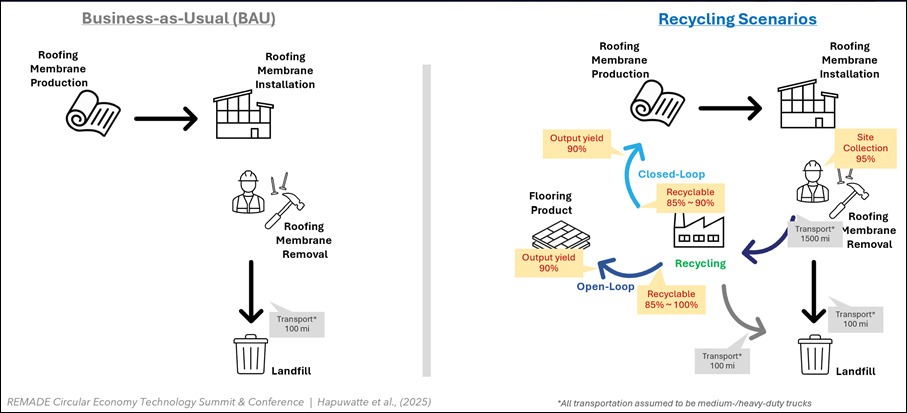
A 2025 study from the National Institute of Standards and Technology (NIST) examines what happens at the end of a PVC roofing membrane’s service life. Researchers compared a business-as-usual scenario, in which the removed membrane is transported to a landfill, with two recycling pathways: closed-loop recycling into new roofing membrane and open-loop recycling into PVC flooring.
The analysis found potential carbon avoidance under both recycling scenarios compared with landfilling. It also considers factors that influence those benefits, including collection rates, recycling yields, transportation, and the amount of recycled material that can replace virgin material.
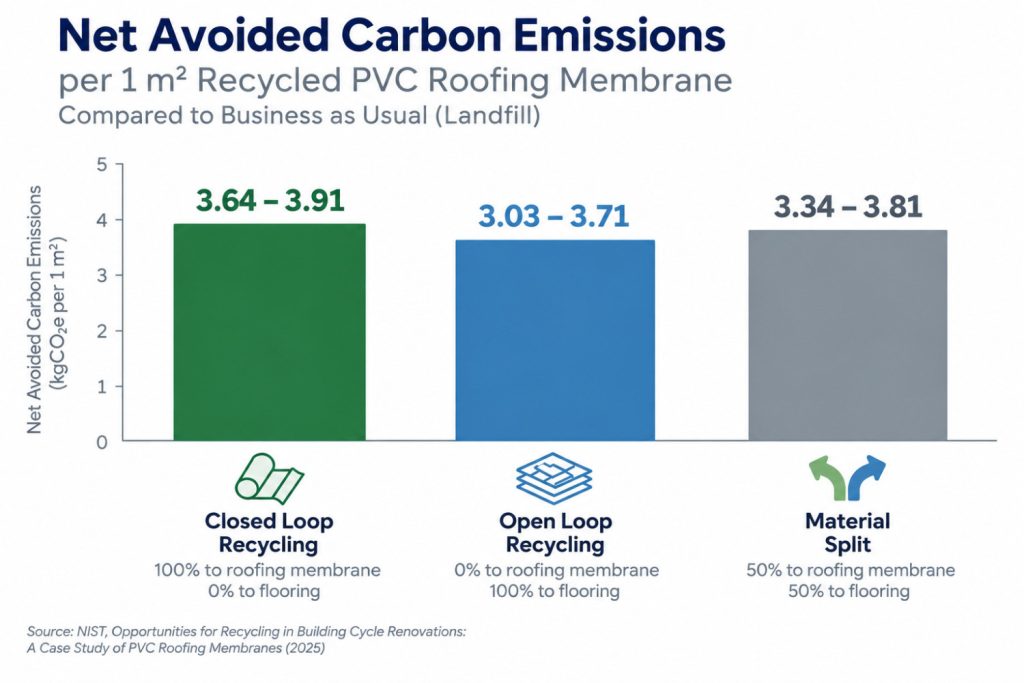
For building owners, architects, specifiers, and sustainability professionals, this provides another way to evaluate roof replacement decisions. Rather than measuring success solely by pounds of material diverted from landfill, recycling can also be examined through its potential reductions in embodied carbon.
As whole-building life-cycle assessments become increasingly important, quantifying avoided carbon can provide another way to demonstrate the broader value of incorporating PVC roof recycling into roof replacement planning. Learn more about PVC roofing sustainability efforts at vinylroofs.org/sustainability.
“Sponsored” material is supplied by the sponsor. The publisher cannot assume responsibility for any errors of relevance, fact or omission. Hosting sponsored material does not constitute endorsement of the sponsor.
Sign up for our weekly newsletter
Architectural materials and methods delivered right to your inbox

- CSI News & Notes: CSI’s impact earns official recognition; celebrate leaders, mentors, and innovators; and more
- CSI News and Notes: CSI spring certification exams open; scholarships available; and more
- CSI News & Notes: CSI MSR heading to San Diego; spring certification exams open; and more
- To Be Specific: Why CDT Should Be Your First Move
- CSI News & Notes: CSI Fellows share member benefits; and a New Year’s Resolution to keep
Popular Articles
-
1
-
2
-
3
-
4
-
5
Read the Latest Issue