
The dark side of the moon: Dangers of concealed spalls
As discussed in the article “Failures: Bad Moon Rising” in the August 2024 issue of The Construction Specifier, a common failure of stone masonry veneer is the formation of “half-moon” spalls at kerf cuts that receive the lateral anchorage of the stone panel. When this failure occurs on the panel’s exposed face, it is readily identified and repaired, mitigating the loss of lateral support and the associated hazard of falling material. However, depending on panel geometry and anchor placement, similar spalls may occur on the concealed rear face with little or no visible evidence. This hidden damage can result in a loss of lateral support for the stone panel, which can become dislodged from the wall. Two recent projects illustrate this.
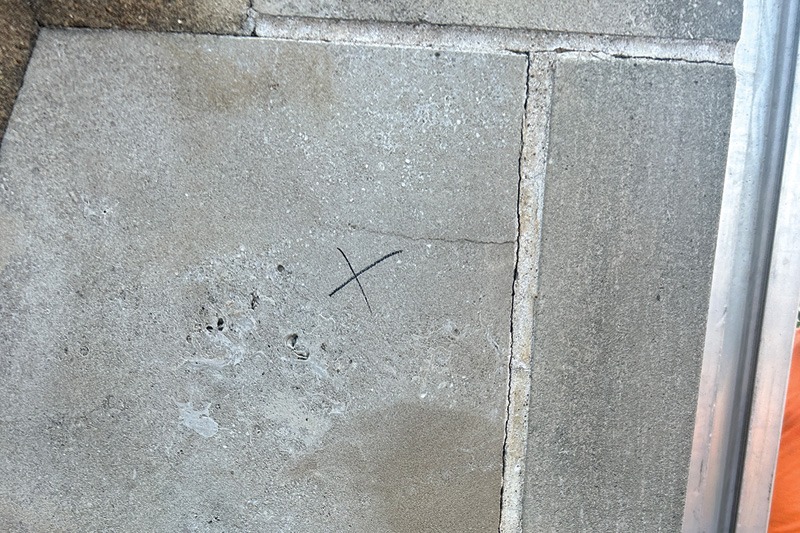
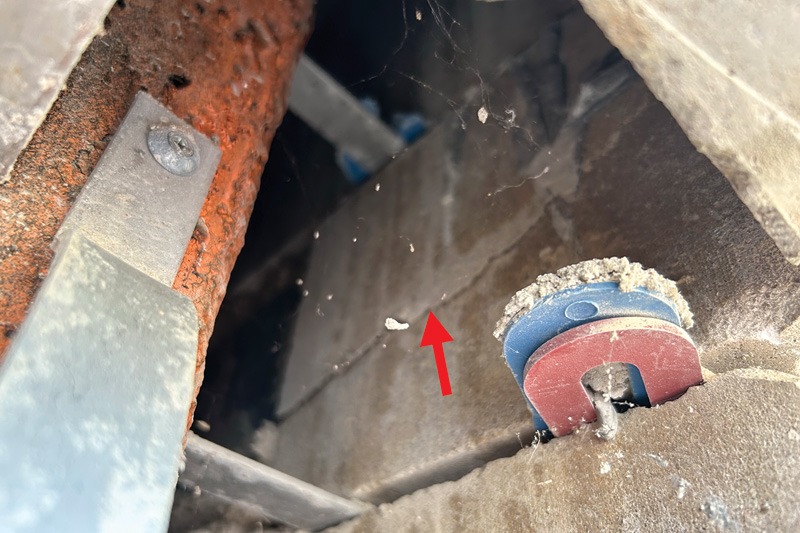
The first project is an institutional building in a high-seismic-risk area. Limestone masonry units on the facade are anchored to the structure with stainless-steel strap anchors set into kerf cuts. A recent repair project addressed several units that had developed incipient half-moon spalls on the exposed face (Figure 1). Removal of the damaged units provided access to the veneer cavity and adjacent panels, revealing significant cracks and spalls on the concealed back faces of multiple units (Figure 2). The repair scope was subsequently expanded to include the replacement of numerous cracked panels.
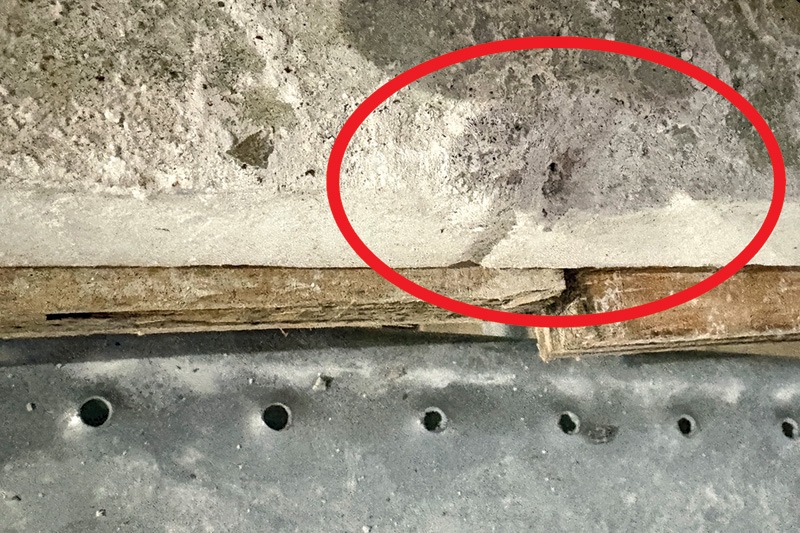
The second project involves a historic structure clad with large marble panels, only 40 mm (1.5 in.) thick but exceeding 1 m2 (12 sf) in area. Aside from intermittent surface corrosion staining, the cladding appeared intact. During mortar removal in preparation for repointing, two panels were destabilized and fell to the ground. Investigation revealed that the original lateral anchorage consisted of 20 mm (0.75 in.) diameter steel pins engaging the panels’ top back edges. Corrosion of these anchors had created half-moon spalls on the back face of many panels, compromising their lateral support (Figure 3). Until the panels fell, corrosion staining was the only visible indication of failure. The repair scope was expanded to include shoring followed by remedial pinning of the entire wall.
When assessing a facade incorporating metal lateral anchorage, a visual survey alone will not identify reverse-face spalls. Depending on the assembly, additional investigation may include metal detectors to locate anchors, hammer sounding to identify delaminated or loose panels, ground-penetrating radar to detect voids, removal of joint materials to inspect panel edges, borescopes to view concealed cavities, or selective panel removal to observe concealed conditions. If the investigation is conducted during the preparation of construction documents and before starting repairs, the scope of required work can be better understood.
Author

Kenneth Itle, AIA, is an architect and associate principal with Wiss, Janney, Elstner Associates, Inc. (WJE) in Northbrook, Ill., specializing in historic preservation. He can be reached at kitle@wje.com.
Sign up for our weekly newsletter
Architectural materials and methods delivered right to your inbox

- CSI News & Notes: CSI’s impact earns official recognition; celebrate leaders, mentors, and innovators; and more
- CSI News and Notes: CSI spring certification exams open; scholarships available; and more
- CSI News & Notes: CSI MSR heading to San Diego; spring certification exams open; and more
- To Be Specific: Why CDT Should Be Your First Move
- CSI News & Notes: CSI Fellows share member benefits; and a New Year’s Resolution to keep
Popular Articles
-
1
-
2
-
3
-
4
-
5
Read the Latest Issue