Understanding Fire Performance in PVC Roofing Systems
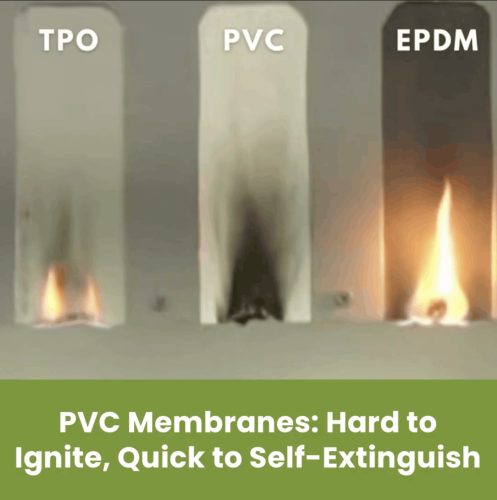
Fire performance is an important consideration when specifying commercial roofing systems. Understanding how individual roofing materials respond to flame exposure, along with the fire classifications of complete roof assemblies, helps inform material selection.
PVC (vinyl) roofing membranes offer inherent fire-resistant properties. The material is difficult to ignite, resists flame spread, and tends to self-extinguish when the source of heat or flame is removed.
Independent testing conducted by Southwest Research Institute’s Fire Technology Department demonstrated these characteristics at the material level. The test compared samples of three common single-ply roofing membranes (PVC, TPO, and EPDM) under direct flame exposure. In two test runs, the PVC samples stopped burning within 12 and 13 seconds, respectively, while the other materials continued burning for several minutes.
Separately, PVC roofing systems have achieved applicable UL and FM fire classifications, including Class A and Class B ratings. Because these classifications apply to specific tested roof assemblies, architects and specifiers should verify applicable ratings with manufacturers when selecting a system.
The Coated Fabrics and Film Association’s Vinyl Roofing Division offers additional resources on PVC roofing fire performance, including independent testing results and a video demonstration.
“Sponsored” material is supplied by the sponsor. The publisher cannot assume responsibility for any errors of relevance, fact or omission. Hosting sponsored material does not constitute endorsement of the sponsor.
Sign up for our weekly newsletter
Architectural materials and methods delivered right to your inbox

- CSI News & Notes: CSI’s impact earns official recognition; celebrate leaders, mentors, and innovators; and more
- CSI News and Notes: CSI spring certification exams open; scholarships available; and more
- CSI News & Notes: CSI MSR heading to San Diego; spring certification exams open; and more
- To Be Specific: Why CDT Should Be Your First Move
- CSI News & Notes: CSI Fellows share member benefits; and a New Year’s Resolution to keep
Popular Articles
-
1
-
2
-
3
-
4
-
5
Read the Latest Issue