
University opens a next-generation VR learning lab
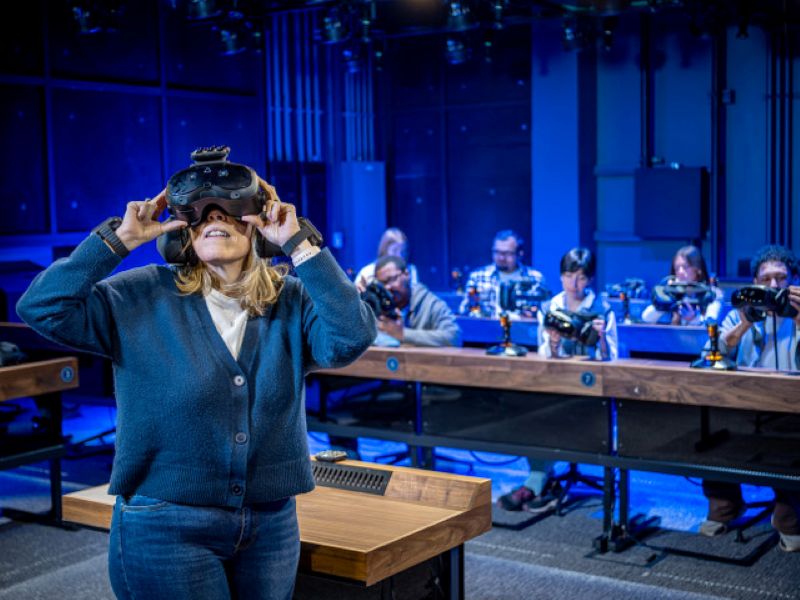
Montclair State University has opened a 228 m2 (2,450 sf) virtual reality learning facility designed to bring immersive technology into coursework across disciplines.
The new lab is located inside the university’s College of Communication and Media building. It will serve more than 24,000 students while providing hands-on training for those pursuing careers in virtual reality, digital media, and virtual production.
Montclair developed the facility with Dreamscape Learn, an immersive learning company that combines cinematic storytelling, virtual reality, motion capture, and haptic technology.
The facility includes two primary components: a 26-seat classroom and a free-roam pod. The classroom supports conventional instruction, while the pod gives students room to move through virtual environments.
That layout allows the lab to function as both a teaching space and a technology-training facility. Students can experience immersive coursework while learning the technical skills required to build and operate virtual environments.
Dreamscape Learn’s system uses 360-degree motion capture and advanced haptics. The technology provides physical feedback through vibration and movement, creating a more immersive connection between students and virtual environments.
Montclair will initially offer Dreamscape Learn’s “Biology in the Alien Zoo.” The course places students inside a virtual alien ecosystem, where they work in teams to conduct fieldwork, collect data, and apply scientific concepts while attempting to save an alien species from extinction.
The university plans to expand course offerings over time, opening the facility to students across majors.
The lab received partial funding through the New Jersey Economic Development Authority’s (NJEDA) New Jersey Film Works Grant Program.
College of Communication and Media director Keith Strudler said the facility will give students practical experience with virtual reality. It will also teach them to storyboard, design, code, and operate virtual environments, he adds.
Sign up for our weekly newsletter
Architectural materials and methods delivered right to your inbox

- CSI News & Notes: CSI’s impact earns official recognition; celebrate leaders, mentors, and innovators; and more
- CSI News and Notes: CSI spring certification exams open; scholarships available; and more
- CSI News & Notes: CSI MSR heading to San Diego; spring certification exams open; and more
- To Be Specific: Why CDT Should Be Your First Move
- CSI News & Notes: CSI Fellows share member benefits; and a New Year’s Resolution to keep
Popular Articles
-
1
-
2
-
3
-
4
-
5
Read the Latest Issue
Demo-Casts