Engineering the Sphere: A watertight roof for Las Vegas’ iconic dome
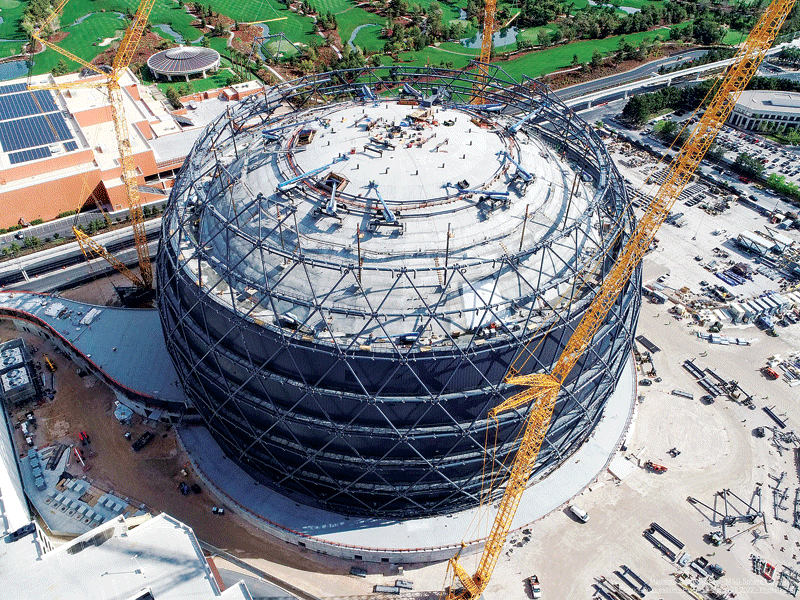
The dome-shaped Las Vegas entertainment complex is wrapped in a high-resolution screen that transforms its entire surface into a dynamic visual display.
From realistic eyeballs and sports balls to themed holiday scenes and advertising, the facade can showcase a wide range of immersive content. The structure is large enough to be seen from space and dominates the Las Vegas skyline, often creating a surreal “living billboard” effect. Specifically, the facility spans 111 x 157 m (366 x 516 ft) and rises 111 m (366 ft) above ground.
The $2-billion facility includes a steel-framed, dome-shaped roof trusses weighing more than 11,793 tonnes (13,000 tons) that were welded and bolted together, presenting the challenge of ensuring it was watertight. The exterior shell was made watertight using specialized sprayfoam insulation (SPF) and elastomeric coatings, rather than the steel trusses themselves being inherently sealed. This waterproof system includes an elastomeric basecoat and topcoat applied to create a robust, weather-resistant envelope over the structure.
Nuts and bolts
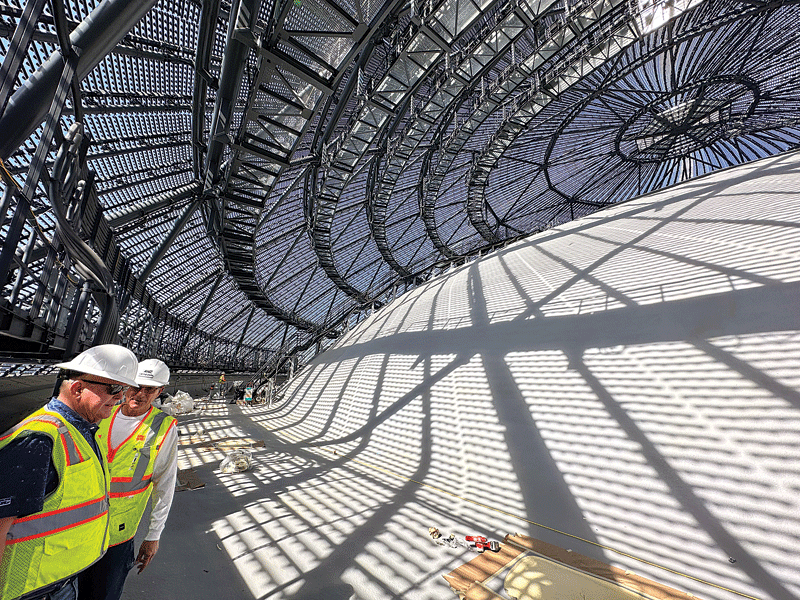
The engineering and selection of structural steel castings were driven by the need to address complex geometry, tight tolerances, and load demands. The design process began with parametric modeling followed by more advanced 3D finite element analyses of the superstructure but was intertwined with hand sketching to determine optimal shapes for the nodes. Early collaboration between design and fabrication teams ensured the feasibility of castings versus fabricated nodes.1
Construction began with installing the trusses to form the domed roof, designed to create a column-free, 14,864 m² (160,000 sf) interior display plane. The framework relies on high-strength structural steel, which provides the necessary support for the massive structure. The project required 25,401 tonnes (28,000 tons) of total steelwork to create the main sphere and its associated structures.
Due to their immense size, the roof trusses were assembled at the site, with 91 tonnes (100 tons) pieces lifted by a 177-m (580-ft) crane. The trusses are covered with corrugated metal decking and hold 2,722 tonnes (3,000 tons) of rebar and 5,040 m³ (6,600 yd³) of concrete on the roof. The crews then placed 2,722 tonnes (3,000 tons) of rebar and pumped 5,040 m³ (6,600 yd³) of concrete—weighing 9,072 tonnes (10,000 tons)—onto the roof to provide full weight-bearing capabilities. The outer shell, or exosphere, uses a geodesic design consisting of hundreds of interlocking triangles connected to the structural steel framework.
The steel-framed dome roof was engineered for efficiency and function, providing substantial load-carrying capacity and adequate stiffness to facilitate the precise placement of LED tiles. The design of the dome roof optimizes its depth and the quantity of circumferential rings, ensuring it can support the considerable weight of both the roof and the media plane.
The original specs for the 16,722-m² (180,000-sf) dome underneath the exoskeleton called for a single-ply polyvinyl chloride (PVC) roof with an R–30 insulation board anchored down to the concrete deck.
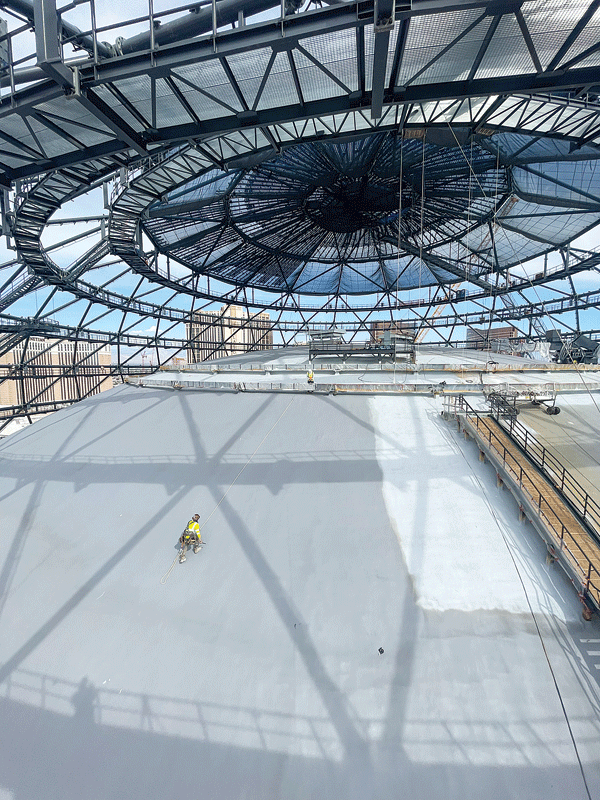
But when the roofing contractor realized that about 45 truckloads of material would need to be brought onto the roof during construction of the sphere’s exterior, the team began seeking alternative systems. They determined that the ideal solution would be to install a sprayfoam roofing system with a coating overtop. This would eliminate the material loading issue and avoid the 20–25 percent waste that would occur trying to install PVC on the round sphere.
The concrete dome was formed by pumping 4,590 m³ (6,000 yd³) of shotcrete onto a prefabricated steel roof frame, creating a 254-mm-thick (10-in.-thick), 9,072-tonne (10,000-ton) concrete shell.
Foundations
The foundation is comprised of 610-mm (24-in.) diameter auger cast-in-place (ACIP) piles supporting cast-in-place concrete pile caps and tie beams. These piles extend up to 30 m (100 ft) down into the bearing stratum (generally comprised of dense sand) to provide the necessary support for the massive structure, ensuring stability and load distribution throughout with minimal potential for differential settlement. The piles and foundation elements are arranged in two closely spaced rings at the perimeter; the outer ring supports both the outer venue columns and the geosphere base, while the inner ring supports the inner column of the venue’s ring of paired columns. An array of individual pile caps supports the seating bowl and concourses. Pile supported concrete mats support the shear wall cores, providing additional stability and resistance for overturning moments and shears induced by lateral loads.1
Seamless partnership and effective collaboration efforts
Early collaboration among stakeholders was instrumental in guaranteeing success. Integrating casting expertise into the design process from the start ensured that components aligned with architectural, structural, and construction goals. Collaboration among the design-construct team, Severud Associates, Populous (the architect), W&W | AFCO Steel (steel fabricator and erector), CastConnex (casting designer and supplier), SDL (erection engineer), and MJ Dean (GC/CIP concrete contractor) allowed for precise integration of structural components and optimized the structural design.
During construction, Severud Associates had a full-time onsite presence to assist with immediate action to any construction issues as they arose. This involved working closely with various contractors to solve issues as quickly as possible, ensuring the project continued to move along smoothly. This hands-on approach allowed for rapid problem-solving and maintained the project’s momentum, adhering to the planned schedule and quality standards.1
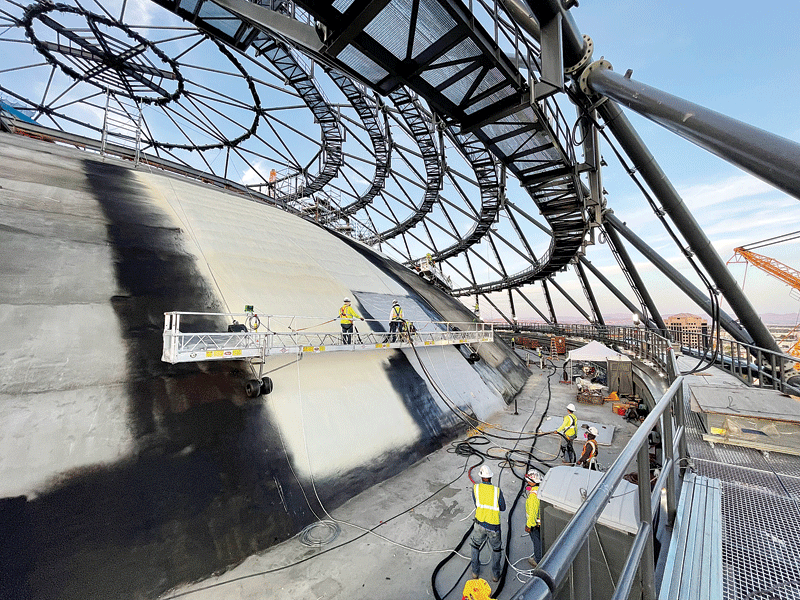
The roofing contractor partnered with a long-time sprayfoam and roof coating manufacturer known for their unique product engineering. Despite the ongoing material shortage at the time, the manufacturer assured everyone that they could deliver a quality product on time, with technical support. A special slate-gray color formulation was created for the top coating, allowing visitors to look at the LED monitors, which run 24/7, without seeing the roof behind them, making it appear as if the roof had vanished. This uniquely developed coating also withstands the hot Las Vegas sun without blistering.
Prefabricated panels of continuous insulation was key to streamlining the facade installation and ensuring quality control. The base included an angled collar that was designed using uniquely angled prefabricated exterior insulation and finish systems (EIFS) wall panels; 232,258 m² (2.5 million sf) of rigid fiberglass insulation was installed on the walls and under the steel dome. Cut to specification, the pieces of rigid board insulation were installed in an array of different 102 mm (4 in.) and 51 mm (2 in.) thicknesses that included radial, dome and double-curved designs.2
Ensuring a safe installation
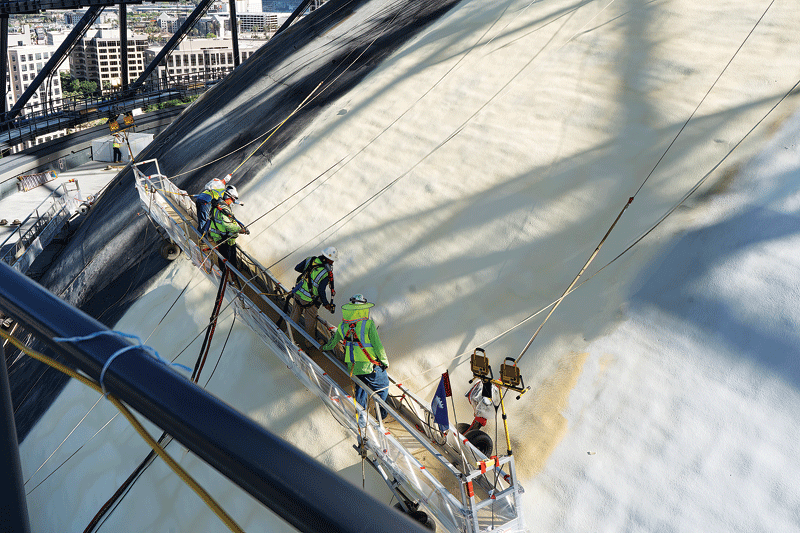
With much of the pitch at 8:12, or even steeper in some areas, the sprayfoam and coating installers contracted with a scaffolding company for swing-stage platform carriages. They had to use some ingenuity and modify the wheels so they would not crush the foam, yet still allow the workers to be close enough to effectively spray and build up the required 127 mm (5 in.) of foam.
Installers began the work relying on these five swing stage platform carriages, about 9.14 to 12.19 m (30 to 40 ft) long. This allowed three sprayfoam applicators to work simultaneously, installing the polyurethane foam that creates a waterproof barrier while a crew followed behind to apply the elastomeric base coat and topcoat at 18.93 L (5 gal) per square feet to finish at 40 dry mils. Once the circumference of the dome was completed, crews moved to the top of the dome, where they were able to stand while being tied off in the case of a fall.
The crew had to be cognizant of overspray during the application since it was done during a very windy time of year. When the wind would pick up, the crew would shut down, causing them to lose a lot of days due to the weather. The installation also required some coordination with the iron workers who were building the exoskeleton of the sphere, at the same time, the roofing system was being installed. They had to work closely with all parties to ensure the workers remained safe.
Once the dome portion was complete, the crew moved on to the tension ring around the bottom. This ring was 396 m (1,300 ft) in circumference and similarly coated. The SPF needed to be applied in a way to create a positive water flow to the drains within the valley, the high points, the crickets, and the tapers all being important. To apply SPF in this way requires precision, technique, and pre-planning, along with mindfulness to ensure the fluid is not carried by the wind and lands on surrounding property. The coatings manufacturer provided support during the installation by positioning their technical team on-site to observe and answer any questions when needed.
Communication is key to success
The engineering and logistics of this roofing project were immense. However, open communication and collaborative problem-solving made it successful. The owner of this iconic facility is extremely pleased and knows the roof will remain watertight.
Notes
1 Refer.
2 Read more.
Author
Steve Goold is Southern California sales manager with General Coatings Manufacturing Corporation and may be reached at sgoold@generalcoatings.net. Fresno, California-based General Coatings Manufacturing Corporation is a manufacturer of spray polyurethane foam (SPF) roofing and insulation systems, as well as high-performance roof coatings.
Sign up for our weekly newsletter
Architectural materials and methods delivered right to your inbox

- CSI News & Notes: CSI’s impact earns official recognition; celebrate leaders, mentors, and innovators; and more
- CSI News and Notes: CSI spring certification exams open; scholarships available; and more
- CSI News & Notes: CSI MSR heading to San Diego; spring certification exams open; and more
- To Be Specific: Why CDT Should Be Your First Move
- CSI News & Notes: CSI Fellows share member benefits; and a New Year’s Resolution to keep
Related Products

Read the Latest Issue