
Climate-ready windows: What architects need to know

The built environment is constantly evolving. Climate concerns, stringent energy codes, and growing consumer expectations continue to reshape how buildings are specified and constructed. Each component of a building, produced by multiple manufacturers, must fit together like puzzle pieces to ensure compatibility and performance across the entire structure.
Each building material has its own story, from conception and R&D to production, before it is ultimately relied upon by owners and occupants to perform for decades. Among these steps, the material’s composition is one of the most critical factors for longevity.
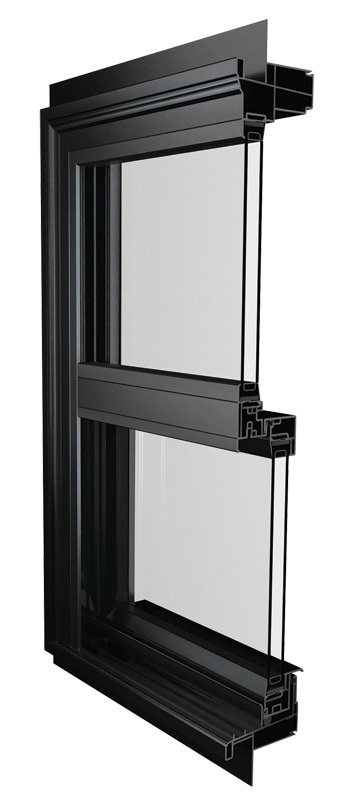
For polyvinyl chloride (PVC) window and door systems specifically, material science plays a major role in a system’s long-term viability and durability. For 21st-century windows and doors, there is more to the approach than meets the eye.
Climate change considerations
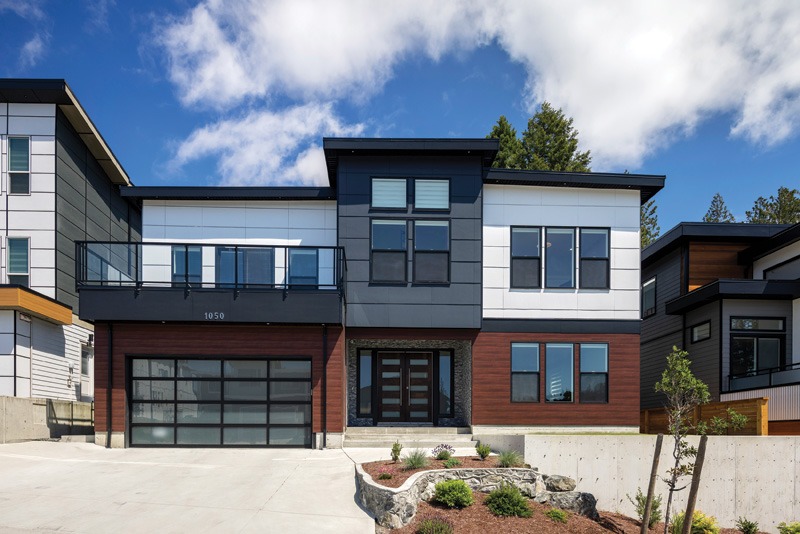
Climate change and ever-increasing global temperatures have placed greater demand on research aimed at advancing PVC formulations. The ones previously used to manufacture windows and doors are not as effective as they once were. The environment is changing, making higher-performing, longer-lasting windows essential.
In addition, from a sustainability perspective, according to an article published by the World Economic Forum, “The building value chain is responsible for 37% of total carbon emissions globally, involving multiple harder-to-abate sectors and needs to accelerate green transition from now on.”
This highlights the obligation for manufacturers to:
- Make products from more environmentally friendly materials
- Ensure products are recyclable at the end of service life
- Take steps to reduce carbon emissions
- Contribute to healthier buildings, i.e. products that reduce thermal transmittance, minimize HVAC/electric demands, offer natural daylighting, provide airtightness, etc.
Ultimately, windows must be designed for today’s performance demands, not for environmental conditions that existed two decades ago. Modern products are required to endure for at least 25 to 30 years, and at the end of their service life, they should be recyclable while retaining 90 percent of their original physical properties.
Further, the strain on modern buildings is greater than it once was because of a general trend of more extreme temperatures and conditions at both ends of the spectrum. For example, higher outdoor temperatures cause window systems to degrade more quickly. This is particularly a challenge with dark-colored window and door profiles, which are increasingly popular as exterior design trends evolve. With this in mind, window and door materials science teams are placing greater emphasis on developing new chemistries to combat these forces.
In addition, ENERGY STAR 7.0 revised its energy efficiency requirements per climate zone for windows to reflect this, with updated U-factor and solar heat gain coefficient (SHGC) values:
- Northern climate zone
- U-factor: less than or equal to 0.22
- SHGC: greater than or equal to 0.17
- North-central climate zone
- U-factor: less than or equal to 0.25
- SHGC: less than or equal to 0.40
- South-central climate zone
- U-factor: less than or equal to 0.28
- SHGC: less than or equal to 0.23
- Southern climate zone
- U-factor: less than or equal to 0.32
- SHGC: less than or equal to 0.23
These tighter criteria are designed to improve whole-building performance, as windows can account for up to 30 percent of residential heating and cooling energy use, according to the U.S. Department of Energy (DOE).
Colors, chemistries, and sustainable sourcing
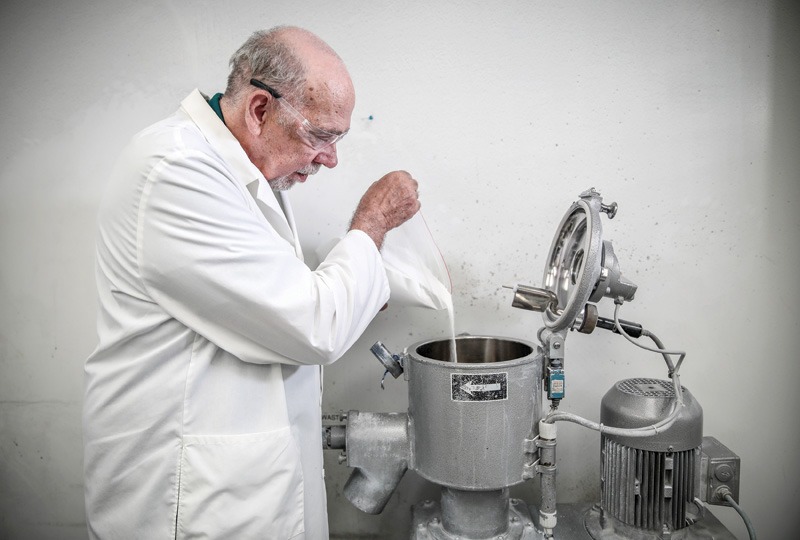
In addition to global climate considerations, the demand for new color pigments and their performance properties has required increased industry-wide research and development in pigment chemistry. For example, organizations have expanded research into paints and coatings originally developed for military vehicles and designed to reflect heat. The findings showed these same advancements can be applied to building materials and have even been employed to reduce heat gain in windows.
Reducing the overall carbon footprint is also an important focus, with many manufacturers committing to a more sustainable built environment. For this reason, plant-based additives sourced locally in the U.S. or imported from regions such as India or Brazil are being incorporated into the formulation of PVC compounds. “Plants” are not traditionally part of the equation when considering the materials used to create windows or other plastic products, but these sustainable, organic materials can serve as lubricants and perform other vital functions in the production of PVC windows and doors.
Material compounds that ensure long-lasting color retention and low maintenance with durability against rotting, cracking, pitting, corroding, and peeling are also on the rise. The goal is to add dimensional strength, allowing window and door profiles to withstand decades of expansion and contraction without warping or surface degradation for the life of the product.
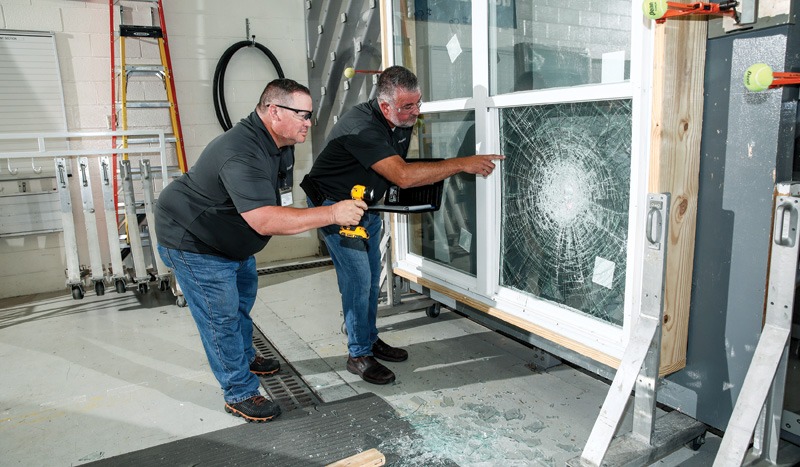
Once manufacturers ace material chemistry and commence initial production of the window and door systems, they must be rigorously validated through standardized testing, including long-term accelerated UV and thermal cycling, air infiltration, water resistance, and uniform load tests, ensuring they maintain structural integrity, thermal efficiency, and color retention throughout their service life.
The big three: Testing for long-term in-service performance
Air infiltration testing, as defined by the Fenestration & Glazing Industry Alliance (FGIA), measures air coming into a building around windows, doors, skylights, electrical outlets, walls, floors, and the roof as a result of differences in a building’s internal and external air pressure. Typically conducted as the first test on a window, it establishes whether a system has the performance attributes necessary for real-world installation; failure at this stage renders subsequent water and structural testing irrelevant.
To pass the air infiltration test, no more than 0.14 L/s (0.3 cfm) of air may pass through the system under standard pressure conditions, which is a 1.75 psf (25 mph) wind load. High-performing window systems can achieve scores as low as 0.028 to 0.047 L/s (0.06 to 0.10 cfm).
Water resistance tests simulate rainfall and wind exposure to assess a window system’s ability to prevent leaks. The test is similar to the air infiltration test, with the addition of a spray rack that continuously sprays water onto a window system. The test begins at a baseline of 2.62 psf (32 mph) winds applied to the exterior side of the window system and steadily increases from there. Negative pressure is also applied to the interior to pull water through the window.
Windows are exposed to 203 mm (8 in.) of simulated rain per square foot per hour. This exceeds any rate of rainfall ever recorded in a natural storm, according to the FGIA. That is, if a window is deemed compliant, it should be more than suitable for any real-world application with regard to rain and water resistance.
Industry average water resistance is 2.86 psf tested at 32 mph winds. Premier systems exceed this, achieving resistance from 3.75 psf to 15 psf—equivalent to 33 mph and 77 mph winds, respectively—providing significant long-term performance benefits in real-world applications.
Uniform load testing evaluates the structural integrity of window systems under extreme positive and negative static wind pressures. The test begins at 22.5 psf (equivalent to 94 mph winds) and progressively increases in 7.5 psf increments. High-performing systems remain intact even under wind loads exceeding 200 mph, demonstrating their ability to withstand substantial wind loads while meeting the specific criteria of the applicable product type and performance class.
It is important for manufacturers to share with customers the overall performance ratings of their windows, including results that consider all three tests.
Importantly, a window may perform to a design pressure of 100, but if its water resistance measures only 30, the overall rating is 30, not 100 nor an average of the total scores. Providing transparency into the overall capability ratings is critical for customers to make informed decisions.
For architects and specifiers, understanding these test results is essential. It ensures window and door systems not only meet code but also deliver long-term durability and occupant comfort while mitigating potential risks for building owners and developers. Clear data helps architectural teams make confident product selections and avoid underperforming fenestration once installed.

Evolving consumer expectations
Eco-conscious consumers are increasingly focused on energy efficiency and minimizing environmental impact in their homes. This is why modern plastics must be used in window and door extrusions, formulated with more sustainable materials compared to those used in the past.
Designers must anticipate the long-term needs of homeowners, ensuring products provide lasting ROI and peace of mind throughout the life of a home.
As far as tangible benefits for the homeowner are concerned, choosing thermally conscious windows helps to create comfortable interior environments and inviting living spaces. In addition, by reducing thermal loss through a window frame, less energy is required to heat or cool a home. This is especially important with the rise in demand for thinner frames and sightlines. In these cases, advanced materials and design features help windows meet or exceed standards such as ENERGY STAR ratings and U-factor or solar heat gain coefficient (SHGC) requirements, resulting in measurable reductions in annual heating and cooling costs while decreasing the structure’s environmental footprint.
Architectural implications
As an architect, incorporating energy-efficient windows into designs offers significant benefits, including energy conservation and occupant comfort. Since a significant portion of a home’s energy loss can be attributed to heat transfer through windows, combining profiles with high thermal performance and the latest insulating glass technologies is a key specification consideration for architects.
Advanced glazing options, such as low-emissivity (Low-E) coatings and multi-pane systems, enhance thermal insulation and reduce the reliance on heating and cooling systems. Further, the integration of dynamic glazing systems (also known as smart glass), which can adjust its properties in response to environmental conditions such as light and heat, reduces the need for occupants to depend on artificial light sources.
These technologies not only contribute to energy conservation but also support sustainable building practices, aligning with respected green building initiatives such as LEED and net zero.
Modern fenestration: A clear view
The evolution of PVC windows and doors is a sign of the times: one that reflects the critical roles that material science, thorough testing, and sustainability goals play in modern construction.
For architects and specifiers, it is clear. Industry-leading window and door systems provide greater compliance with today’s stringent building codes while ensuring long-term performance, occupant well-being, and reduced environmental impact at the end of their lifecycle.
Authors

Paul B. Adams serves as the global vice president of materials innovation at Deceuninck North America and has been with the organization for nearly 20 years. Adams and his team conduct extensive research to create new formulas and advance the performance of extrusions used to create the windows and doors installed in millions of homes and buildings throughout North America.

Dennis Cox is product testing supervisor, Deceuninck North America, where he has been involved in fenestration testing, certification, R&D, and customer support for more than 35 years.
Key Takeaways
Material science, rigorous testing, and sustainability drive modern polyvinyl chloride (PVC) window and door performance. High-quality systems balance durability, energy efficiency, and aesthetic flexibility while withstanding extreme climates and reducing environmental impact. Architects and specifiers benefit from transparency in testing, enabling confident selection for long-term building performance and occupant comfort.
Sign up for our weekly newsletter
Architectural materials and methods delivered right to your inbox

- CSI News and Notes: CSI Foundation’s construction camp; CSI spring exam; and more
- CSI News and Notes: CSI’s credentials; CSI conference theme; and more
- To be specific – CSI supports young AECO professionals
- CSI News and Notes: CSI’s foundation scholarships, national conference, and Crosswalk
- CSI News and Notes: AI’s impact; CSI 2024 conference, and more
Products

Read the Latest Issue