
Low carbon, high coordination: Designing MEP systems in mass timber buildings
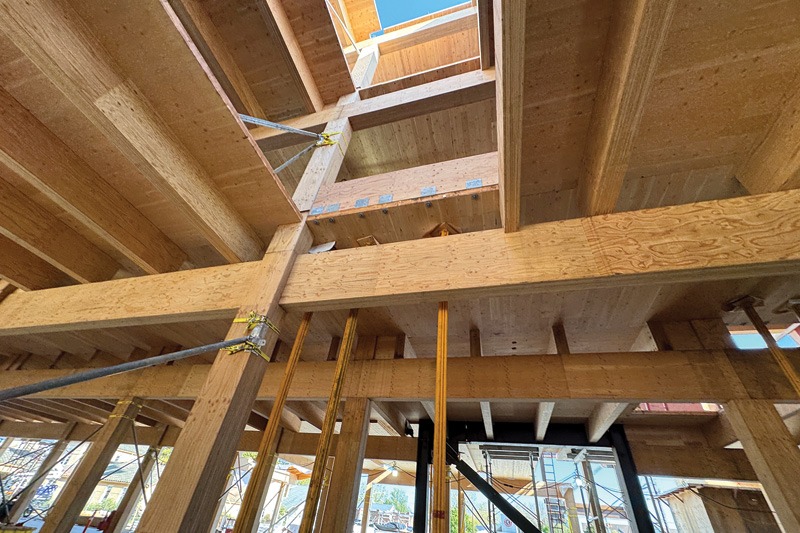
Mass timber has emerged as a leading material in the pursuit of low-carbon, sustainable construction. With its warm, natural aesthetic and significantly lower embodied carbon than steel and concrete, mass timber is increasingly used across a wide range of building types. However, unlike conventional steel or concrete structures, the very characteristics that make it appealing also create unique challenges.
The constraints of mass timber construction, such as exposed structural elements and prefabricated panels with limited flexibility, demand a new level of precision and foresight in the design and coordination of mechanical, electrical, and plumbing (MEP) systems. By anticipating the structural and aesthetic challenges of mass timber and engaging in thoughtful MEP design and coordination, engineers, architects, and specifiers can deliver high-performance buildings that not only celebrate the beauty of timber but also help meet decarbonization and sustainability goals.
Advantages of mass timber
Over the past decade, as the construction industry has favored sustainable and innovative building methods, mass timber has become a popular alternative to traditional materials. By layering and connecting wood elements with fasteners such as adhesives, nails, or dowels, mass timber components demonstrate exceptional strength and load-bearing capacity. They exhibit excellent rigidity and dimensional stability, comparable to steel and concrete, as well as superior fire, seismic, and thermal performance.
Given these qualities, mass timber is suitable for a variety of structural applications, including beams and columns; floor, roof, and wall panels; tall wall framing studs or roof rafters; and door and window headers. At the same time, mass timber is lightweight and versatile enough for a wide range of architectural styles. Cross-laminated timber (CLT), for example, is the most well-known and widely used structural material for major building elements, such as floors, roofs, and walls. In contrast, glue-laminated timber (Glulam) can be shaped into complex, curving forms ideal for use in innovative, modern architecture where the natural beauty of wood is meant to be highlighted.
While mass timber’s strength and versatility offer distinct advantages, its aesthetic appeal is a major factor driving its growing popularity. The warm, natural look of exposed wood creates a sense of harmony with the environment, resulting in visually striking spaces. When paired with biophilic design—an approach that integrates natural elements, lighting, and materials into the built environment—mass timber can strengthen occupants’ connection to nature, reducing stress and anxiety while enhancing health, well-being, and productivity.
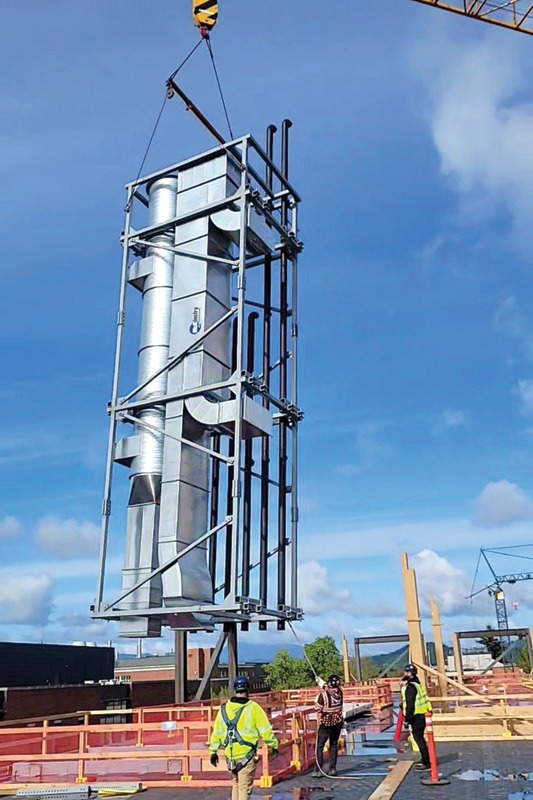
Environmental benefits are another major reason for the growing interest in mass timber, as more organizations and facilities aim to reduce their carbon emissions and meet their sustainability goals. Mass timber generally has lower embodied carbon than steel and concrete, as its manufacturing and transportation use less energy and produce fewer emissions. Also, the wood in mass timber products, which comes from smaller trees, lower-quality lumber, and waste pieces, stores more carbon than it releases over its lifespan. It generates less waste than other building materials, and its strength and durability make it well-suited for deconstruction and reuse projects.
Structural and material factors in MEP design
While mass timber offers numerous benefits and opportunities for innovative design, its fabrication and associated construction processes introduce complexities that affect MEP coordination. Mass timber presents unique challenges that necessitate more precise planning for the effective integration of MEP systems, particularly in areas such as adjustability, acoustics, and humidification.
Panel modifications and penetrations
Mass timber products are typically custom-designed for each job, and components must be fabricated off-site to meet exact specifications for each project location. Therefore, mass timber panels have limited flexibility for on‑site modification, making it challenging and time-consuming to drill, cut, or alter them on-site.
Major MEP systems and components must be fully coordinated during preconstruction before ordering panels from the supplier. Additionally, all penetrations should be carefully planned, minimally invasive, and coordinated with structural and fire protection consultants. This ensures precise cutting of penetrations during panel fabrication, resulting in more accurate opening dimensions and a cleaner appearance.
Creating openings in a mass timber floor or roof panel may affect the assembly’s fire resistance and acoustic performance. To preserve the integrity of fire-rated assemblies, all penetrations should be properly sealed and protected in accordance with the International Building Code (IBC) or the locally adopted and amended version of this code in the jurisdiction of the project.
Sound attenuation
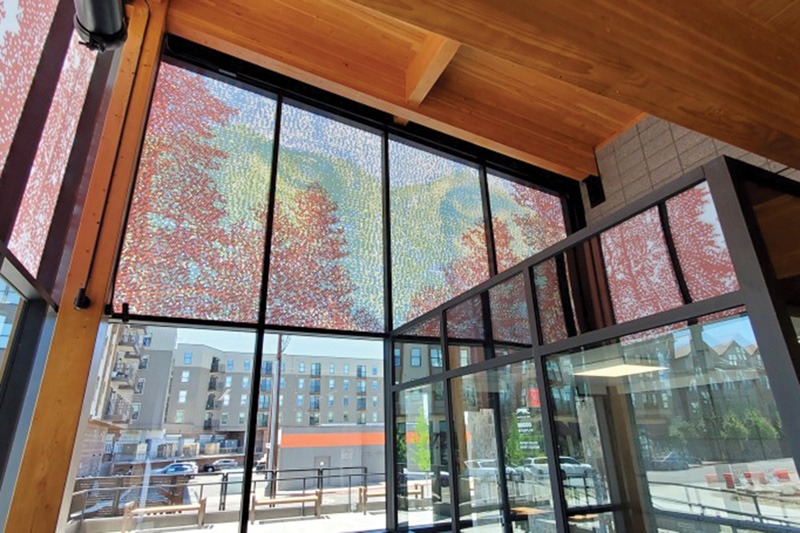
Acoustics significantly impact occupant comfort, particularly in open-plan or high-volume spaces. The absence of an acoustical ceiling tile or gypsum ceilings in mass timber buildings can amplify sound, making it crucial to integrate acoustic treatments through system design, material selection, or spatial planning. Coordinating acoustic criteria and associated requirements is essential to meet desired sound levels. Mass timber inherently has more exposed solid surfaces than traditional materials, so it is important to explore additional sound-absorbent surfaces.
Multiple sound-reduction solutions can be incorporated early in the design process to address sound concerns. For example, dowel laminated timber (DLT) can have milled voids filled with acoustic insulation between the laminations to enhance sound absorption. If needed, a similar effect can be achieved by removing sections of wood to create return/exhaust air pathways. This is ideal for atrium smoke exhaust systems that require a large volume of air and a large grille in a highly visible space.
To mitigate noise from mechanical systems, engineers often specify lined ductwork with internal acoustic insulation, which helps absorb sound generated by airflow and equipment. Sound attenuators, strategically placed near fans or terminal units, further reduce noise propagation throughout the ductwork system.
Moisture control
While mass timber can safely absorb some moisture, there are risks if the wood cannot dry properly or if water becomes trapped at interfaces, such as beneath concrete floor toppings or roofing membranes. Prolonged exposure to high humidity or repeated wetting and drying cycles can put additional stress on structural attachments and fasteners, lead to decay and structural damage, and cause the growth of fungi and bacteria on and within the wood.
Mechanical systems should be designed to maintain an acceptable humidity range, protecting the structure by minimizing expansion and contraction. In dry climates, a relative humidity (RH) of 20 to 30 percent is recommended, with a maximum of around 50 percent. Maintaining these humidity ranges helps prevent dimensional changes in the wood and preserve the investment and aesthetics of the timber.
Designing MEP for aesthetic appeal
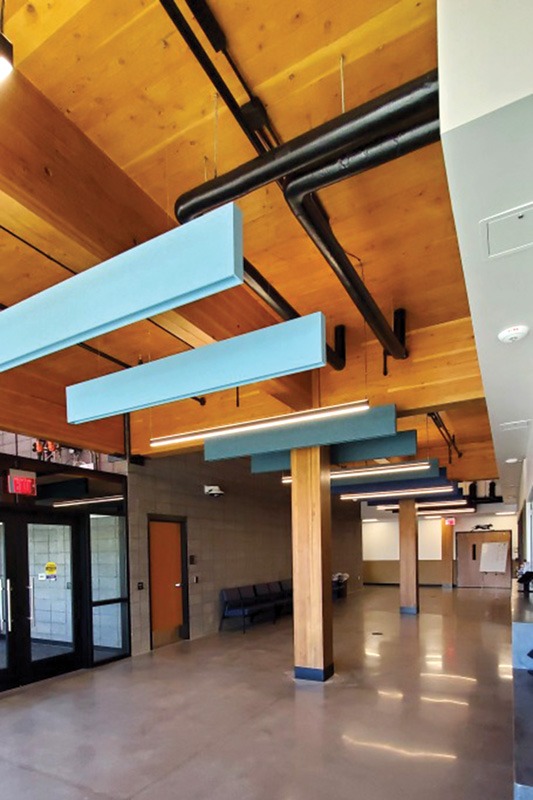
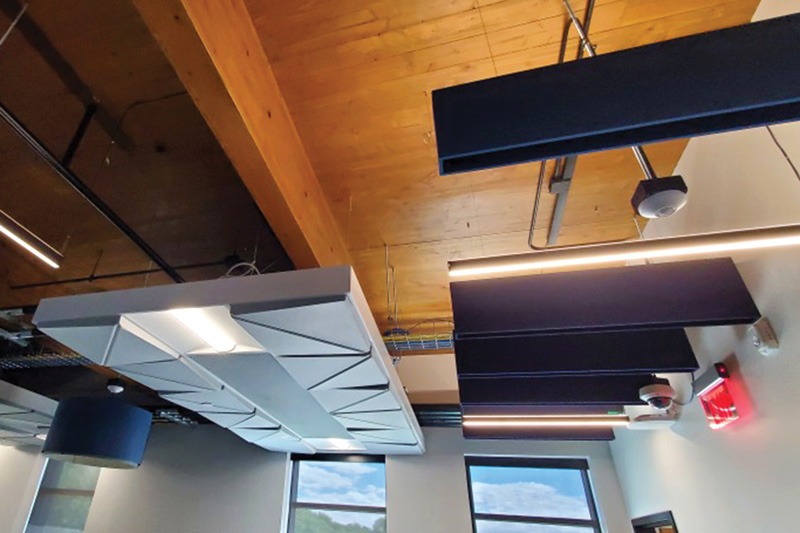
A defining feature of mass timber architecture is the visibility of its structure, making the visual integration of MEP systems critical. Exposed wood surfaces create a warm, tactile environment, but leave little room to hide ductwork, piping, fire sprinklers, conduits, and other components.
In some cases, exposing systems can complement the architectural language when carefully aligned, color-coordinated, and thoughtfully detailed. In other instances, concealment strategies such as soffits, millwork, or raised floors are more appropriate. The key is to treat MEP systems as design elements rather than afterthoughts.
To better integrate ductwork, piping, and conduit layouts into the architectural design, horizontal branches and mains can be aligned with beams and corridors. Ideally, mains are concealed behind deep beams in primary sightlines, such as main entrances. Reducing the use of elbows, offsets, and reducers maintains a clean, organized appearance.
An efficient layout should provide sufficient vertical and horizontal space for utilities to follow main routes and branch off without needing offsets to navigate around other trades. Developing trade zoning details early to identify where each system will go through main corridors is essential for creating a streamlined design. Including sections and zoning details of key areas in the bid documents will ensure the design intent is followed in the field.
Concealed spaces, such as dropped ceilings, soffits, or chases, provide additional options for routing MEP components. Specifically, raised concrete-tile floors supported on pedestals are ideal for mass timber projects. Supply air, piping, electrical conduits, and technology cable trays can use the raised floor cavity to serve open office spaces without overhead drops. Note that return air grilles, fire protection, wireless access points, fire alarms, and lighting conduits will remain exposed at ceiling level.
Embracing sustainable MEP solutions
One of the main appeals of mass timber is its ability to sequester carbon and reduce greenhouse gas emissions. The unique architectural features also naturally support low-carbon, sustainable mechanical solutions. Ultra-efficient MEP design leverages the
low-carbon qualities of mass timber, saving energy costs and reducing operational carbon emissions. They also ease coordination challenges from open ceilings and deeper
beams that conventional overhead systems often struggle with.
When it comes to lighting, high-volume spaces without conventional dropped ceilings are prime candidates for dynamic daylighting strategies, including clerestories and skylights. Open ceiling volumes allow maximum daylight deep into a building, reducing reliance on electrical lighting. The added surface area of the timber beams allows indirect lighting to provide more diffused, reflected light throughout a space. In contrast, the vertical surfaces add a dynamic element to overhead lighting, creating a more engaging space. Lighting control systems must account for the higher ceiling volumes, including thoughtful placement of daylight-harvesting photocells.
Radiant floor systems or displacement ventilation systems along the floor are particularly efficient in taller volumes and synergize well with mass timber’s tendency to reduce ceiling distribution. Floor-based heating and cooling systems maintain optimal comfort in the lower portion of the space and allow higher temperatures in the upper portion, resulting in a net reduction in heating and cooling requirements.
In climates with consistently warmer outdoor temperatures, floor heating and cooling systems work well alongside outdoor economizer systems (free cooling) because they can elevate return air temperatures at the top of high-volume spaces. When optimally designed, these systems are among the quieter options for space conditions, which suits mass timbers’ reduced capacity for noise attenuation.
For example, the high-performance heating and cooling system at Mountain Line Downtown Connection Center in Flagstaff, Ariz., uses all-electric, grade-level central heat pumps to distribute hot and chilled water throughout the building’s radiant floor system and overhead active and passive chilled beams. With these beams, the overhead fresh-air ductwork and piping were reduced and carefully coordinated through beam penetrations as needed.
Early coordination and careful integration are key
As mass timber continues to gain traction in the built environment, the importance of thoughtful MEP integration cannot be overstated. Integrated design and early collaboration between disciplines are essential for successful planning and coordination. Bringing MEP engineers into the conversation from the earliest conceptual stages allows for more efficient system layouts and fewer conflicts. For complex buildings where MEP systems are more exposed and put on display, the need for this iterative design and coordination process is even more critical.
Also important is coordination with timber fabricators, architects, and the construction team. Panel layouts, beam depths, and connection details all influence how and where systems can be routed. By working directly with manufacturers, engineers can align system needs with structural realities, reducing the need for costly redesigns or field modifications. This can help avoid late-stage routing changes or overlooked penetrations, save time, reduce costs, and preserve the architectural integrity of the timber structure.
Ultimately, successful MEP integration in mass timber buildings requires a balance of technical rigor and design sensitivity. When done well, it enhances both performance and aesthetics, reinforcing the project’s holistic sustainability goals.
Key Takeaways
Mass timber’s prefabricated nature and exposed aesthetics require precise, early-stage coordination among mechanical, electrical, and plumbing (MEP) systems. Designers must integrate technical systems—such as acoustic treatments and moisture controls—as visual elements to preserve the building’s biophilic appeal and structural integrity.
Authors

Robin Graves, PE, LEED AP, is a principal at Affiliated Engineers, Inc., bringing more than 20 years of experience in designing mechanical systems that balance innovative design, performance, and aesthetic appeal. She has led teams on a variety of projects, including cleanrooms, laboratories, pharmaceutical manufacturing, industrial facilities, and higher education institutions, utilizing her diverse system and project expertise to help clients meet their goals.

Jessica Mangler, PE, is a principal and project manager at Affiliated Engineers, Inc., with more than 15 years of experience designing mechanical systems for complex, high-performance buildings. Her portfolio includes research laboratories, BSL-3 facilities, data centers, supercomputing environments, and semiconductor cleanrooms. She brings deep expertise in energy-efficient ventilation design, decarbonization strategies, decoupled cooling, chilled beam systems, radiant heating and cooling, and high-performance heat recovery solutions. She regularly leads multidisciplinary teams on technically demanding, fast-paced projects across the higher education, science and technology, and healthcare sectors.

Brett McQuillan, PE, is a principal at Affiliated Engineers, Inc., with more than 10 years of experience in analyzing, engineering, and designing mechanical systems for laboratories, healthcare, and higher education spaces. He offers design leadership through building performance simulation, generating integrated solutions that focus on innovative carbon, energy, and water conservation efforts for zero-net-energy, carbon-neutral, and multiple LEED Platinum-certified projects.
Sign up for our weekly newsletter
Architectural materials and methods delivered right to your inbox

- CSI News & Notes: CSI’s impact earns official recognition; celebrate leaders, mentors, and innovators; and more
- CSI News and Notes: CSI spring certification exams open; scholarships available; and more
- CSI News & Notes: CSI MSR heading to San Diego; spring certification exams open; and more
- To Be Specific: Why CDT Should Be Your First Move
- CSI News & Notes: CSI Fellows share member benefits; and a New Year’s Resolution to keep
Products

Read the Latest Issue