
Sound advice: Specifying interior wood doors
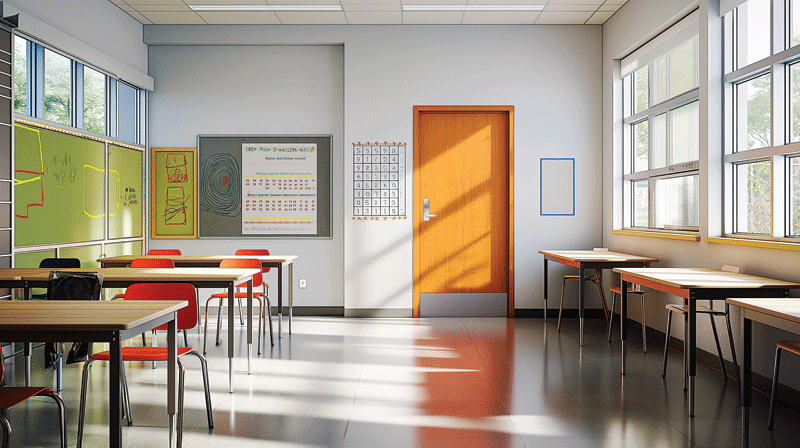
Acoustic performance has become a defining factor in the design of interior commercial environments. Rising expectations for speech privacy and auditory comfort continue to shape how designers manage sound. While walls and ceilings typically receive most of the attention, interior wood doors also contribute positively when properly specified. To achieve optimal acoustic performance, doors must be approached as a complete assembly in which the door leaf, frame, glazing, hardware, and seals all work together. Because each component contributes to acoustic control, durability, safety, and aesthetics, recognizing this interdependence allows architects and designers to strike the right balance and ensure the door assembly is greater than the sum of its parts.
Acoustic needs in context
Since acoustic priorities vary widely by building type, door assembly features must be based on how the space will be used. Assemblies that perform well acoustically in one environment may fall short in another if all requirements are not considered collectively. Understanding these application-specific needs is the first step in selecting doors that support acoustic goals without compromising other performance criteria.
In educational settings, doors are often tasked with limiting corridor noise and maintaining speech clarity inside classrooms. Depending on the level of separation required, openings may target Sound Transmission Class (STC) ratings in the mid-30s to mid-40s to reduce distraction while supporting clear instruction. Frequent use, visibility requirements, and evolving safety and security expectations add to specification complexity, making it essential to choose assemblies that balance acoustic performance with durability and life-safety requirements.
In office or workplace environments, acoustic requirements often center on speech privacy in conference rooms, collaborative workspaces, and private offices. Openings in meeting rooms or executive offices where confidential discussions occur may target STC ratings of 45 or higher. At the same time, doors must align with broader interior design strategies and reflect the organization’s brand.
For healthcare facilities, doors must protect patient privacy and contribute to a healing environment. Openings between patient rooms, exam spaces, or consultation areas commonly require STC ratings in the 40 to 50 range, depending on adjacent spaces and facility standards. Acoustic performance must be achieved alongside strict requirements for cleanability, durability, and safety, often within high-traffic, high-contact conditions.
By starting with the unique demands of the space and establishing realistic performance targets, specifiers can more clearly define how door assemblies must perform. Manufacturers can then match door designs, materials, and supporting components to meet both acoustic expectations and broader project requirements.

Coordinating laboratory ratings with field performance
Acoustic performance for door assemblies is specified by an STC rating. STC values are determined through laboratory testing in accordance with ASTM E90, Standard Test Method for Laboratory Measurement of Airborne Sound Transmission Loss of Building Partitions and Elements, and calculated under ASTM E413, Classification for Rating Sound Insulation, providing a standardized measure of how effectively a door assembly reduces airborne sound transmission across a range of frequencies.
While STC offers a useful benchmark for comparing products, it reflects controlled laboratory conditions. In the field, installed performance is typically evaluated as Noise Isolation Class (NIC) under ASTM E336, Standard Test Method for Measurement of Airborne Sound Attenuation between Rooms in Buildings. Because field conditions introduce variables such as installation tolerances, seal integrity, adjacent wall construction, and ceiling plenums, measured NIC values may differ from laboratory STC ratings.
For specifiers, this distinction underscores an important principle: achieving the desired acoustic outcome requires more than selecting a door with a target STC value. The surrounding wall assembly, frame integration, gasketing, and installation quality all influence acoustic performance. Approaching the opening as a coordinated system helps ensure that laboratory-tested ratings translate into predictable results once the building is occupied.
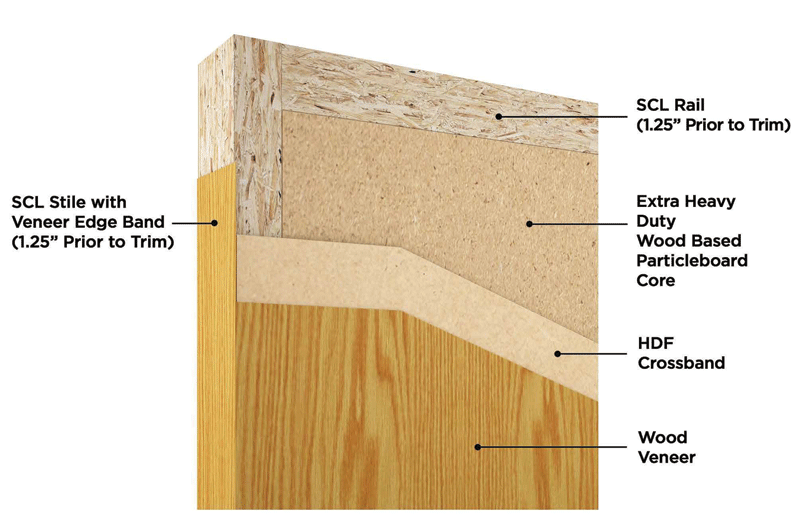
Breaking down the door: Key components that contribute to acoustic control
Once application needs are determined, the next step is understanding how a door assembly supports acoustic performance, as the core alone does not determine the final STC rating. Rather than simply specifying an acoustic-rated core, it is more effective to break down the entire door assembly into its component parts and specify them individually with manufacturer guidance.
Door leaf
The largest contributor to a door assembly’s ability to attenuate sound is the door leaf, which comprises the core, face construction (veneer, laminate, or metal skins), and edge detailing. In acoustic doors, the core is not a conventional solid insert but an engineered internal construction. Its interaction with the surrounding faces and edges determines the leaf’s overall mass, stiffness, and ability to resist vibration. As sound waves strike the surface, energy is transferred into the leaf and must be controlled within its layered construction to limit airborne sound transmission.
While proprietary configurations vary by manufacturer, most acoustic cores are designed around three core performance strategies:
- Engineered multi-layer construction—Acoustic cores commonly use laminated wood-based or composite layers arranged to disrupt vibration paths and reduce internal resonance.
- Increased surface mass—Added mass improves transmission loss in accordance with mass law principles, requiring greater energy for sound to pass through the door.
- Internal damping—By combining materials with differing stiffness characteristics, acoustic cores reduce the amplitude of vibration as energy moves through the assembly, limiting how much sound reaches the opposite side.
Together, these strategies elevate acoustic doors beyond conventional solid-core constructions of similar thickness.
Frame
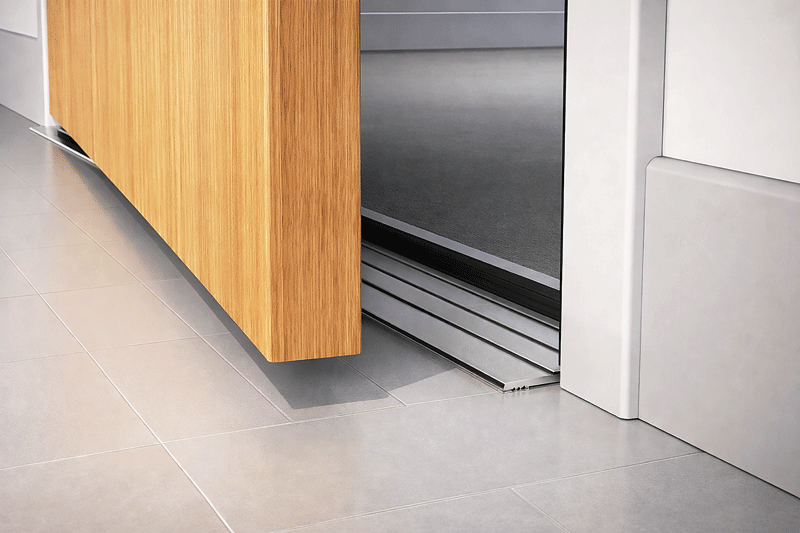
While the door leaf provides most of a door assembly’s sound attenuation, the frame is essential for realizing that performance in practice. The frame forms the structural boundary around the leaf, supporting alignment, hardware, and seals while controlling indirect sound transmission paths. A properly engineered frame works with the leaf to maintain acoustic continuity at the perimeter and at the interface between the opening and the surrounding wall.
Acoustic door frames achieve performance through several key design principles:
- Continuous, stable construction—Frames are built to provide a rigid, uninterrupted connection to the surrounding wall assembly. Stability at this junction is critical, as movement, voids, or incomplete anchoring can create flanking paths that allow sound to flow around the leaf rather than through it. Proper anchorage at the frame-to-wall interface helps preserve the integrity of both the opening and adjacent construction.
- Precision alignment and tolerances—Frames are manufactured and installed to tight dimensional standards, ensuring the door leaf closes squarely and consistently. Accurate alignment allows latching hardware and gasketing to fully engage, maintaining the designed seal pressure and limiting sound transmission at the perimeter.
- Control of indirect transmission—Special attention is given to transitions between the frame, the wall assembly, and adjacent building elements. Openings at these transitions, including alignment gaps and unsealed penetrations, can reduce effective isolation, even when the door assembly carries a high laboratory STC rating. Attention to detail in these areas helps ensure sound energy does not bypass the opening.
When properly specified and installed, the frame does more than support the leaf. It also helps integrate the door assembly into the overall acoustic envelope of the space, maintaining consistent performance across the opening.
Vision lites and glazing
When visibility, daylighting, or safety requirements call for vision lites in the door leaf, the size, location, and construction of the opening directly influence acoustic performance. In acoustic doors, vision lites are designed to preserve as much of the door leaf’s sound-attenuating properties as possible while also meeting functional and aesthetic goals.
An effective acoustic vision lite design includes:
- Optimized size and placement—Smaller openings preserve more of the leaf’s mass, which is essential for sound blocking. Thoughtful positioning of the lite within the door can also minimize structural interruptions that may reduce performance.
- Acoustic-rated glazing—Specialty glass or laminated units add mass and internal damping, helping limit sound transfer through the lite. The specific thickness and composition of the glazing are coordinated with the surrounding leaf construction to achieve the desired STC rating.
- Precision framing and sealing—Glazing is installed in frames designed to maintain tight tolerances and full seal compression around the lite perimeter. Properly engineered lite frames prevent gaps that could create flanking paths and ensure the vision opening does not compromise overall acoustic performance.
These considerations allow vision lites to provide daylighting, visibility, and safety while preserving the acoustic integrity of the door assembly.
Hardware
Hinges, latching mechanisms, locks, and closers are not just operational elements. They also help ensure the door maintains alignment, seal compression, and acoustic continuity over time. Even the best-engineered leaf and frame cannot achieve STC-rated performance if the hardware has gaps, misalignments, or uneven compression.
Effective acoustic hardware attends to:
- Weight support and alignment—Hinges must adequately accommodate the weight of the door, particularly heavier acoustic cores or doors with glazing, to maintain long-term alignment. A properly supported leaf prevents sagging that could reduce gasket compression or create gaps at the perimeter.
- Full engagement and consistent seal compression—Latching mechanisms, locks, and closers work together to ensure the door fully engages the frame every time it closes. Consistent engagement compresses perimeter seals and prevents sound from bypassing the leaf through gaps.
- Durability under frequent use—High-traffic environments such as schools, hospitals, and offices require hardware that withstands repeated operation without loosening, warping, or failing. Durable components maintain proper alignment and seal pressure, preserving acoustic performance throughout the life of the door.
By specifying and installing hardware in coordination with the leaf and frame, designers can ensure that the door assembly functions as a cohesive acoustic system.
Gasketing and seals
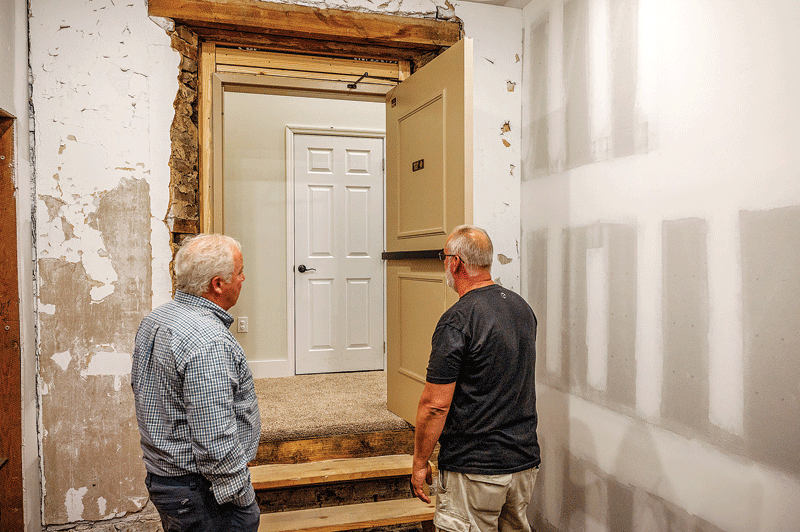
Even the most carefully specified door leaf, frame, and hardware cannot achieve rated acoustic performance without proper gasketing and perimeter seals. These elements close the gaps between the leaf, frame, and floor, preventing airborne sound from bypassing the assembly and undermining the STC rating.
Effective acoustic gasketing and seal design rely on:
- Continuous sealing around the perimeter—Perimeter gaskets must maintain an uninterrupted barrier along the top and sides of the door. Continuous, properly aligned perimeter gaskets prevent flanking paths and help the leaf and frame achieve their full acoustic potential.
- Compatibility with hardware and door operation. Seals and door bottoms must be matched to the door’s weight, swing, and frequency of use. Proper coordination with latches, closers, and hinges ensures that compression is consistent and that the seals function over the life of the assembly without excessive wear or deformation.
- Floor and threshold integration—Automatic or drop seals at the bottom of the door, or gasketed thresholds, prevent sound from escaping beneath the leaf. These components are engineered to fully engage when the door closes yet allow smooth operation and durability in high-traffic areas.
By understanding the contribution of each component and coordinating with an experienced manufacturer, designers can specify assemblies that reliably achieve their intended acoustic performance targets.

Balancing acoustic performance with other requirements
Acoustics are only one priority that interior doors must meet in real-world environments. Schools, hospitals, offices, and other high-traffic spaces require doors that are also durable, safe, and visually appropriate for the intended area. When properly specified, acoustic door assemblies can satisfy these additional requirements without compromising sound control, allowing designers to achieve a truly integrated solution.
Durability and high use
In classrooms, patient rooms, and busy offices, doors must withstand repeated operation, impacts, and general wear over time. Acoustic doors meet these demands through robust core constructions, reinforced edges, and durable hardware. Selecting hardware rated for heavier acoustic cores and ensuring proper frame installation helps maintain alignment and seal compression over years of use, preserving both durability and sound attenuation. High-quality face materials, such as resilient laminates or wear-resistant veneers, further protect the leaf against scratches and dents while maintaining acoustic performance.
Fire and safety performance
Depending on building codes and the location of the door, assemblies may need to meet fire-resistance ratings, smoke control standards, or other safety requirements. Acoustic doors can be configured with fire-rated cores, glazing, and compatible hardware when required, without reducing sound attenuation.
Aesthetic integration
Veneer species, cuts, paints, stain finishes, and laminate options provide flexibility for color, texture, and pattern without impacting acoustic cores and perimeter seals. Designers can coordinate vision lites, hardware finishes, and door leaves to align with branding or interior themes while still achieving the desired STC rating.
By considering durability, fire and safety, and aesthetics alongside acoustic goals, specifiers can select door assemblies that meet multiple project requirements.
Selecting a manufacturer that supports specification
Today’s interior wood doors are expected to deliver more than visual appeal, making the choice of manufacturer an important part of managing the specification process. The ideal manufacturer is one that simplifies decision-making and helps ensure both design and performance intent are realized in the finished environment.
Start with a system-based approach
Manufacturers that offer performance data for complete door assemblies are better able to help specifiers achieve predictable results. Acoustic performance, durability, fire ratings, and aesthetics are all outcomes that depend on how the door leaf, frame, glazing, hardware, and seals interact. Look for a manufacturer that tests and documents performance at the assembly level and that can clearly explain how each component contributes to the overall result. This approach reduces guesswork and helps specifiers avoid unintended performance gaps.
Prioritize verified performance
A reliable manufacturer provides clear, easily accessible documentation, such as acoustic ratings, security certifications, fire listings, and compliance with applicable standards, so specifiers can compare options with confidence. Equally important is transparency about limitations and tradeoffs. Manufacturers that are knowledgeable about how factors like glazing, core selection, and hardware choices affect acoustics help specifiers make more informed decisions.

Look for a balance of aesthetics and performance
Manufacturers of high-performing acoustic wood doors offer a wide range of aesthetic options that do not require specifiers to sacrifice design for performance. The right manufacturer supports architectural expression with a range of wood veneer options as well as stains, paint finishes, and edge profiles that work in harmony with the door assembly’s strength and durability.
Consider early and ongoing technical support
The best manufacturers act as technical partners, not just product suppliers. Early engagement in the development of the door’s design helps identify and resolve potential conflicts among acoustics, code requirements, and budgets before they become costly issues. Ongoing support throughout submittals and installation further ensures the specified performance is preserved through construction.
Assess long-term value, not just first cost
High-quality acoustic wood doors that meet multiple performance priorities should deliver lasting value. Manufacturers that emphasize durability, consistent quality control, and serviceability help protect the building owner’s investment while reducing maintenance and replacement costs over time.
Ultimately, specifying interior wood doors for acoustic performance requires more than selecting a product with a target STC rating. Success depends on coordinating the entire assembly and adjacent structures with the support of a knowledgeable manufacturer. Taking this approach supports better-informed and better-designed acoustic solutions that meet the demands of today’s commercial interiors.
Author

Maria Leddin, senior product manager at Forte Opening Solutions (forteopenings.com), brings more than a decade of product management experience in manufacturing and commercial project solutions. She oversees Forte’s full product portfolio—from doors to components—ensuring performance, consistency, and value across complex commercial environments, with particular expertise in wood-based solutions. Leddin holds an MBA from the University of Iowa and a BA from the University of Wisconsin, and is known for her strategic, data-driven approach and collaborative leadership that help deliver reliable results for Forte’s customers.
Sign up for our weekly newsletter
Architectural materials and methods delivered right to your inbox

- CSI News & Notes: CSI’s impact earns official recognition; celebrate leaders, mentors, and innovators; and more
- CSI News and Notes: CSI spring certification exams open; scholarships available; and more
- CSI News & Notes: CSI MSR heading to San Diego; spring certification exams open; and more
- To Be Specific: Why CDT Should Be Your First Move
- CSI News & Notes: CSI Fellows share member benefits; and a New Year’s Resolution to keep
Products


Read the Latest Issue