Atrium dreams, code reality: Bridging the gap
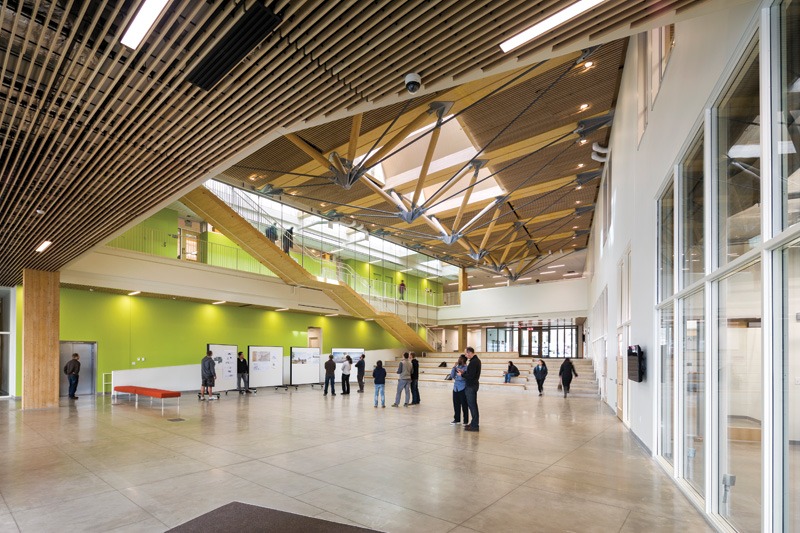
Atriums are among the most compelling architectural elements in modern design. They invite daylight into buildings, connect levels with openness, and create a sense of spaciousness that is hard to match. Whether it is a soaring lobby, a central gathering space, or a featured staircase linking floors together, atriums have become a preferred design solution.
However, they come with some of the most complex and impactful building code requirements that can reshape projects in ways many architects do not anticipate. Atriums have increased exposure to occupants from heat, smoke, and toxic gases, requiring additional life-safety systems. This is why they often require systems such as smoke exhaust fans, fire-rated shutters, additional sprinklers, and sometimes even a generator. Understanding what triggers atrium classification, what systems it requires, and how it affects fire protection, egress, and cost is essential for preserving the integrity of the design and avoiding compromises.
What is an atrium?
When walking into a building for the first time, it can feel a little claustrophobic. Doors in every direction lead to other spaces within the building, but which door is the correct one?
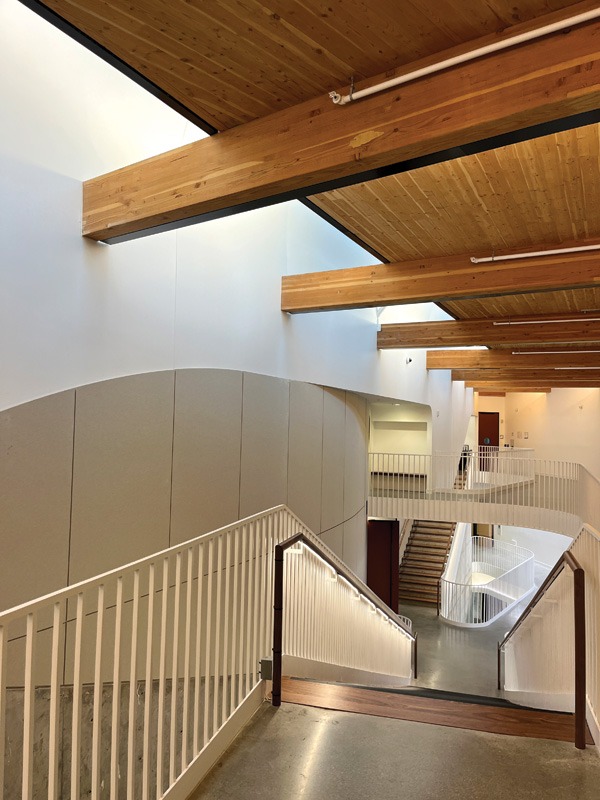
Walking into an atrium is an entirely different experience: the space is open, airy, and well-lit by natural light streaming in from ceilings that can be 9.1 m (30 ft) or more above the floor. There are often art or architectural features, places to sit, and a welcoming environment for people to collect their thoughts before continuing further to conduct business or enjoy a day of leisure.
Architects use atriums to create seamless connections between related spaces. Common in airports, hotels, concert halls, convention centers, and office buildings, they allow occupants to experience interconnected environments supporting ultimate flexibility.
An atrium can enhance building performance, occupant comfort, and spatial quality, serving both functional and aesthetic purposes. The large open volume introduces abundant daylight into the building core, reducing reliance on artificial lighting and lowering energy demand. When integrated with thoughtful facade and vertical circulation design, atriums can support stack-effect ventilation, improve airflow, and use passive cooling strategies. They strengthen visual connections between floors, improve wayfinding and orientation, establish spatial hierarchy, and act as architectural focal points. In addition, atriums serve as communal spaces that encourage social interaction and collaboration, making them a valuable element in contemporary building design.
When asking fire protection engineers what an atrium is, they are likely to give a strict definition rather than the feeling or design that an architect might describe. According to the 2024 International Building Code (IBC), an atrium is defined as any vertical space that is closed at the top and connects three or more stories—or two stories in hospitals (Group I-2) or detention centers (Group I-3). Atriums are not permitted in high-hazard (Group H) occupancies. Three connected stories may sound like a shaft, but the atrium provisions come from special, detailed requirements in Section 404 of the IBC that allow spaces to be interconnected.
However, every time stories are connected, an atrium is not necessarily required. The IBC does provide allowances for vertical openings for escalators, parking garages, and two-story openings (including exit access stairways). These can preserve interconnected stories without triggering full atrium requirements. As a reminder, a mezzanine is not a story, and mezzanines are often open to the story they are part of, but are allowed to be closed in certain cases. Other examples of vertical openings where atriums are not required include:
Escalators (712.1.3)
Escalators are commonly featured in the centers of malls and large shopping centers to facilitate smooth movement between levels, make navigation easier, and encourage more interaction and engagement among visitors. A horizontal assembly is not required between the floor and openings for escalators complying with one of the following from IBC Section 712.1.3:
- Protection by a draft curtain and closely spaced sprinklers. The vertical opening cannot be more than twice the area of the escalator in the opening.
- Protection of the vertical opening by listed or approved shutters.
Two-story openings (712.1.9)
Upon entering a hotel, guests are often greeted with breathtaking high ceilings that convey a sense of openness and grandeur. The two-story opening provides a welcoming atmosphere that sets the tone for an elevated experience. In occupancies other than Group I-2 and I-3, a two-story vertical opening is allowed when it does not penetrate horizontal assemblies that separate fire areas, is not concealed within structural elements, is not open to corridors in Group I or R occupancies, and is properly separated from other floor openings.
Exit access stairways and ramps (1019.3)
A grand, open stairway rises through the middle of the space, inviting movement, daylight, and visual connection between floors while serving as a primary circulation path. The stairs share some qualities with an atrium, but they meet a special condition and are not classified as one. Vertical openings for exit access stairways and ramps are limited to a maximum area that does not exceed twice the stair’s or ramp’s projected horizontal area. The number of stories connected in buildings classified as Group B or Group M occupancies (office buildings or retail stores) is not limited. In other occupancies, openings may connect to no more than four stories and are not permitted in Group I-2 or Group I-3 occupancies.
Parking garages (712.1.10)
While driving up parking garage levels looking for a place to park, drivers may wonder how these levels interact so seamlessly, what special systems are in place to allow this fluidity, and how much it costs to design. The truth is, vertical openings in parking garages for automobile ramps, elevators, and duct systems dedicated to the parking garage are permitted if they are constructed in accordance with the requirements for parking garages (406.5, 406.6).
Use and function
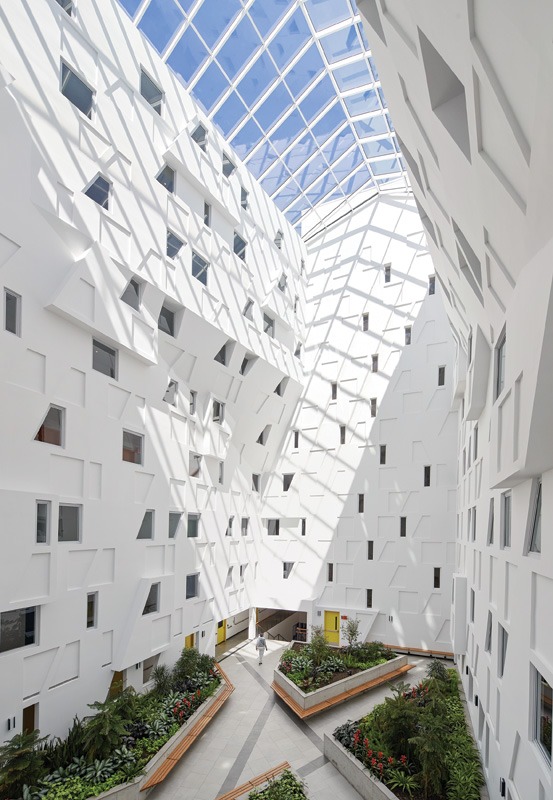
Airports, university buildings, and hotels frequently incorporate atriums into their designs to create open, visually appealing spaces. However, the use and function of atrium spaces are restricted by the requirements outlined in the IBC. Specifically, atriums are generally limited to low-hazard uses, unless sprinklered.
Low-hazard uses include areas where the contents and activities present a minimal risk of fire, such as churches, museums, educational facilities, restaurant seating areas, and auditoriums (as noted in National Fire Protection Association (NFPA) 13 Annex A.4.3.2). Atrium areas are often prohibited from uses such as fabrication spaces, storage areas, and office areas because they introduce a greater fire risk. In some cases, certain uses may be allowed within an atrium if sprinklered and approved by the authority having jurisdiction (AHJ).
Atrium separation
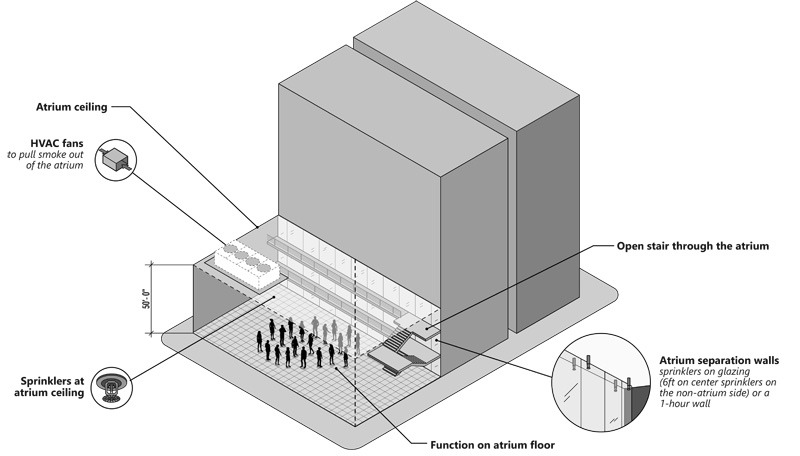
Atriums must be separated from the rest of the building by one-hour fire barriers or horizontal assemblies. There is some flexibility in preserving the openness of the space: design teams can use fire-rated glazing or opt for non-rated glass protected by automatic sprinklers (a water curtain). This involves closely spaced sprinkler heads installed on one or both sides of the glass. Note that this type of application is not a universal substitute for a one-hour-rated
fire barrier.
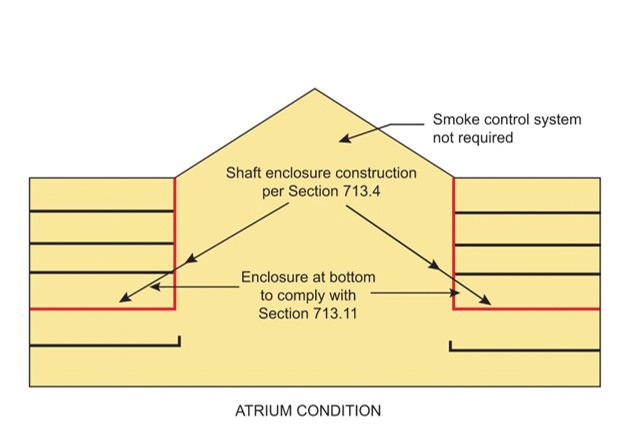
A top-hat strategy can be used to preserve grandeur at lower levels of a building while enclosing the upper floors to better manage fire and smoke risks. This design strategy allows atriums that appear to connect three or more stories (but only connect two) to omit a smoke control system when only the two lowest stories are open to the atrium and all stories above are separated as a vertical shaft. This configuration resembles a top hat sitting above the open atrium with the upper levels effectively capped and isolated, as shown in Figure 2.
In the traditional approach, rather than the top-hat method, up to three floors can open directly into the atrium, provided the smoke control system is designed to control smoke in the occupied spaces within the atrium. Some teams also explore deployable fire/smoke curtains to maintain openness while satisfying separation requirements. These solutions require careful planning, integration into smoke control modeling, and early approval from the AHJ.
| Table 1: Example of Occupant tenability criteria | |||
| Criteria | Limits | Location and specifications | Reference |
| Temperature | 60 C (140 F) maximum | 1.8 m (6 ft) above highest walking surface outside of plume | NFPA 92 |
| Visibility | 10 m (33 ft) minimum | At any occupied surface within 1.8 m (6 ft) of the floor outside of the plume |
Yamada and Akizuk2 |
| Carbon Monoxide | 380 ppm maximum | At any occupied surface within 1.8 m (6 ft) of the floor outside of the plume |
NFPA 92 Annex M3 |
Walls
Atrium walls are generally required to be constructed as fire barriers in accordance with IBC Section 707, which mandates that walls extend continuously from the top of the foundation or floor/ceiling assembly below to the underside of the floor or roof sheathing, slab, or deck above, and that they be securely attached (Section 404.6B). Additionally, supporting construction for a fire barrier must be protected to the same fire-resistance rating as the barrier itself, unless an exception permits otherwise.
Atrium fire barriers must be tested in accordance with ASTM E119, Standard Test Methods for Fire Tests of Building Construction and Materials, or UL 263, Fire Tests of Building Construction and Materials, the standard fire tests for building construction and materials. These tests evaluate the barrier’s ability to resist the passage of fire and maintain structural integrity for a prescribed duration. Testing includes exposure to a standard time–temperature fire curve, followed by a hose-stream test to assess durability under both thermal and mechanical stress.
Openings
An open concept allows spaces to interact with each other, lets light flow through, and enables better interaction between the spaces and their users. Flowing the atrium into the rest of the building can seem challenging when a fire barrier is required to separate the spaces. However, openings in fire barriers are still permitted when protected in accordance with Section 716 of the IBC. Fire doors, horizontal shutters, and fire windows (opening protectives) must be tested to ensure they remain intact when subjected to a fire department hose stream, in accordance with NFPA 252, UL 10B, or UL 10C. Typically, these openings are limited to a single opening of 14.4 m2 (156 sf) and a maximum aggregate width of 25 percent of the wall length. However, single opening size does not apply when adjoining floor areas are fully sprinklered and neither apply when opening protectives tested to ASTM E119.

Smoke control
Once a space qualifies as an atrium under building codes, one of the most significant code requirements is the installation of a smoke control system. This system is critical for maintaining safe conditions during a fire event. Most atriums require mechanical exhaust fans, which must be strategically located so smoke can flow freely to the fans without obstruction. These fans must be connected to standby or backup power sources to provide operation during a power outage.
In addition to exhaust, makeup air provisions are necessary to replace the air being removed and to maintain pressure balance. This can involve installing automatic door openers on exterior doors to allow air into the building or installing mechanical makeup air units—or both. Smoke or heat detection and control systems are also essential. Beam smoke detectors, which span long distances across the atrium space, are commonly used to detect smoke early and at high elevations. Some designs may incorporate UV/IR flame detectors for quicker response in certain environments. The fire alarm system plays a central role in this setup by detecting smoke, managing the sequence of operations, activating control systems, closing fire doors, shutting down elevators, and notifying occupants.
To evaluate smoke control performance, criteria are established to keep conditions safe long enough for people to get out and can still see where to go. Key factors, including temperature, visibility, and carbon monoxide concentration (Table 1), are measured within 1.8 m (6 ft) of the walking surface. Thresholds are selected using applicable standards, building occupancy, and the agreed-upon design fire scenarios. Tenability criteria and the design fire scenarios are typically developed by the fire protection engineer, agreed to by the design team/owner, and approved by the AHJ. They serve as pass/fail metrics for computational fluid dynamics (CFD) or zone modeling and directly drive major design decisions, such as exhaust rates, makeup air paths, and detector and control strategies.
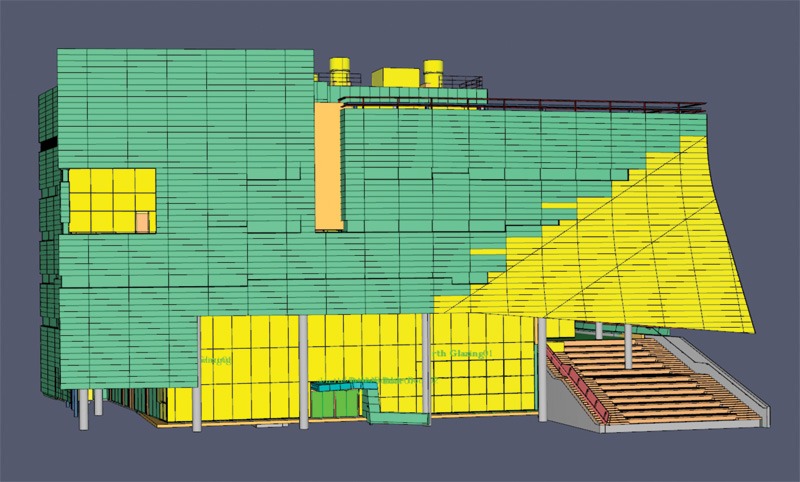
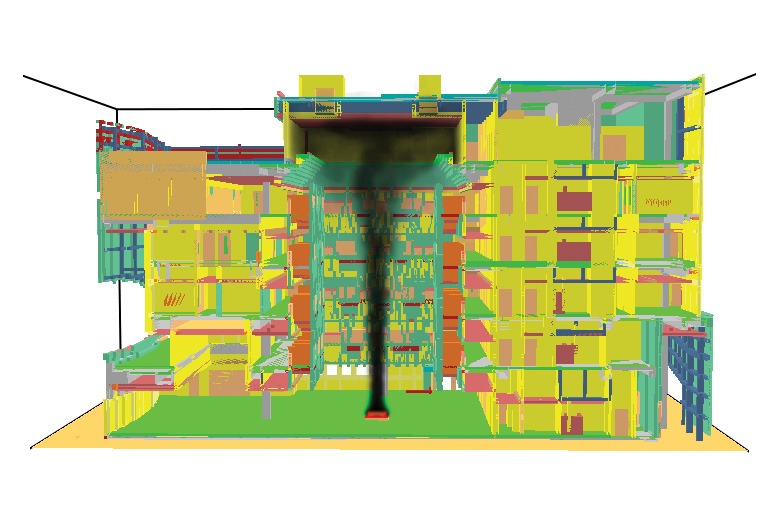
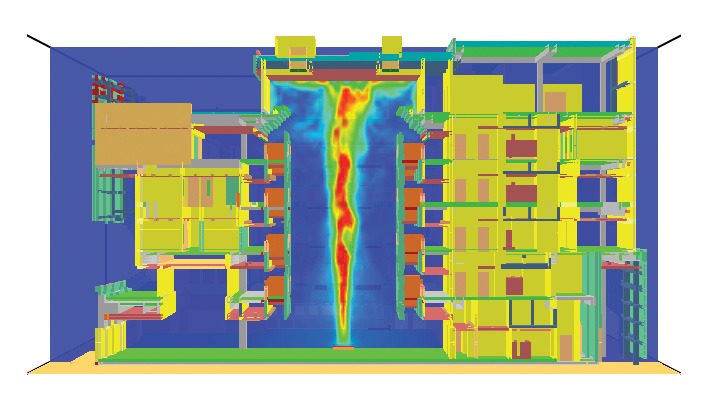
Determining the performance of a smoke control system typically involves detailed modeling. Engineers often use CFD or zone models to simulate how smoke will behave in the 3D atrium space. This includes building a full 3D model of the atrium and running complex simulations that can take days or even weeks to complete, depending on the project’s size and complexity. The final design must demonstrate that smoke can be effectively controlled under various fire scenarios.
These systems demand early coordination between the architect, fire protection engineer, mechanical engineer, electrical engineer, and building owner. Waiting too long to address smoke control often results in late reworking, lost ceiling space, or costly redesigns of fan sizes, ductwork locations, or atrium walls.
Egress
Atriums are often treated as central hubs, and it is tempting to rely on them heavily for egress. But there are limits. Exit access travel distance through an atrium is restricted; if the egress path passes through the atrium at the level of exit discharge, it must still comply with the general exit access travel distance requirements laid out in IBC Section 1017.2. However, when egress through the atrium occurs on levels other than the level of exit discharge, the travel distance within the atrium is limited to 61 m (200 ft).
IBC 1023.2 requires interior exit stairways to be enclosed in fire reistance-rated construction with an exception for interior exit stairways in atriums to be unenclosed. IBC 404 outlines criteria for interior exit stairways located within the atrium, requiring each stairway to be accessible from at least two directions and base code criteria to be followed for stairways.
Whether occupants are exiting from the atrium or another part of the building, they must have access to a stair outside the atrium because no more than half of the required interior exit stairways are allowed within the atrium. The discharge from those interior stairways must comply with IBC Section 1028.1. This requires exits to discharge directly to the exterior of the building, or, for up to 50 percent of the required capacity, to discharge through interior areas, including atriums, at the level of exit discharge when specific criteria are met. The stairs must lead to an unobstructed area where an exterior door is readily visible and accessible. The area must be separated from areas below with fire-resistant construction equivalent to the stair enclosure and must be sprinklered. If both an interior stairway and an open exit access stairway serve the same floor and discharge at the same level, they must be located at least 9.1 m (30 ft) or one-quarter of the building’s diagonal apart (whichever is less).
Sprinklers
Since residential and institutional buildings must be sprinklered in all cases, and most other occupancies require sprinklers when the building is larger than 1,110 m2 (12,000 sf), buildings large enough to feature an atrium will likely require sprinklers regardless. However, even if sprinklers would not otherwise be required, any building with an atrium must be fully sprinklered unless the area of the building adjacent to the atrium is separated by at least a two-hour fire barrier or a horizontal assembly.
Where the ceiling of the atrium is more than 16.8 m (55 ft) above the floor, sprinkler protection at the atrium ceiling is not required. Instead, the code relies on smoke control systems and only requires sprinklers at lower levels or balconies to control fire hazard.
Standpipes
The IBC does not have specific requirements for standpipes in atriums. However, standpipe requirements depend on a building’s height and occupancy, so a building with an atrium is likely to require coverage by standpipes.
A sufficiently large atrium may require a hose valve, as standpipe hose connections must be located so that all portions of the building are within 61 m (200 ft) of a hose connection, measured along the path of travel.
Conclusion
Atriums are not something to avoid–they are something to plan for. Clear planning for code-compliant smoke control, barriers, and egress can unlock the full potential of an atrium while staying within budget. The real challenge is not the code itself, but realizing too late that open exit access stairs or a grand lobby qualify as an atrium. At that point, retrofitting complex systems into a fully coordinated design can derail the budget and timeline.
Notes
1 National Fire Protection Association. NFPA 92: Standard for Smoke Control Systems, Annex M3.6, NFPA, 2018.
2 Yamada T., and Y. Akizuki, “Visibility and Human Behavior in Fire Smoke,” SFPE Handbook of Fire Protection Engineering, 5th Ed., Table 61.3, P2198.e.
3 NFPA 92 (2018 version) – Standard for Smoke Control Systems, NFPA, Quincy, Mass.
Authors

Kevin Black, P.E., is a senior consulting engineer with Simpson Gumpertz & Heger’s (SGH) New York, N.Y., office. He is a seasoned fire protection engineer who helps clients solve complex fire and life safety challenges while navigating intricate code requirements. He specializes in developing practical solutions for a range of projects, integrating fire protection measures with essential building systems to support safety and performance. Black can be reached at kmblack@sgh.com.

Madison Di Vico is a project consultant with SGH’s New York, N.Y., office. She specializes in fire protection engineering and fire life safety consulting, helping clients achieve their safety and performance goals. Her experience spans a diverse range of projects, where she provides code consulting, fire modeling, and design services to develop practical, code-compliant solutions. Madison can be reached at mldivico@sgh.com.
Key Takeaways
Atriums offer significant aesthetic and daylighting benefits but introduces rigorous fire- and life-safety code requirements. Architects must engage code consultants early to manage complex systems, such as smoke control, fire-rated barriers, and standby power, ensuring open designs remain safe and cost-effective without disruptive late-stage design modifications.
Sign up for our weekly newsletter
Architectural materials and methods delivered right to your inbox

- CSI News & Notes: CSI’s impact earns official recognition; celebrate leaders, mentors, and innovators; and more
- CSI News and Notes: CSI spring certification exams open; scholarships available; and more
- CSI News & Notes: CSI MSR heading to San Diego; spring certification exams open; and more
- To Be Specific: Why CDT Should Be Your First Move
- CSI News & Notes: CSI Fellows share member benefits; and a New Year’s Resolution to keep
Products

Read the Latest Issue