
Rethinking waterproofing quality assurance

The U.S. construction industry spends an estimated $8 billion per year on waterproofing remediation, and water intrusion claims account for approximately 70 percent of all building envelope litigation. A significant share of these costs stems from documentation problems: inspection records that cannot withstand scrutiny years later when a leak appears.
The challenge in building envelope quality assurance (QA) is producing a durable record—one that spans the gap between installation and failure, often several years in waterproofing. By the time a leak appears, the conditions that caused it are long since been concealed, and the inspection record becomes the only reliable evidence. That same record is carried forward into warranty management, recurring inspections, and forensic investigations. Its quality, captured in the field and preserved over time, determines whether the firm’s envelope work is defensible when questions arise.
Why documentation is where envelope QA breaks down
Three shifts in how envelope work is contracted and defended have placed new pressure on documentation rather than on technical work alone. Together, they are accelerating the shift towards digital inspection and compliance workflows, areas where the AEC industry has historically lagged behind other sectors.
Handover expectations have shifted
Complete, time-stamped QA records are now contractual deliverables, on par with construction documents. Documentation has shifted from supplementary to essential.
Codes are revised faster than paper can keep up
The International Building Code (IBC) and relevant ASTM standards are revised every few years, with states and cities adopting them on their own timelines. Documentation processes must keep pace—something paper records and isolated spreadsheets cannot do without constant rebuilding. When proof is needed that a particular waterproofing detail was inspected against the current applicable standard, the evidence needs to be instantly retrievable, not reconstructed from a binder of notes.
Inspection labor has tightened
Skilled envelope inspectors are increasingly difficult to hire, and most firms cannot scale headcount to match demand. Firms that streamline the inspection workflow can take on more work. Documentation efficiency has evolved from a back-office concern into a core competitive advantage.
All these pressures converge at one point: the record of what was inspected, when, and against which standard. What once lived in a binder must now support real-time oversight and long-term retrieval years after the fact, an entirely different level of requirement.
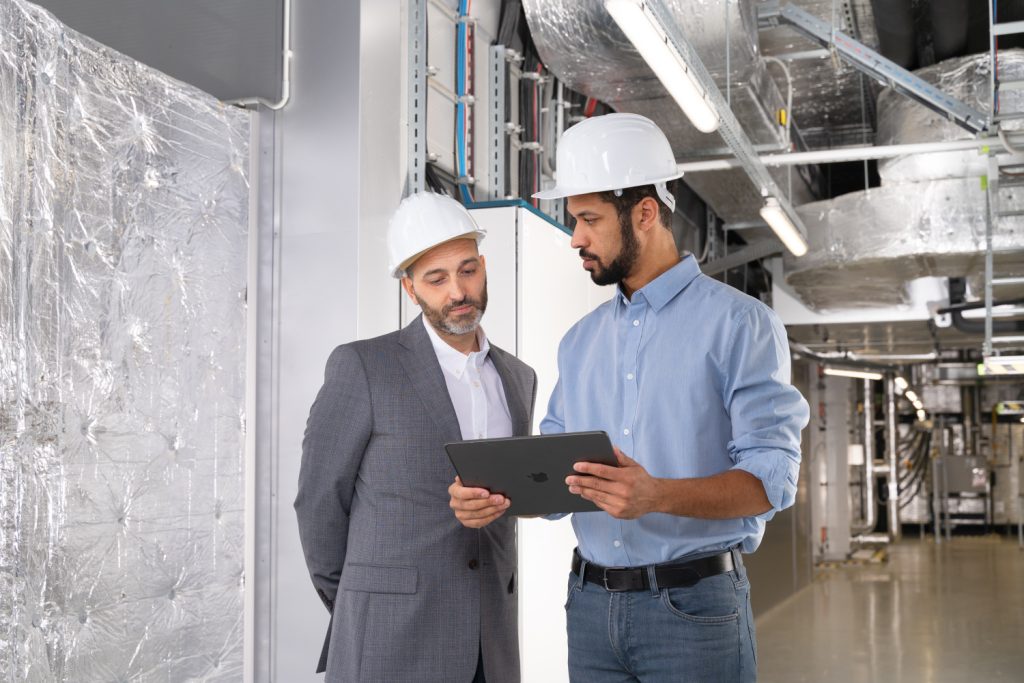
What does better documentation look like in practice?
The shift happening across mature envelope firms is structural, not a wholesale reinvention of how inspectors work. Modern platforms adapt to existing inspection sequences, code requirements, and reporting formats, rather than imposing a new methodology. The inspector with 15 years of QA experience does not change how they inspect; the infrastructure adapts to meet them.
This principle also guides implementation as well. For firms managing multiple active projects, the cost of a lengthy rollout is lost revenue. Platforms gaining traction are ready for production within days rather than months. Field applications are simple enough that an inspector can capture observations from a phone on a scaffold without training delays.
In the field
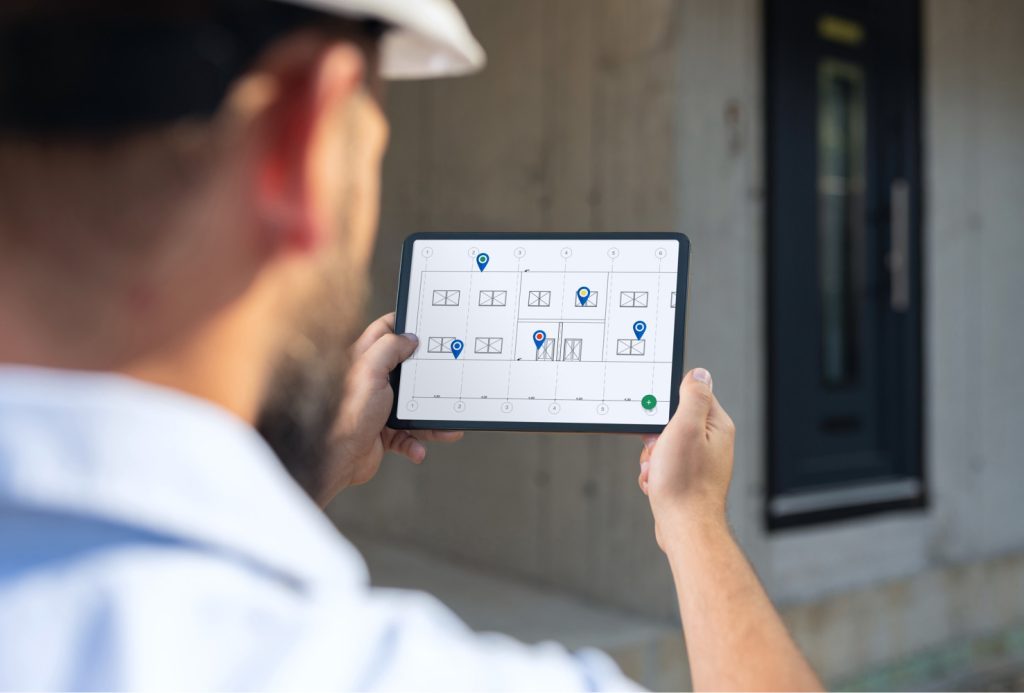
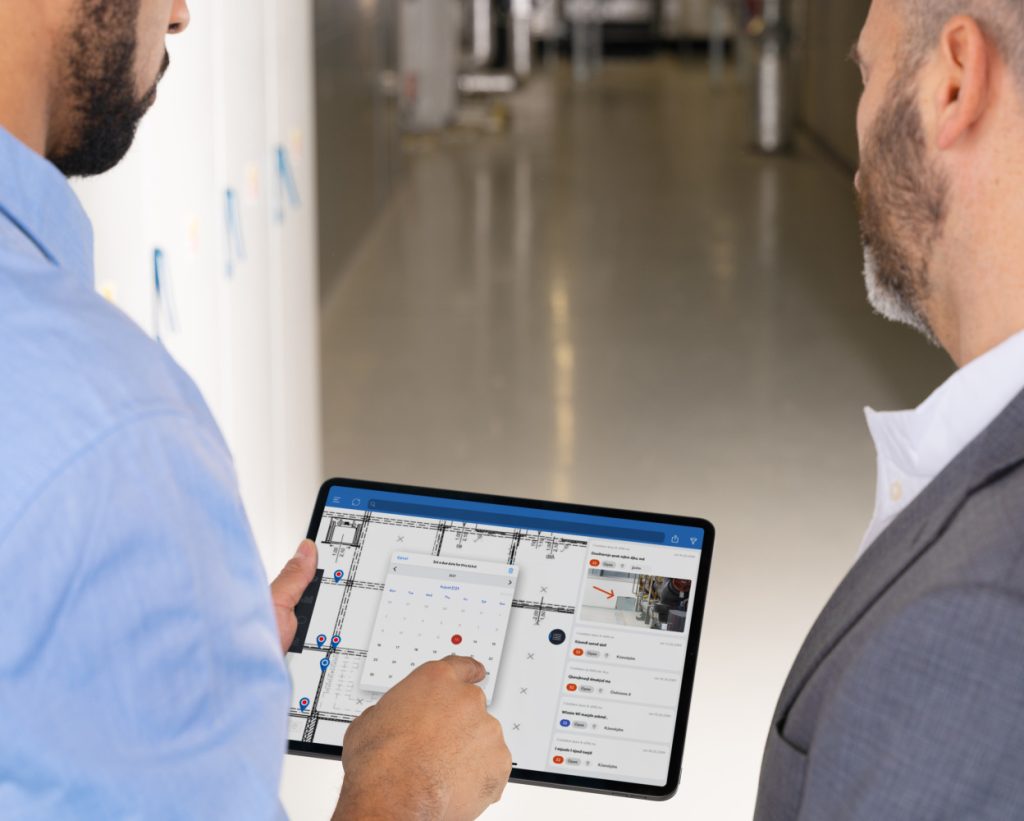
Every observation is tied to its precise location on the plan, with the photo, time stamp, and assignee captured at the moment of inspection. What was once fragmented documentation becomes a single, coherent source of truth. A water stain appearing on a fifth-floor ceiling six months after handover is far easier to diagnose when the original installation evidence and inspector history are linked to the exact wall position above it. For firms running multiple concurrent projects, real-time visibility across all open issues emerges without manual compilation of status reports. The complete, time-stamped audit trail withstands scrutiny during claims and/or regulatory reviews.
Between field and office
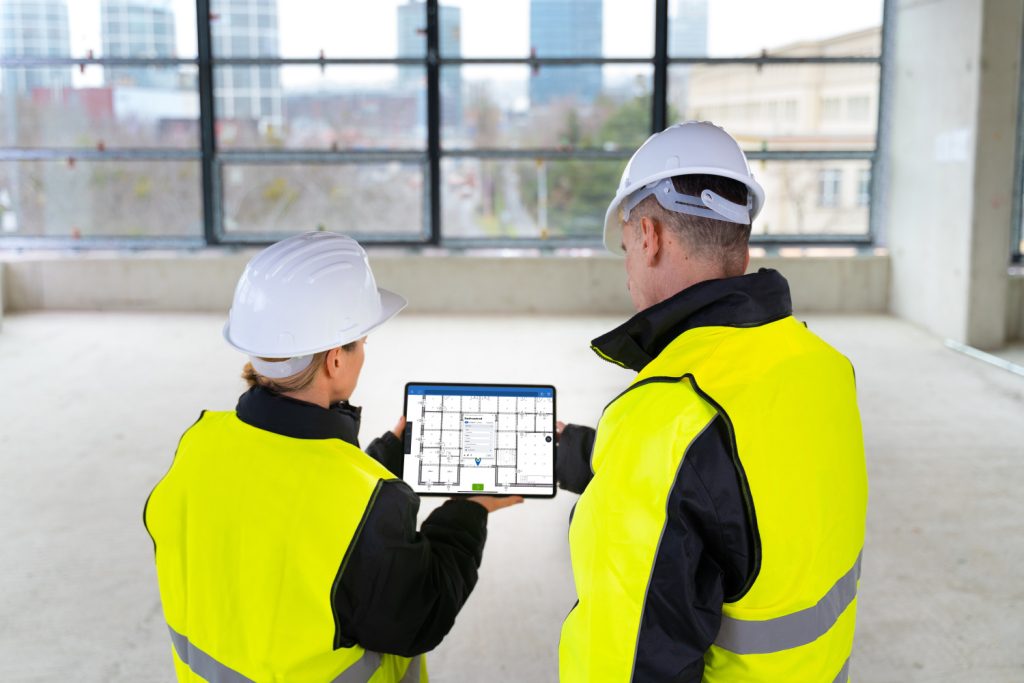
Inspectors and reviewers work from the same live data. Observations are checked digitally for accuracy and completeness; deficiencies are flagged through a structured issue list; and items can be escalated for second-level review, all within a single environment. The original visual evidence and location data remain available at each step. Days once lost to reconciling field notes and emails into a presentable report are recovered, and the omissions common in manual report compilation are reduced at the point of capture. For envelope work, where inspection is rarely a simple pass-or-fail model, data integrity matters as much as time savings.
From the inspection to the report
Platforms that excel in this space prioritize structured data over documents. Field observations, photos, location references, and technical details are captured into standardized fields as the inspection occurs. Reports are generated directly from this data, reducing report-writing time—often by more than half. More importantly, the report becomes a window into the underlying record rather than a separately authored deliverable.
Flexibility is essential. The platform must adapt to whatever codes, laws, or regulations apply to the project, now or in the future. Specifiers determine the forms and required fields; evolving standards update the workflow without losing continuity.
The outcome that matters most is consistency. Structured data capture reduces the chance that a defect goes undocumented or that similar conditions are recorded inconsistently across teams with different experience levels.
Visual continuity for what gets covered over
Some of the most consequential envelope failures originate in conditions that are long hidden by the time they manifest. Examples include a flashing detail buried behind cladding, a below-grade transition backfilled within days of installation, or a roof penetration concealed beneath finished assemblies. A single photo may capture the details, but not the surrounding context that explains a failure years later.
With 360-degree site documentation, those surrounding conditions remain visible after the work is concealed. For example, a 360-degree camera mounted on a helmet can capture the site during walk-throughs and automatically map the imagery onto the plan. Walks at different stages can be compared side by side, creating a layered visual record over time.
Each issue raised during a walk is tied to the exact image in which it was captured.
For envelope work, this matters on two timescales. In the short term, it enables remote review: someone can examine specific details, reducing the need for repeat site visits for follow-up questions. In the long term, this record becomes a historical reference, and when a problem emerges years after installation, investigators can diagnose the issue using the 360 record itself.
AI for records that are already kept
The value of AI in envelope QA depends entirely on centralized inspection data. Without that foundation, AI is merely a demonstration. With it, new capabilities emerge.
Platforms can analyze project data directly, surfacing recurring defect patterns that would be difficult to detect manually. Across multiple projects, this analysis can identify issues tied to a particular assembly type, a subcontractor, or regional conditions such as freeze-thaw exposure. Patterns that previously required a week of manual review can surface in minutes, helping teams prioritize follow-up work.
AI also reduces the friction at both ends of the inspection workflow. Inspection forms can be generated from natural-language prompts rather than being built manually. In the field, voice input replaces typing, enabling hands-free capture that is immediately converted into a structured record.
None of this replaces the judgment of the envelope professional. It simply removes the manual steps between observation and documentation, where inspection records tend to thin out.
The operational life is where the record is tested
QA does not end when the building is handed over for use. Most documentation effort occurs during the building’s operational life—through scheduled inspections, warranty management, and forensic investigations. All depend on the completeness of the construction phases record.
Warranty management is the clearest example. When a claim is filed under the contractor’s or manufacturer’s warranty, the immediate question is what was installed and what has been observed since. A complete digital record reduces retrieval times from days to minutes. For owners managing portfolios under active warranty, the distinction between paper records and structured digital often determines whether a claim is contested or resolved on its own merits.
Recurring inspections rely on the same historical data. A facade section photographed and inspected at substantial completion, which can be revisited years later, with the original evidence available alongside new observations. Patterns of weathering or progressive failure become visible across the portfolio.
Forensic work places the greatest demand on the record. Water intrusion often originates from conditions present years before the leak appears, and forensic investigation under relevant ASTM standards relies on construction documentation alongside field testing. When the construction-phase record is complete and tied to the plan, the forensic process holds together.
When incomplete, the investigators must reconstruct events from observable conditions at the time of failure, which is rarely sufficient. The construction-phase record is what turns QA from a handover deliverable into a capability that runs across the life of the building.
Case study: Ace Building Envelope Design
Ace Building Envelope Design (ACE) is a California-based envelope firm with around 80 staff, covering design, inspection, and ongoing assessment across residential, multi-family, commercial, and institutional projects. The firm manages hundreds of open issues at any given time across more than 60 concurrent projects.
The firm had deep envelope expertise, but the documentation infrastructure underneath it had not kept pace with the scale the practice had grown to. Inspection reports—the firm’s primary client deliverable—took up to 60 days to produce. To bridge the gap, the team relied on email, spreadsheets, and task lists scattered across the active portfolio.
ACE has transitioned to a single platform that integrates field capture, structured review in the office, and reports generated directly from field data. Report turnaround dropped from up to 60 days to a few days, enabling the firm to take on more projects and deliver more consistent reports across a growing portfolio.
The same record now surrounds recurring inspections and warranty oversight throughout the operational life of the buildings ACE serves.
Where envelope performance is now decided
Most of the $8 billion per year spent annually on waterproofing remediation in the U.S. stems from a documentation gap—not a technical one. The expertise to deliver durable envelopes exists. What’s missing is the infrastructure to capture that knowledge consistently and carry it forward through the life of the building. Firms that have built this infrastructure into daily practice gain two things simultaneously: envelope work that remains defensible when claims arise, and the operational capacity to take on more work than firms still relying on binders and spreadsheets.
Author

David Homola brings international expertise in construction, civil engineering, and real estate to his role as U.S. vice president for PlanRadar, a platform for field management in construction, facility management, and real estate projects.
Key takeaways
The U.S. construction industry spends approximately $8 billion annually on waterproofing remediation, with water intrusion claims making up 70 percent of all building envelope litigation. These high costs are largely driven by inadequate documentation that fails to remain defensible years after a project is completed. To address this, firms are shifting to digital inspection platforms that create “single sources of truth” by linking photos and data directly to project plans, ensuring that installation evidence is retrievable for warranty management, recurring inspections, and forensic investigations throughout the building’s lifecycle.
Sign up for our weekly newsletter
Architectural materials and methods delivered right to your inbox

- CSI News & Notes: CSI’s impact earns official recognition; celebrate leaders, mentors, and innovators; and more
- CSI News and Notes: CSI spring certification exams open; scholarships available; and more
- CSI News & Notes: CSI MSR heading to San Diego; spring certification exams open; and more
- To Be Specific: Why CDT Should Be Your First Move
- CSI News & Notes: CSI Fellows share member benefits; and a New Year’s Resolution to keep
Products

Read the Latest Issue
Demo-Casts