Beyond delivery models: Why alignment matters more than labels

The architecture, engineering, and construction (AEC) industry has spent years debating the future of project delivery. Integrated project delivery (IPD), design-build (DB), integrated design-build (IDB), and various hybrid structures have all been positioned as solutions to the industry’s long-standing inefficiencies.
Each model offers advantages. Some improve speed, while others improve accountability or reduce fragmentation between disciplines. Yet despite the increasing popularity of integrated delivery methods, many projects still experience delays, cost overruns, coordination breakdowns, and frustrated clients.
That raises an important question: if the industry has spent decades refining delivery structures, why do so many projects still struggle?
The issue is that projects rarely fail solely because of the contract structure. They fail when the alignment between the people responsible for delivering the work deteriorates.
Delivery models matter, but alignment matters more
Across commercial construction, some of the most expensive project failures do not stem from technical incompetence, but from communication gaps, fragmented decision-making, and gradual loss of client intent as projects move between departments, consultants, and construction teams.
A well-designed project can still fail operationally if the original vision becomes diluted between schematic design, estimating, permitting, procurement, and field execution. The strongest projects succeed because alignment is maintained continuously from concept through completion.
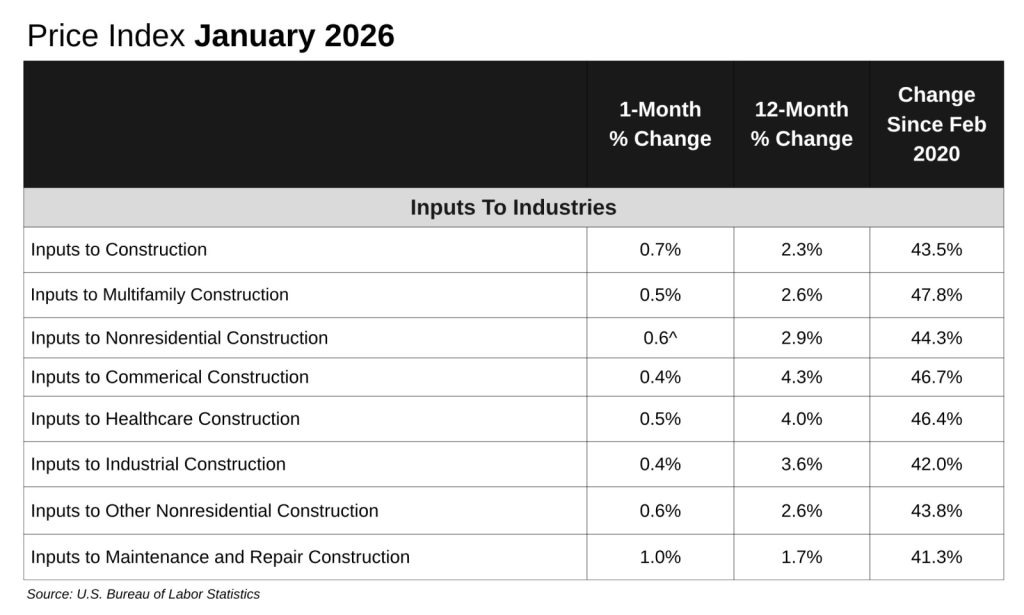
That continuity has become increasingly important as construction complexity accelerates. Construction input prices in the United States have increased more than 43 percent since early 2020, according to the U.S. Bureau of Labor Statistics. At the same time, projects face tighter schedules, longer procurement lead times, evolving code requirements, and increasing pressure for operational efficiency.
Owners are no longer simply evaluating whether a project can be built. They are evaluating whether it can be delivered predictably, efficiently, and with minimal operational disruption. That shift is reshaping how successful teams approach project delivery.
Where projects actually break down
There is a common misconception in construction that projects fail primarily because of bad drawings, unrealistic budgets, or unforeseen site conditions. Those issues certainly create challenges, but many project problems originate much earlier and are far less visible.
In many cases, projects drift long before construction starts, often when alignment among teams, priorities, and decision-making erodes.
In traditional workflows, projects frequently move through a sequence of disconnected phases. Business development teams establish client expectations. Architects develop conceptual designs, estimators prepare budgets, and consultants coordinate engineering systems. Construction teams inherit the documents and attempt to execute the work under compressed timelines.
At each transition point, information is interpreted, condensed, or retranslated. The result is often what could be described as “alignment decay,” where the original project vision gradually weakens as it passes among disciplines and stakeholders.
Preconstruction is typically intended to reduce this fragmentation, but it often functions more as a checkpoint than a truly integrated process. Teams may gather once or twice to review pricing or scheduling assumptions. Still, those ultimately responsible for delivering the project are not always involved early enough to shape decisions while they remain flexible.
By the time construction begins, the field teams may have limited exposure to the owner’s original priorities, operational concerns, or long-term goals, and the financial impact of these disconnects is significant.
According to a 2018 report from PlanGrid and FMI Corp., communication and project data inefficiencies were estimated to cost the U.S. construction industry more than $177 billion annually. The report also found that construction professionals spent approximately 35 percent of their time on non-optimal activities such as resolving conflicts, locating project information, and addressing avoidable rework. That translates to more than 14 hours per week spent dealing with inefficiencies that often stem from poor coordination and fragmented communication.
Researchers further found construction professionals spent more than five hours each week searching for project data, nearly five hours managing stakeholder disagreements, and almost four hours assessing mistakes and rework. These are not isolated operational inconveniences. They represent systemic inefficiencies embedded within fragmented project delivery environments.
More importantly, that same report found that poor communication accounts for 26 percent of rework, while poor project information accounts for another 22 percent. In other words, many project failures are not caused by technical inability. They occur because teams lose alignment around information, intent, and execution over the course of a project.

Why integrated teams perform more effectively
Integrated delivery models aim to address these challenges by bringing together architecture, engineering, and construction expertise earlier in the process.
However, the value of integration is often misunderstood. The primary advantage is not merely combining services under a single contract. It is preserving continuity throughout the project lifecycle.
Strong projects begin with alignment between budget, goals, operations, schedule expectations, and construction realities. Integrated teams help maintain that alignment because the people who shape decisions early are often the same ones responsible for executing them later.
When architects, engineers, construction managers, contractors, estimators, project managers, field supervisors, and trade partners collaborate early, projects benefit from:
- Reduced fragmentation between phases
- Faster resolution of design and coordination issues
- Improved understanding of constructability constraints
- Earlier identification of procurement risks
- Better alignment between budget and scope
- Clearer communication between stakeholders
This continuity becomes particularly valuable during periods of market volatility.
Recent supply chain disruptions significantly extended procurement timelines for key construction materials, making early coordination increasingly critical to maintaining project schedules. Under those conditions, the procurement strategy cannot continue to function as a downstream activity.
Product selection, phasing, and scheduling decisions must be made earlier and involve greater collaboration between design and construction teams. Integrated teams are better at making those decisions proactively because procurement realities are incorporated into design discussions from the outset.
Research from the Design-Build Institute of America (DBIA) shows that design-build projects experience 3.8 percent less cost growth than comparable design-bid-build projects and are delivered approximately 102 percent faster from design through completion. DBIA research also found that design-build projects see 1.7 percent less schedule growth than design-bid-build and are completed 36 percent faster during the construction phase alone.
Additional research surrounding early contractor involvement (ECI) further demonstrates that engaging contractors during front-end planning can improve constructability, strengthen collaboration, and reduce downstream risk by aligning design decisions with real-world construction conditions earlier. Studies and project case examples have shown that ECI can reduce change orders, improve schedule certainty, and generate measurable cost savings before design decisions become difficult or expensive to revise.
Those outcomes are not simply the result of compressed contracts or overlapping schedules, but of earlier coordination and fewer downstream conflicts, leading to more successful projects.
The hidden cost of fragmentation
Construction projects have always involved complexity. What has changed is the degree to which operational, financial, and logistical pressures amplify the consequences of misalignment. Today’s projects operate within narrower margins for error.
Research from McKinsey & Company indicates that large construction projects typically take 20 percent longer to complete than scheduled and can run up to 80 percent over budget. Meanwhile, SmartPM’s 2025 State of Construction Scheduling Report found that 88 percent of baseline schedules fail established quality benchmarks.
These statistics reflect more than isolated project management failures. They reveal an industry struggling to coordinate across increasingly fragmented project environments.
The invisible costs of misalignment often extend well beyond direct construction expenses. They include executive time diverted to dispute resolution, delayed tenant occupancy, lost operational revenue, employee inefficiency due to poor facility planning, tenant dissatisfaction, impacts on brand perception, and increased long-term operating costs.
For owner-users, these downstream consequences can be far more expensive than initial construction overruns. A building that technically opens on schedule may still underperform operationally if workflow inefficiencies, customer circulation issues, or maintenance concerns were not fully considered during planning.
Buildings are operational tools, not isolated design exercises.
Protecting client intent throughout the process
One of the most overlooked responsibilities in project delivery is protecting client intent over time. In many traditional project structures, the individuals who initially hear the client’s goals may no longer remain closely involved as the project progresses through documentation, procurement, and construction. This inherently creates risk.
Clients rarely define success solely through aesthetics or square footage. Usually, they focus on improving operational flow, increasing employee retention, enhancing customer experience, or supporting future growth strategies.
Those priorities are not always fully captured within drawings alone. Without continuity between planning and execution teams, projects can gradually drift away from the business objectives that originally justified the investment.
This is particularly important for owner-users because facilities directly influence workflow efficiency, staffing operations, customer interaction, employee productivity, long-term maintenance requirements, and overall operational cost structures. Ultimately, the success of many projects is measured by how effectively the building supports the business operating inside it.
Alignment begins before construction starts
Some of the most important project decisions occur long before construction begins. Successful projects start with understanding how the client’s business operates, not simply what the floor plan should look like.
Early planning discussions should examine how employees move through the space, where operational bottlenecks exist, how customer circulation affects experience and revenue, anticipated staffing or workflow changes, and the operational problems the facility faces.
These conversations are often more valuable than early aesthetic discussions because they establish the operational framework that design and construction decisions must ultimately support.
Integrated teams are particularly effective during early planning phases because they combine design vision with real-world construction knowledge and implementation strategy. This allows teams to identify practical constraints before assumptions become embedded within the project.
Early collaboration helps teams evaluate permitting pathways, phasing constraints, occupied-space logistics, procurement sequencing, utility infrastructure limitations, code compliance challenges, and potential cost-escalation risks before they become larger issues during construction.
Research from Deloitte and World Commerce & Contracting found that projects using ECI improved cost outcomes by up to 15 percent. In contrast, additional research indicates that collaborative contracting and early involvement of key stakeholders during preconstruction can improve schedule performance by 15 to 18 percent.
Together, these findings reinforce a critical industry reality: project outcomes are often determined well before construction mobilization.
The value of constructability reviews
One of the clearest examples of alignment-driven value creation is constructability review.
Constructability reviews bridge the gap between design intent and field execution by evaluating whether proposed solutions can realistically be built efficiently, safely, and on budget.
This process becomes particularly valuable during the 50 and 75 percent design milestones, when modifications remain manageable. According to industry research and construction management guidance, constructability reviews can help reduce requests for information (RFI), change orders, delays, disputes, and administrative costs by identifying conflicts and ambiguities before documents are issued for bidding.
These reductions carry significant downstream value because fewer RFIs generally lead to fewer change orders, reduced schedule disruption, improved trade coordination, lower administrative burden, and better budget predictability.
The value of constructability is not about limiting design creativity. It is about ensuring design decisions remain informed by construction realities.
Without that coordination, projects frequently experience what some professionals describe as “design intent delusion,” in which unresolved details are assumed to work themselves out in the field. They rarely do. Instead, unresolved coordination issues typically emerge during construction when changes become more expensive, schedules become compressed, and options become limited. These challenges are not theoretical. They emerge regularly in projects where continuity between planning, design, and execution begins to break down.
Case study: Alignment recovery—Mend Wellness
One recent wellness and hospitality project in Phoenix, Ariz., illustrates how fragmentation during early project phases can create significant downstream coordination challenges as construction realities collide with unresolved design assumptions.
The project initially operated under a more traditional structure, with separate architecture, interiors, and construction teams. Although permitting had already progressed, many critical implementation details had not yet been fully organized with the subcontractors and trade partners responsible for fabrication, infrastructure integration, and field execution.
As procurement conditions shifted, material prices rose, and tariff-related uncertainty began affecting product availability, the owner grew increasingly concerned about budget predictability, constructability, and schedule stability.
An integrated design-build team was brought in to reevaluate the project before construction could meaningfully proceed. It quickly became apparent that several design elements had been developed conceptually but had not yet been fully resolved from either a constructability or sequencing standpoint.
Custom assemblies, finish transitions, utility management, and fabrication requirements still required substantial coordination before efficient field execution could occur.
Rather than treating those issues as isolated construction problems, the team restructured the coordination process itself. Architects, engineers, construction managers, contractors, subcontractors, fabricators, and field leadership were brought together to collectively evaluate operational requirements, sequencing constraints, procurement risks, and installation logistics before additional work progressed.
This process ultimately resulted in layout adjustments, revised detailing strategies, resequenced procurement planning, and modifications to certain residential-inspired design elements to better align with commercial performance requirements, code compliance, and long-term operational functionality.
The project reinforced a broader industry reality: many construction challenges commonly perceived as “field issues” are often alignment issues originating much earlier in the project lifecycle.
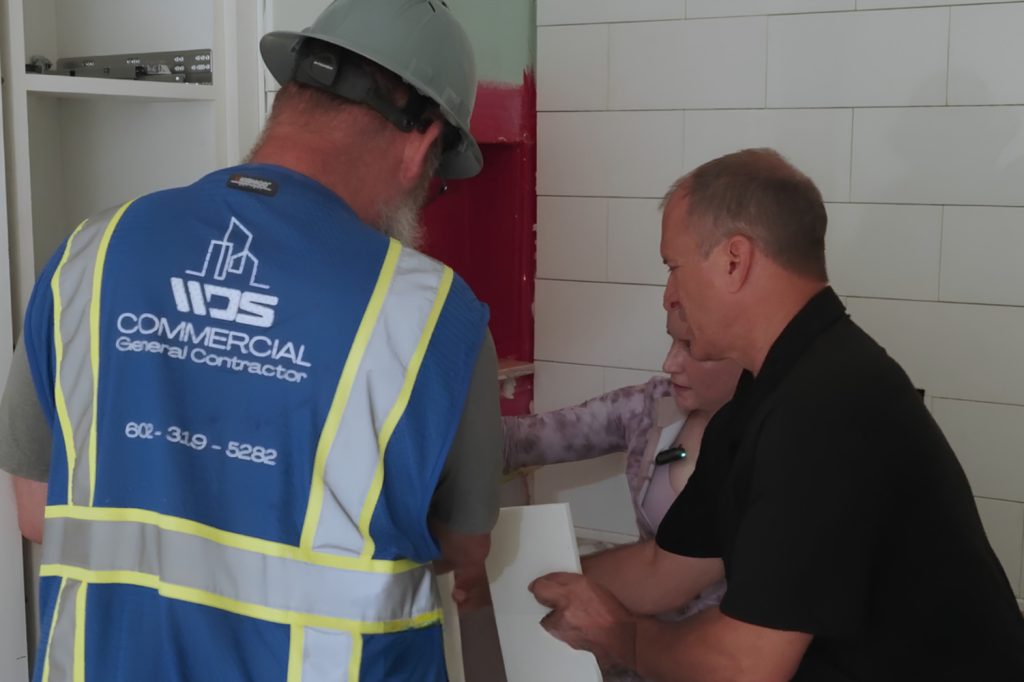
Case study: Alignment continuity—Empire Scottsdale
A different example is the adaptive reuse of Empire Scottsdale, a former art gallery repositioned as a coworking and hospitality space in Scottsdale, Ariz.
Adaptive reuse projects inherently introduce greater uncertainty because existing conditions, infrastructure limitations, code upgrades, and operational requirements frequently evolve throughout construction. Under those conditions, maintaining continuity between design intent and field execution becomes especially important.
From the outset, architecture, construction leadership, and trade coordination teams remained closely integrated throughout planning and execution. This allowed evaluation of constructability constraints, permitting requirements, utility infrastructure limitations, and sequencing considerations concurrently rather than through isolated project phases.
Since field coordination and construction expertise were incorporated into decision-making early, the team was able to proactively address evolving site conditions and operational challenges before they escalated into larger downstream conflicts.
Design adjustments, infrastructure modifications, and sequencing decisions could be evaluated in real time against operational goals, permitting requirements, and construction realities.
The project demonstrates how alignment-driven coordination becomes particularly valuable in adaptive reuse environments where unknown conditions and evolving project requirements are unavoidable. While complexity remained throughout the process, maintaining continuity between disciplines reduced fragmentation and improved the team’s ability to adapt as conditions evolved.
Communication as a competitive advantage
Construction has historically lagged behind many industries in productivity growth. McKinsey & Company estimates that construction productivity has grown by only about 1 percent annually over the past two decades, significantly trailing other industries, largely due to fragmentation and coordination inefficiencies.
That reality makes communication one of the industry’s most undervalued competitive advantages.
Industry research from organizations such as the DBIA and FMI Consulting consistently identifies communication, collaboration, and accountability as major contributors to successful project outcomes and owner satisfaction. Most business owners are not construction experts. What they want most is clarity, predictability, and confidence that their priorities are being understood throughout the process.
Integrated teams improve communication because fewer parties have to translate information across disciplines. That continuity reduces the risk of misunderstandings and accelerates decision-making across the design, procurement, and construction phases.
Digital collaboration platforms and integrated data environments can support this process, but technology alone is not enough. Autodesk and FMI Consulting estimated that bad project data may have contributed to approximately $1.8 trillion in global losses in 2020 and was responsible for roughly 14 percent of avoidable rework worldwide.
The issue is not simply data availability. It is alignment around how information is interpreted, communicated, and acted upon. Even the most advanced technology cannot compensate for fragmented project leadership or inconsistent communication between teams.
Ultimately, communication is not a soft skill operating adjacent to project delivery. It is a core operational function that directly influences schedule reliability, budget predictability, efficiency, and client confidence.
Rethinking the ‘speed, cost, and quality’ trade-off
The construction industry frequently frames projects as a trade-off between speed, cost, and quality, implying that improving one requires sacrificing another. However, in practice, strong collaboration can improve all three simultaneously.
Projects with early alignment often achieve quicker delivery, more predictable budgets, fewer redesign cycles, reduced rework, and stronger operational outcomes after occupancy. Those outcomes are not necessarily tied to a specific delivery acronym. They are tied to continuity, accountability, and communication.
Integrated delivery models help facilitate those outcomes by reducing fragmentation and encouraging earlier coordination. However, no delivery structure alone guarantees success. A poorly aligned design-build project can still struggle. Likewise, a highly collaborative traditional project can still succeed. Ultimately, performance is determined by whether teams remain aligned around shared objectives throughout the project lifecycle.
That distinction matters because the industry often overemphasizes delivery labels while underestimating the operational importance of continuity between planning, decision-making, and execution.
The most successful projects are rarely defined solely by the contract structure. They are defined by how effectively teams preserve alignment as complexity, uncertainty, and project pressures evolve.
Alignment as the real delivery strategy
Construction projects will always involve uncertainty. Codes evolve, supply chains fluctuate, site conditions change, and market pressures shift. The difference between successful projects and difficult ones is rarely the absence of challenges. It is how effectively teams communicate, harmonize, and adapt when challenges emerge.
As the industry continues exploring new delivery structures, it is important not to confuse process labels with project outcomes. The strongest projects succeed because teams remain aligned around the client’s goals from concept through completion.
That alignment preserves continuity, improves accountability, and reduces friction between disciplines, and increasingly determines whether projects feel controlled or reactive as they move toward occupancy.
The future of project delivery is not simply about integration for its own sake. It is about creating systems that protect alignment throughout the entire project lifecycle. In the end, projects rarely fail because teams lack a specific delivery model; they fail because they lose alignment and fail to meet the owner’s goals and expectations.
Key takeaways
Project success relies less on the formal contract structure (e.g. integrated project delivery [IPD], design-build [DB], integrated design-build [IDB]) and far more on continuous alignment, open communication, and shared intent among project teams. To prevent costly coordination breakdowns, firms must move past traditional handoffs and prioritize early, integrated collaboration between designers and builders throughout the entire project lifecycle.
Author

Michael Marden is the owner of WDS Integrated Design Build, where he leads sales, estimating, and project management across the firm’s fully integrated practice, including WDS Architecture and WDS Commercial Contractor. With more than 33 years of experience spanning both architecture and construction, Marden brings a comprehensive design-build perspective to commercial projects. He works closely with clients from early feasibility through project completion, aligning design, budget, and constructability to streamline delivery, improve coordination, and reduce risk.
Sign up for our weekly newsletter
Architectural materials and methods delivered right to your inbox

- CSI News & Notes: CSI’s impact earns official recognition; celebrate leaders, mentors, and innovators; and more
- CSI News and Notes: CSI spring certification exams open; scholarships available; and more
- CSI News & Notes: CSI MSR heading to San Diego; spring certification exams open; and more
- To Be Specific: Why CDT Should Be Your First Move
- CSI News & Notes: CSI Fellows share member benefits; and a New Year’s Resolution to keep
Products
Read the Latest Issue