From building design to stage design: Versatile theater set piece
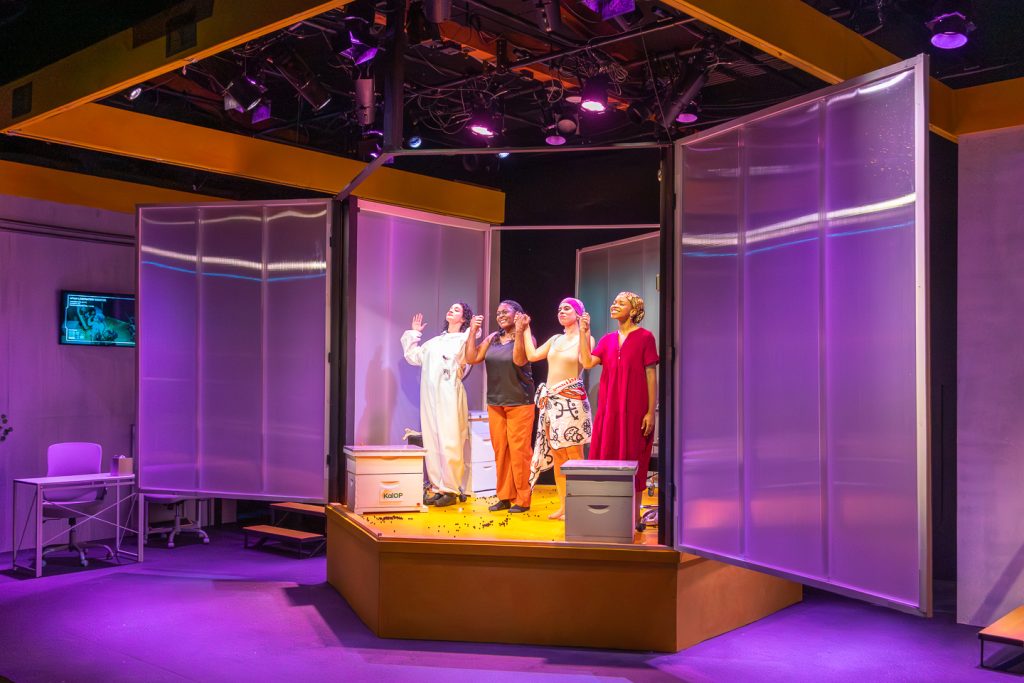
An unprecedented engineering project recently required the Kingspan Light + Air team to expand the application of high-performance building systems beyond traditional architecture and into theatrical stage design. In an inventive intersection of art and science, Kingspan Light + Air partnered with New Village Arts (NVA) theatre company in Carlsbad, Calif., to design a highly versatile set structure for the new sci-fi play The Apiary.
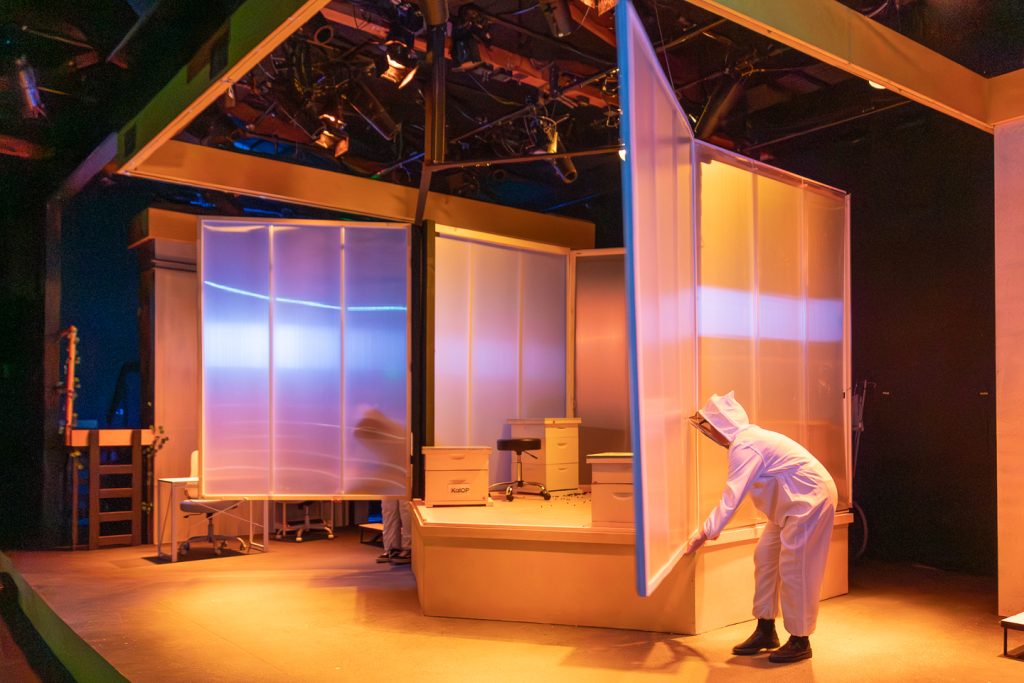
It required a custom-engineered, large-scale set structure with six modular translucent polycarbonate panels to form a hexagonal, interactive set volume. Designed to interact with immersive visual technology while maintaining modularity and durability, the structure also provides a sustainable framework that can be reused in future productions.
Beyond serving as a visual and narrative centerpiece throughout the show’s regional premiere in February 2026, the project introduces new potential applications for translucent cladding systems. It highlights emerging opportunities for sustainable set design.
Artistic and technical challenges
The NVA creative team first visited the Kingspan Light + Air office to test how video projections interacted with the polycarbonate surface of the translucent wall systems. Right away, they recognized the potential solution for their elaborate set of requirements.
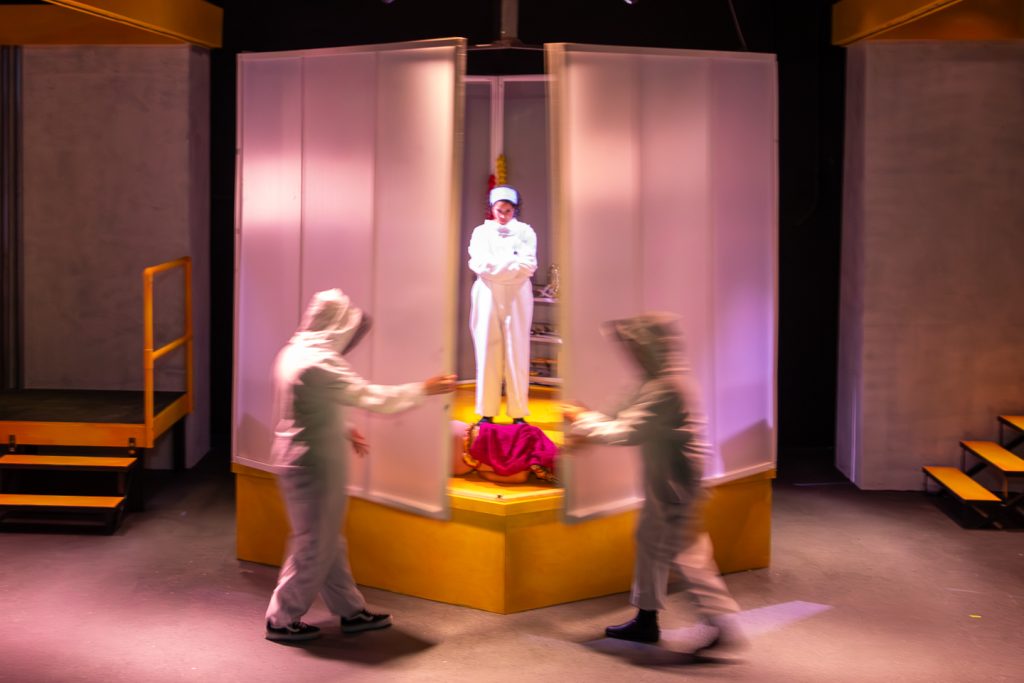
With The Apiary portraying a futuristic workplace drama inside a synthetic honeybee laboratory, the creative team sought to construct a capacious “apiary box” for the stage with a wide range of capabilities. Intended to serve as the central set piece throughout the show, the apiary needed to function as both an architectural structure and storytelling device.
The set piece is specifically needed to achieve dynamic interactions between light, projection, and movement onstage, serving as an instrumental vessel for showcasing key visual effects, supporting actors’ interaction, and displaying shifting visuals to heighten tension and elicit targeted audience reactions.
To meet the creative team’s extensive needs, the following design details had to be taken into account:
- Dimensions—The boxlike set piece needed to provide ample space for multiple actors to fit inside and maneuver freely.
- Weight and mobility—The structure needed to be lightweight and modular for efficient stage use.
- Positioning—The show required elevating the structure off the stage floor.
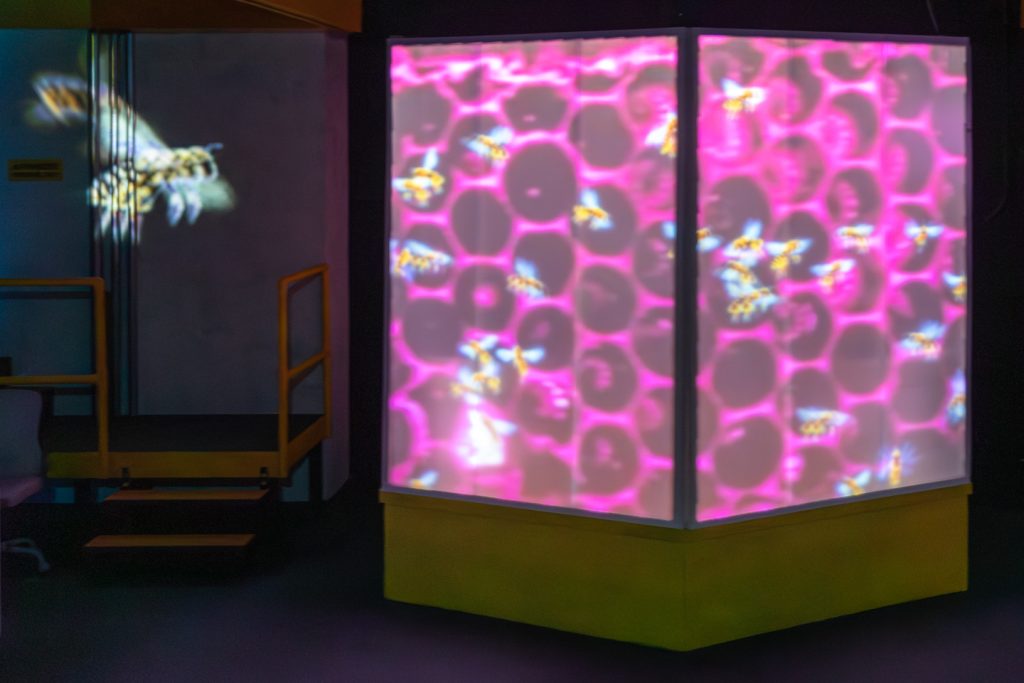
- Visual effects—The set piece needed to allow temporal projections of bees to interact dynamically with its surface when closed.
- Optical versatility—The structure would need to shift between opacity, translucency, and transparency, depending on lighting. The set piece would also need to vary between displaying silhouettes, partial visibility, and layered depth within.
These requirements were essential not only for stage functionality but also for achieving the layered visual environment necessary to support the play’s themes of preservation, control, and engineered survival.
A critical balancing act
Accommodating these needs required a marked shift in design approach, as Kingspan Light + Air typically engineers cladding systems for permanent building installations. The theatrical application, however, required mobility, rapid assembly, and adaptability.
This required a calculated balance of design details, with engineers striving to maintain visual performance and structural integrity without overengineering.
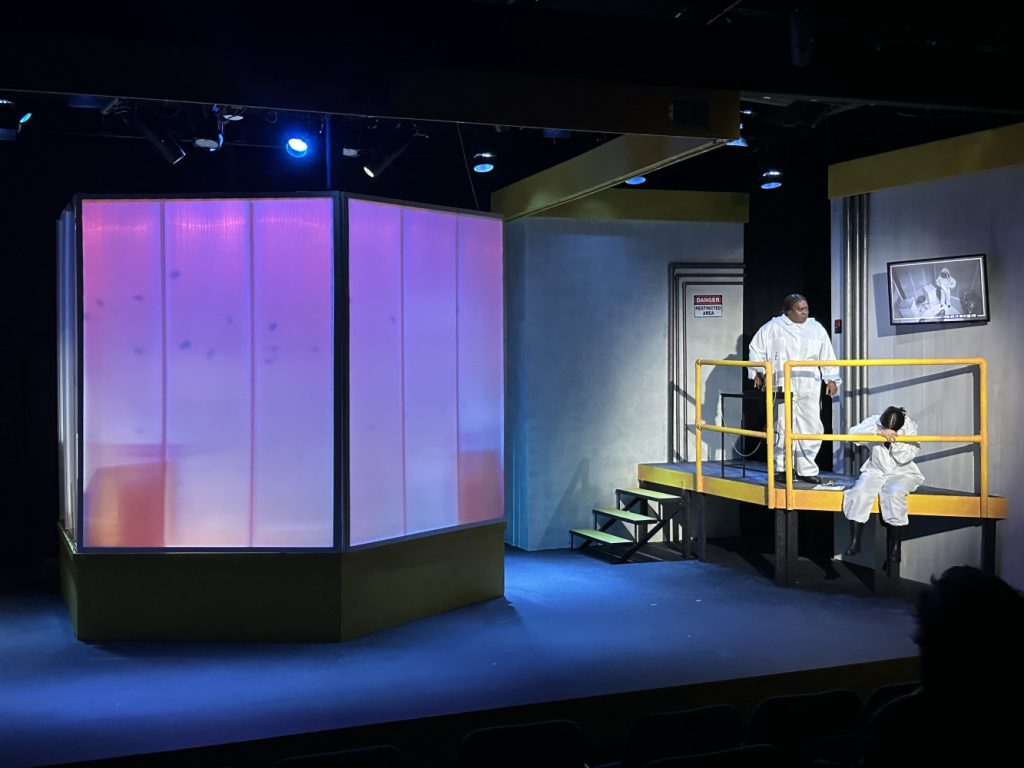
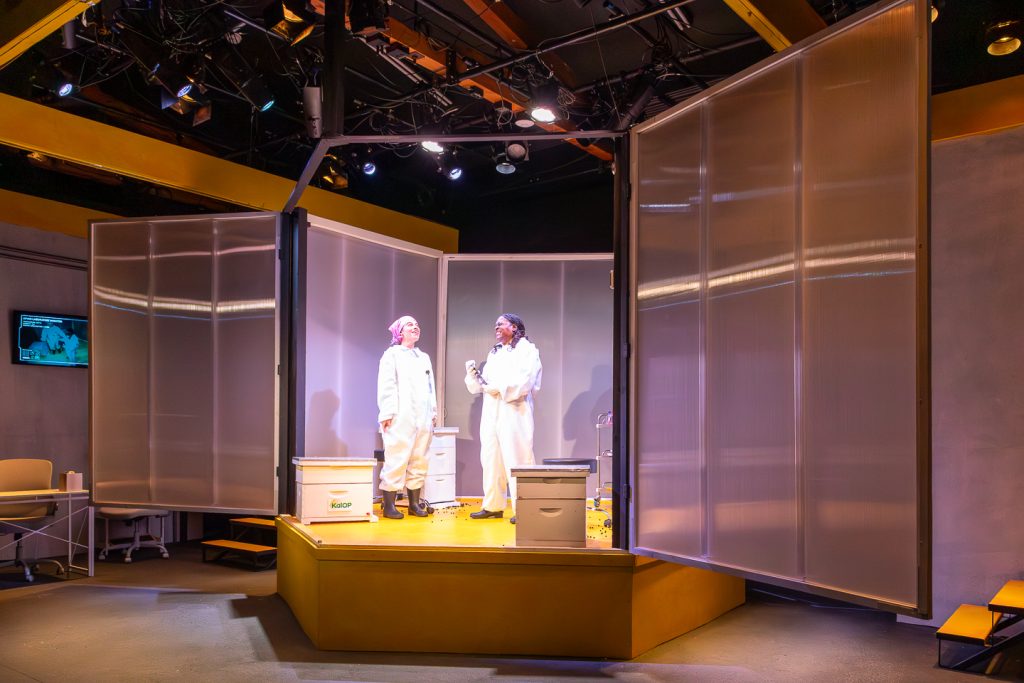
To meet these elaborate aesthetic and performance requirements, the engineers created a modified version of an existing cladding system comprising six modular panels, each 1.83 m (6 ft) wide by 2.4 m (8 ft) tall, to fully accommodate multiple actors within an operable, adaptable hexagonal set volume. This solution also featured 10 mm (0.4 in.) Clear Matte polycarbonate glazing and polycarbonate battens, allowing the box to shift across a full range of opacity, translucency, and transparency.
Early design iterations proved too heavy for theatrical use. To resolve this, the original milled aluminum framing was replaced with a custom wood support frame. This adjustment significantly reduced weight while maintaining durability and structural stability.
The result was a lightweight, movable, and translucent enclosure capable of dynamically interacting with stage lighting, live actors, and projection.
A show-stopping design
The custom cladding solution provided the significant versatility required to serve as the play’s central, immersive design feature.
When actors and projected imagery moved within and behind the panels, the polycarbonate surface shifted visually between veiled opacity and translucency. Silhouettes and movement created depth within the box, allowing the set itself to contribute to the performance’s strong emotional tone.
The movement of projections on the structure’s surface and the dramatic changes in its translucency enabled the play’s dystopian world to manifest in a way that traditional scenic materials could not.
This created a visually engaging stage setting that effectively supported the production’s storytelling and elicited targeted audience reactions.
Advancing sustainability on stage
The thoughtfully engineered apiary set structure represents potential long-term impacts across manufacturing and theater design—especially for sustainability practices.
Rather than delivering the apiary box as a one-time scene build, the enclosure was designed so its panels can be reassembled with endless adaptability for reuse in future productions. This approach provides the theatre company with a durable, long-term asset while reducing material waste associated with traditional set construction.
Sustainability has become an increasingly important consideration within the theater industry. Throughout much of the theater industry’s history, set structures were often demolished following a show’s closing, with pieces sent straight to landfills.
Many theater production teams now strive to prevent this. Theatre Green Book launched in the United Kingdom in 2021 as an industrywide initiative to promote sustainable practices throughout the performing arts. Providing a unified set of standards and toolkits to help theaters reduce their environmental impact, the program has amassed a global following in just five years, with 350 participating organizations across Europe, Asia, Australia, and North and South America.
Recycling set pieces can significantly diminish a theater company’s carbon footprint. A study found theater sets made with all-new materials generated carbon emissions equivalent to 12 American homes, while one made with all-recycled materials reduced emissions to just 1.5 homes.
By incorporating durable, modular cladding panels designed for repeated use, the apiary structure presents a new model for sustainable scenic design.
Conclusion
This partnership resulted in a meaningful shift in the application of high-performance cladding materials. Showcasing the versatility of advanced polycarbonate glazing systems, the highly engineered apiary set piece demonstrates all-new creative potential for its incorporation into theater set design. By thoughtfully customizing their next-generation features, translucent cladding systems can provide sustainable, resilient, and flexible solutions for a wide range of stage productions.
Author

Neall Digert, Ph.D., MIES, vice president, innovation and market development for Kingspan Light + Air North America, has more than 30 years of consulting and education experience working in the energy, lighting, and daylighting design and research fields, specializing in the design and application of advanced lighting and daylighting systems for commercial building applications.
Key takeaways
This project illustrates how high-performance translucent cladding systems can extend far beyond traditional building envelopes. Materials engineered for durability, light diffusion, and structural performance can also support flexible, modular installations where lighting interaction and visual depth are critical. For architects and specifiers, this demonstrates the potential to use translucent wall systems in creative applications such as cultural spaces, exhibit design, or temporary structures where light transmission and visual layering are key design objectives.
Sign up for our weekly newsletter
Architectural materials and methods delivered right to your inbox

- CSI News & Notes: CSI’s impact earns official recognition; celebrate leaders, mentors, and innovators; and more
- CSI News and Notes: CSI spring certification exams open; scholarships available; and more
- CSI News & Notes: CSI MSR heading to San Diego; spring certification exams open; and more
- To Be Specific: Why CDT Should Be Your First Move
- CSI News & Notes: CSI Fellows share member benefits; and a New Year’s Resolution to keep
Products
Read the Latest Issue